Best Viewpoints in Assisi: Terraces, Ramparts and Valley Vistas
A practical guide to the best viewpoints in Assisi, from the Rocca Maggiore ramparts to Piazza Santa Chiara, with how to reach each spot and when the light is best.
On this page
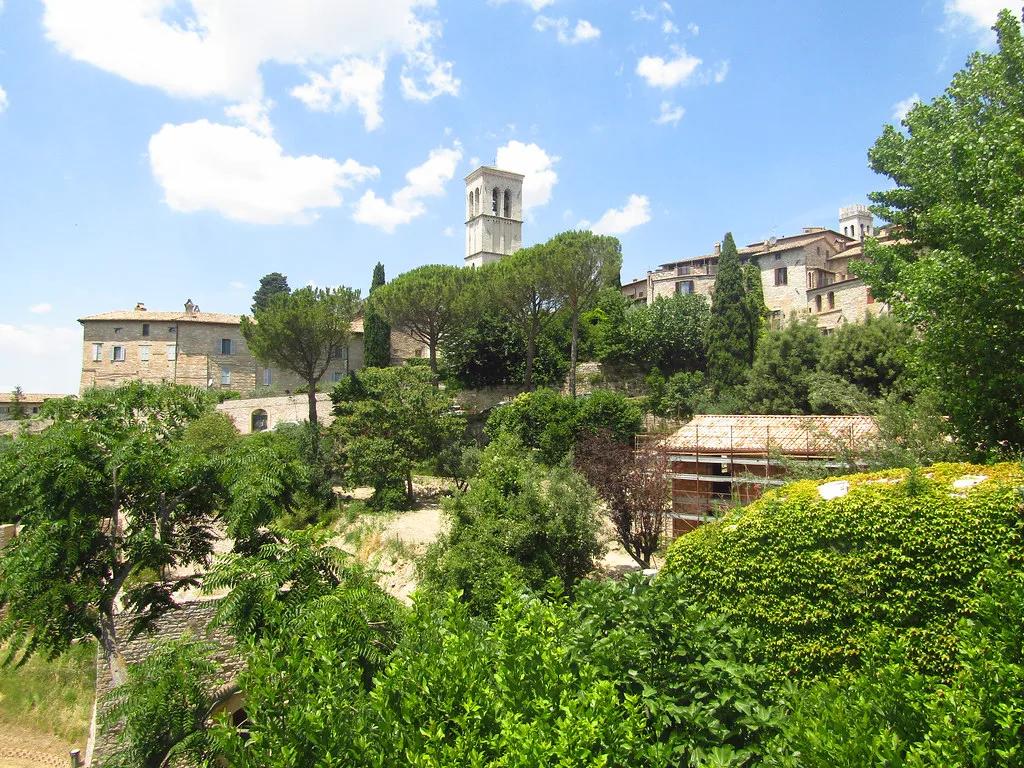
Assisi is built on a slope, which means the town hands out views almost by accident: a gap between houses, a terrace outside a church, a wall at the top of a lane. The reward for climbing is the Umbrian valley opening below, with pale stone rooftops stepping down toward Santa Maria degli Angeli.
The headline panorama belongs to the Rocca Maggiore, the fortress on the hill above town. From its ramparts you get a near-360-degree sweep over the rooftops, the Basilica of San Francesco and the valley toward Perugia, and entry runs around eight euros, a figure worth rechecking at the ticket office before you commit to the climb.
This guide sorts Assisi's viewpoints by what they ask of you: a paid fortress climb, a free church terrace, a street-level square, or a quiet lane at dusk. Pair it with our look at the hidden gems in Assisi for the sights between viewpoints.
How Assisi's Layout Shapes Its Views
Most of the sights sit along one gently climbing spine. The Basilica of San Francesco anchors the lower western end, Via San Francesco rises to Piazza del Comune, and the Basilica of Santa Chiara and Piazza Matteotti sit near the top.
That single axis is why height matters so much here. Every step up the spine gains you a wider slice of valley, and the best free panoramas cluster at the higher end of town around Santa Chiara.
The historic centre is compact and walkable end to end in roughly twenty to twenty-five minutes if you never stop, but the streets are steep and cobbled. Good shoes matter more than a map, and escalators from some lower car parks ease the climb.
Rocca Maggiore: The Big Panorama
The fortress crowns the hill and delivers the most complete view in Assisi, a near-360-degree panorama over rooftops, the Basilica and the valley stretching toward Perugia. Nothing else in town competes with the range of it.
The trade-off is effort. The climb is steep, and unlike the church terraces this one carries an entry fee, quoted in one guide at around eight euros; treat that as an indicative figure and confirm the current ticket on arrival rather than budgeting from an older article.
Time it for the afternoon if you can, when light falls on the stone facades below and the Basilica reads clearly against the valley. The walk down afterward is far easier on the calves than the way up.
Piazza di Santa Chiara and the Basilica Terrace
At the top end of town, the terrace outside the Basilica of Santa Chiara gives one of the best valley views in Assisi, and it costs nothing. Entry to the basilica is free as well, so this is the highest-value viewpoint in town for anyone watching a budget.
Inside, the basilica holds the original San Damiano Crucifix, the one said to have spoken to St Francis, which makes the stop more than a photo opportunity. Step out again for the panorama before moving on.
Sunsets draw a crowd to this square, and it earns the reputation: the buildings take on a glow and the sky turns burnt orange over the valley. Arrive a little early if you want space at the railing.
Piazza del Comune and the Temple of Minerva
Piazza del Comune is the beating heart of Assisi, laid over the old Roman forum, and its showpiece is the first-century BC Temple of Minerva, whose six Corinthian columns now front the church of Santa Maria sopra Minerva. It is free to enter.
Be clear about what kind of view this is. The square offers street-level charm and cafe terraces facing the columns, not a panorama; the white lines on the paving trace the edges of the ancient forum below rather than leading anywhere scenic.
Come early for a quiet coffee before the terraces fill, or late for an aperitivo as the light softens on the stone. Around midday it is the busiest point in town.
Via San Francesco and the Basilica's Lower Piazza
The sloping medieval street between Piazza del Comune and the Basilica of San Francesco is a view in itself, a run of stone arches and receding lines that photographs well in any light. Pause on the way down rather than rushing through.
The Basilica complex faces southwest, so late afternoon is when the exterior and the lower plaza catch their best golden light. Entry to the church is free, though that does not extend to every separately ticketed collection in town.
Two rules are enforced here: shoulders and knees must be covered for everyone, and photography is not allowed inside the Upper Church, where the Giotto cycle covers the walls. Leave the camera in the bag and plan your shots for the exterior.
Quieter Corners and Twilight Lanes
Once the day-trippers leave, the lamplit lanes empty out and the town feels different. The narrow arched side lanes, the vicoli, are at their best at twilight, when lamps come on and the pale limestone glows.
Other glimpses come free between buildings: patches of bright green field visible through gaps in the medieval streetscape as you walk. These are incidental views rather than destinations, and worth stopping for anyway.
Beyond the walls, the wooded slopes of Monte Subasio frame the whole town, separating and linking Assisi with Spello and Nocera Umbra. Walking the streets here is a way of passing through that landscape.
Best Light and Time of Day
Plan exterior views around the southwest-facing Basilica and the higher terraces. Late afternoon and early evening are the safest bets for warm light on stone, but treat that as a suggestion rather than a fixed schedule, since the light shifts with the season.
Mornings belong to the early risers. Starting at the Basilica right at opening puts you ahead of the coach crowds, and the squares stay calm until mid-morning; the terraces of Piazza del Comune are loveliest empty at the start of the day.
For the Rocca and the Santa Chiara terrace, aim for the last part of the day and give yourself time to walk down before dark. Sunset from Piazza di Santa Chiara is a known draw, so expect company rather than solitude.
Walking and Access Practicalities
Everything on this list sits within the historic centre and can be linked on foot, but the cumulative climbing adds up over a day. If your legs are tiring, split the viewpoints across two outings rather than forcing the full axis in one go.
Drivers should leave the car below the walls; the centre is a camera-enforced restricted zone. Several lots sit under the town, and escalators or mechanised walkways help with the climb from the lower car parks.
Arriving by train means a transfer, since the station sits in the valley at Santa Maria degli Angeli, four to five kilometres below the centre. Buses run up to Piazza Matteotti and taxis are available; buy any bus ticket before boarding.
Pairing Viewpoints With Nearby Sights
San Damiano sits a short walk downhill below the walls, the small convent where St Clare lived and where Francis composed the Canticle of the Creatures. It is quieter than the great basilicas and pairs naturally with the Santa Chiara terrace above.
The Eremo delle Carceri, a forest hermitage on Monte Subasio about four kilometres above town, is further afield and reached by car, taxi or a steep walk. Check current access arrangements before setting out, since the packet does not confirm them.
Down in the valley, Santa Maria degli Angeli encloses the tiny Porziuncola chapel inside one of the world's largest cathedrals, a strange and striking sight worth the detour. Our guide to Assisi Attractions covers the town's major sights in more depth.
A Half-Day Viewpoint Sequence
A workable loop starts at the top: take the bus or walk up to Piazza Matteotti, visit Santa Chiara and its terrace, then work downhill through Piazza del Comune for coffee. From there follow Via San Francesco to the Basilica and its lower piazza for late light.
Add the Rocca Maggiore at the start or end depending on your energy. Doing it first means fresh legs for the steep climb; doing it last means the best light but a tired descent on cobbles.
If you have a full day rather than half, our Assisi itinerary ideas fit the viewpoints around the churches without rushing either. The sequence is a suggestion, not an official route, so adjust it to your pace.
Choosing Your View
Pick by effort and crowd level rather than by checklist. The Rocca Maggiore rewards the climb with the widest panorama, the Santa Chiara terrace gives almost as much for free, and the piazza and lanes deliver charm without any climbing at all.
Whichever you choose, build the day around light and timing: early for the Basilica, late for the terrace and the west-facing stone. Confirm current entry fees and any access rules on site, especially for the fortress. For related planning, see Free Things to Do in Assisi: Churches, Squares and Walks.
Frequently Asked Questions
Is the Rocca Maggiore climb worth it for the view?
If you want the widest panorama in Assisi, yes. The fortress terrace gives a near-360-degree view over the rooftops, the Basilica and the valley toward Perugia. The climb is steep and entry is ticketed, so weigh it against the free views from the Santa Chiara terrace if time or energy is short.
Are there free viewpoints in Assisi?
Several. The terrace outside the Basilica of Santa Chiara offers one of the best valley views in town at no cost, entry to the basilica is free, and the squares and streets are public space. The Basilica of San Francesco is also free to enter, though that does not cover every separately ticketed collection.
Can you see the valley from Piazza del Comune?
Not as a panorama. Piazza del Comune is a street-level square built over the Roman forum, with cafe terraces facing the Temple of Minerva's columns. For the valley sweep, climb to Santa Chiara or the Rocca Maggiore instead.
What is the best time of day for views in Assisi?
Late afternoon and early evening suit the southwest-facing Basilica and the higher terraces, when warm light falls on the stone. Mornings are calmer in the squares and best for starting at the Basilica before crowds arrive. Treat these as suggestions and check seasonal light on the day.
How long does it take to walk between Assisi's viewpoints?
The historic centre is compact enough to cross in roughly twenty to twenty-five minutes without stopping, but the streets are steep and cobbled, and the viewpoints sit at different heights. Allow a half day for a comfortable loop rather than trying to rush the axis.
Sources
Continue exploring
More guides you'll find useful