
Alghero One Day Itinerary: Old Town, Bastions and a Beach
Plan one day in Alghero with a walkable old town route, a bastions stroll, a beach or coastal detour, local dishes, and what to cut when time runs short.
On this page
Alghero sits on Sardinia's northwest coast, and its walled historic centre is compact enough to cross on foot between one meal and the next. That makes the town unusually well suited to a single day: you can see the core in the morning, eat properly at midday and still give the afternoon to the sea or the cliffs beyond.
The plan below is a suggested sequence, not an official timetable. Nothing here assumes a fixed opening schedule. Before you commit a morning to a church interior or a cave visit, check current hours and entry conditions directly with the operator, and use the Comune di Alghero site for city notices that can affect traffic and events.
If you want more than the headline sights, our guide to the hidden gems in Alghero pairs naturally with this route, while the wider Alghero Attractions hub covers individual sights in more depth when you decide where to slow down.
The Day at a Glance: Morning Town, Midday Food, Afternoon Air
Shape the day around light. The old town rewards an early start, when the lanes are quieter and the facades are still in shade. Aim to be inside the Centro storico before lunch, then let food and the midday pause take over.
After lunch you have three honest choices: stay in town for the bastions, drop down to a city beach, or drive north toward Porto Conte and Capo Caccia. The first is free and forgiving, the second is easy, and the third is the most rewarding and the most demanding on time.
Finish back inside the walls for an evening aperitivo. Walking the ramparts at the end of the day is one of the simplest pleasures here, and it works whether you spent the afternoon on sand or on a cliff path.
A suggested shape for the day: roughly two hours in the lanes before lunch, a proper midday meal, then an afternoon that runs until the light softens, ending with one drink on the walls. Treat those blocks as editorial suggestions you can stretch or drop, not as official timings.
Morning: Entering the Historic Centre on Foot
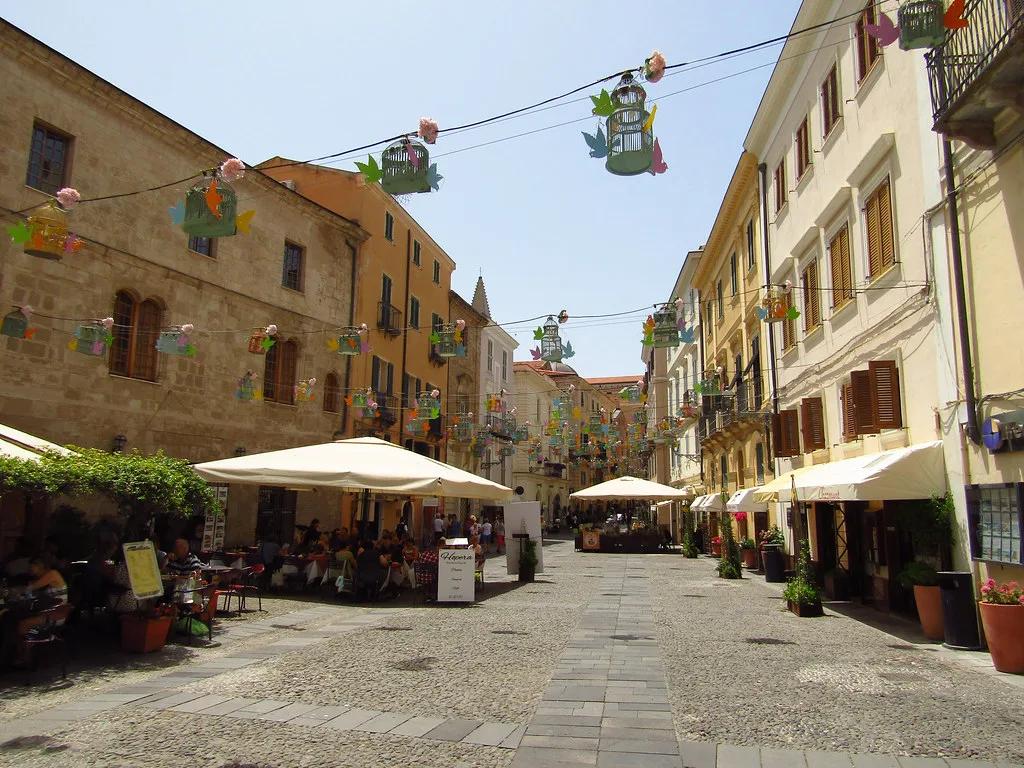
Start at the sea-facing edge of the old town and walk in. The centre is pedestrian-friendly and tightly packed, so leaving the car outside and entering on foot is the practical choice rather than a romantic one. This is the part of Alghero where the Catalan inheritance is most visible, from the street pattern to the churches.
Make the Cattedrale di Santa Maria your first anchor. One travel account describes it as one of the largest churches in Sardinia, with a distinctive bell tower and pyramidal spire beside it. Treat the exterior and the surrounding square as the dependable part of the visit, and confirm whether the interior is open on the day you arrive.
From there, wander rather than march. The church of San Francesco, described in the same account as dating to the fourteenth century, is a natural second stop, and the lanes between the two are the real attraction: small shops, stone facades and sudden views out to sea.
Give yourself roughly two hours for this first loop as a suggestion rather than a rule, and resist the urge to tick off every church. One interior, one facade and a slow walk through the alleys will feel more complete than five rushed doorways.
Optional Morning Swap: A Guided Walk Through Catalan History
If the architecture reads as pleasant but meaningless, a guided old-town walk changes that quickly. Local guides explain how the Catalan period shaped the language, festivals and street layout, which turns the same lanes into a story rather than a backdrop.
Book ahead if your day is fixed, because a guided walk consumes the morning slot that you might otherwise spend freely. The trade-off is depth against flexibility: you lose the ability to follow a narrow street on impulse, but you gain context you would otherwise carry home as guesswork.
Travellers who have written up the town note that the centre is compact enough that getting truly lost is hard, which makes a guided walk a choice about understanding rather than navigation.
Midday: What to Eat and How to Time It
Alghero's table leans on the sea and on its own hybrid history. Look for octopus agliata, a garlicky red preparation, and paella algherese made with fregola rather than rice, a dish that makes the Catalan connection edible. Malloreddus with a rich ragù and seadas with honey are the other dishes a first-time visitor is most often pointed toward.
Sicily is not the only place that takes its siesta seriously. Expect parts of the town to go quiet in the mid-afternoon, so plan lunch as a proper pause rather than a quick refuel, and schedule shopping or church visits for the morning or late afternoon instead.
Menus and prices change by season and by kitchen, and none are fixed here. Read the board outside before you sit, and ask about dishes of the day rather than assuming any signature plate is available.
Afternoon Option A: The Bastioni Walk
The simplest afternoon is also the best value. The sixteenth-century walls, known as the bastioni, let you trace the edge of the citadel, passing towers such as Torre di San Giacomo, Torre della Polveriera and Torre di Sant'Elmo on the way toward Piazza Sulis.
Walking the walls costs nothing and needs no booking, which distinguishes it sharply from the paid experiences in town. Pace it slowly, stop where the view opens, and use it as a way to see the old town from outside its own streets.
Late afternoon is when the walls fill up, with bars spilling onto the pavement for aperitivo. If crowds bother you, walk the ramparts earlier and save the bar seat for after the light softens.
The Consorzio Turistico Riviera del Corallo, which promotes the town and surrounding coast, frames Alghero as a place of cliffs, coves and sunsets, and the walls are where that description becomes visible without leaving the city.
Afternoon Option B: A Beach Break in Town
Alghero keeps beaches close enough that you do not have to choose between town and water. Spiaggia del Lido sits just north of the port and is walkable from the centre, though it is the least scenic of the local options. Spiaggia di San Giovanni, the next one north, is noticeably better because it is further from the port.
If you have a car or are willing to take transport, Spiaggia di Maria Pia has powdery sand and clear water a short drive north, and Le Bombarde is a small cove often singled out in travel accounts as the most idyllic beach in the immediate area. These are the ones to pick when the afternoon is the main event.
Choose by distance, not reputation. On a one-day schedule, Lido or San Giovanni means you keep the evening in town; Maria Pia or Le Bombarde eat into it, so go only if the water matters more than the aperitivo.
Afternoon Option C: North to Porto Conte and the Cliffs
Heading north changes the day entirely. Porto Conte Regional Natural Park mixes rocky headlands, hidden coves and pine forest, and the drive out toward Capo Caccia is a destination in itself. It is the option to take when you have a car and are willing to give the afternoon to a single area.
Two stops compete for the same hours. Nuraghe Palmavera is a Bronze Age complex a short drive north of the city, and one account advises visiting earlier in the day in summer because the site is fully exposed. Neptune's Grotto, set into the cliffs at Capo Caccia, is the other draw, approached on foot down the cliffside or by boat.
Neither is a casual addition to a one-day plan. Confirm current access, timings and any booking requirements with the operators before you set out, since cave visits and cliffside access are exactly the details that vary by season and conditions.
If you take this option, accept the trade: the northern detour can be the highlight of many trips but it consumes the evening. Better to return to Alghero for a late dinner than to rush the cliffs and see nothing properly.
Evening: Aperitivo on the Walls and Coral Shopping
End where the light is. Bars along the bastioni serve aperitivo as the sun drops, and the walk from Porta a Mare round toward Piazza Sulis doubles as the route between one drink and the next. Keep it simple: one drink, one view, then dinner.
Coral is Alghero's signature craft, and travel accounts note that around twenty boutiques sit in the historic centre. Look for the official mark of the Corallium Rubrum consortium when buying, since imitation coral is widely sold in markets and the distinction matters if you want a piece tied to local, responsible harvesting.
For context before you shop, the Museo del Corallo explains how the city works with coral and what sustainability practices look like. Check its current opening arrangements directly rather than assuming it is open when you pass.
Getting Around and Where to Base Yourself
The old town is compact and largely pedestrian, so a car is a liability during the day. Base yourself within walking distance of the walls if you can, and choose accommodation with parking if you plan coastal excursions, so you are not hunting for a space after a day out.
A rental car earns its keep mainly for the coast: Maria Pia, Le Bombarde, Porto Conte, Capo Caccia and day trips further afield. For a town-only day, leave it parked. The Consorzio Turistico Riviera del Corallo's site is a reasonable starting point for local operators, guides and boat services.
Check city notices before driving into the centre. The Comune di Alghero publishes traffic changes for events and roadworks, and a race or public works programme can close streets you were counting on.
What to Cut When Time or Weather Runs Short
With half a day, drop the northern detour first. Spend the morning in the centre, eat, and walk the bastioni before leaving. That combination gives you the town's character without any dependence on opening hours beyond the streets themselves, which are always there.
In rain, the walls and beaches lose their appeal, so shift weight indoors: churches, the coral museum and a long lunch. Confirm opening times on the operator's own page or by phone, because museum and church hours are the details most likely to change and least likely to be updated on third-party listings.
If you are short on patience rather than time, cut the guided walk and keep the independent loop. The lanes are compact enough to explore without a plan, and a slower, smaller day usually beats a crowded one.
A One-Day Route That Leaves Room to Return
Alghero rewards a day spent at walking pace. Morning in the lanes around Santa Maria and San Francesco, a proper lunch, then either the bastioni or a beach, and an aperitivo as the walls turn gold. That is enough to understand why people come back.
The coast is what you save for next time. Porto Conte, Capo Caccia and the grotto deserve their own day, with verified access details checked in advance. Use the Comune di Alghero and the Consorzio Turistico Riviera del Corallo to confirm current conditions before you go. For related planning, see Nuraghe Palmavera Guide: Visiting the Nuragic Complex Near Alghero.
Frequently Asked Questions
Is one day enough for Alghero?
One day covers the walled historic centre comfortably, including the cathedral area, San Francesco and a walk along the bastioni. It is not enough for Porto Conte, Capo Caccia and the surrounding coast, which deserve a separate day with transport arranged.
Where should you start a one-day visit?
Start at the sea-facing edge of the old town and walk in, since the centre is compact and pedestrian-friendly. Leaving the car outside avoids wasting the morning on traffic and puts you in the lanes early, before the midday pause quiets the town.
Should you choose the old town or a beach in the afternoon?
Choose the bastioni if you want the town's atmosphere and an easy evening. Choose a beach such as San Giovanni, Maria Pia or Le Bombarde if the water matters more, accepting that the further beaches eat into aperitivo time. The northern detour is a different day.
Do you need a car for a day in Alghero?
No, not for the town itself. The historic centre is walkable and largely pedestrian. A car only becomes useful for beaches outside the centre and for Porto Conte, Capo Caccia and day trips, so base yourself centrally and keep the car for coastal excursions.
What can you do in Alghero when it rains?
Shift the day indoors: churches, the coral museum and a long lunch, then check whether conditions allow a short walk on the walls. Confirm opening arrangements with each site directly, since hours change and third-party listings are often out of date.
Is Alghero worth more than one day?
Yes, if you want the coast as well as the town. A single day handles the historic centre well, but the national park, the cliffs and the cave network need their own time and a verified plan for access, so two or three nights makes a better base.
Sources
Continue exploring
More guides you'll find useful





