
Piazza Duomo Trento: Fountain, Palaces and What to See
A Piazza Duomo Trento guide to the Neptune Fountain, the cathedral facade, the painted Cazuffi-Rella houses and Palazzo Pretorio, with a suggested pace.
On this page
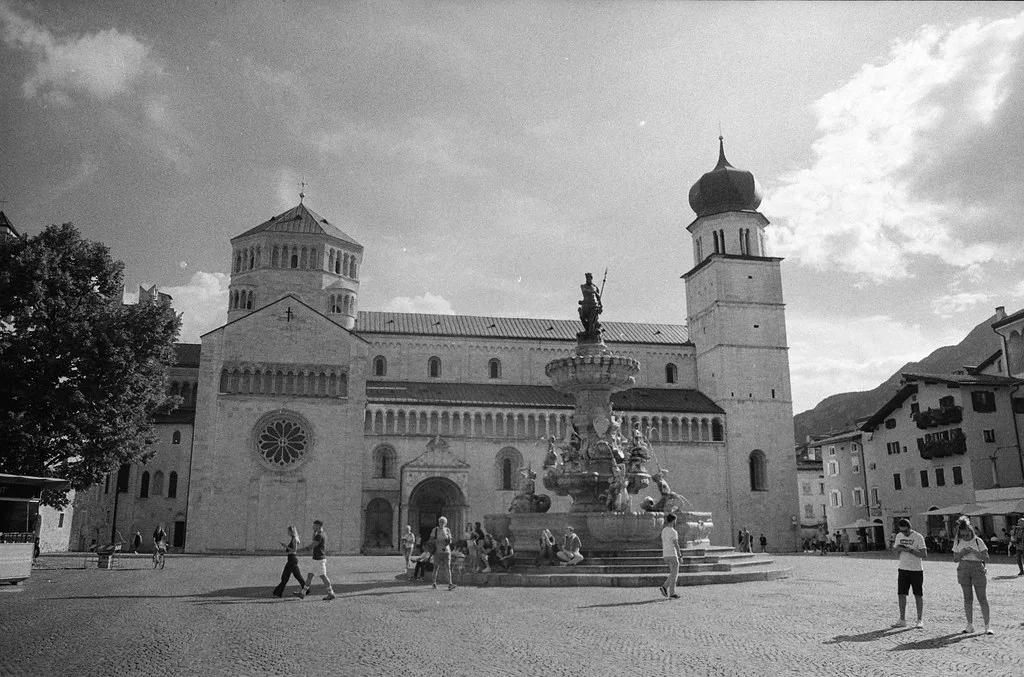
Piazza Duomo is Trento's drawing room, and almost everything worth noticing there is visible from ground level. The Neptune Fountain marks the centre, the Cathedral of San Vigilio fills one side, the frescoed Cazuffi-Rella houses address the corner, and the Palazzo Pretorio with its Civic Tower completes the frame. Nothing essential requires a ticket to look at, which is why the square rewards a slower read than a single photograph.
Our suggested linger is 45 to 90 minutes: a short orientation if you are passing through, a longer stay if you sit down and walk the painted facades properly. That pace is our recommendation, not an official figure. The practical variables sit outside the square itself: the tower is visitable only on certain days and times through guided tours, and the archaeological area beneath the cathedral is a separate visit from the church interior.
This guide treats the square as a reading exercise, then extends naturally into Via Belenzani and toward the castle. For a broader set of sights beyond the centre, the Trento Attractions collection sets out what else merits a slot in your day.
Where the Square Sits and Why You Walk It
The historic centre gathers around Piazza Duomo, and the square sits within walking distance of the Buonconsiglio Castle on the northern edge of the old town. The castle, the square and the cathedral can share one central walk, which is the reason to leave the car behind. The castle approach from the square is about 750 metres, or roughly ten minutes on foot.
Once you arrive, the square works best as a pedestrian space rather than a stop on a driving circuit. Treat the historic centre as a walking zone and the day organizes itself. The painted facades, the fountain and the cathedral front all sit within a couple of minutes of each other.
The Neptune Fountain: Reading the Centre
The fountain at the middle of the square is a Baroque composition from 1769, with Neptune flanked by tritons and sea horses. It has become an affectionate emblem of the city rather than a mere roundabout ornament, and it does the practical work of anchoring the space. Stand back far enough to see the figure group against the cathedral behind it, then move closer for the water and stonework.
Because the fountain sits at the centre, it is the natural meeting point and the best pace-setter. Circle it once in each direction: the cathedral facade, the Palazzo Pretorio and the painted corner houses all resolve differently depending on which side you stand. This is the cheapest way to understand the square's layout before committing to any interior.
The Cathedral of San Vigilio: Facade and Interior Are Different Visits
The Cathedral of San Vigilio rises between the twelfth and thirteenth centuries in Romanesque forms, with Gothic detail layered into its stonework. Its place in European history is specific: the Council of Trent opened officially here in 1545, and the assembly sat until 1563, a sequence that reshaped the Catholic Church and made Trento a capital of the Counter-Reformation for a generation. Look for the solidity of the masonry and the proportions of the arcades rather than treating the church as a backdrop for the fountain.
The exterior and the square cost nothing to see, and the church interior is a free working place of worship. What is not included is the archaeological experience beneath the nave, where a fourth-century cemetery basilica holds early Christian remains and the tombs of San Vigilio and the Anaunian martyrs. Entering the cathedral therefore does not make the underground area part of the same visit. Further visitor details appear in Things to Do in Trento: Buonconsiglio & MUSE | Dolcecharm.
Time your look between services. This is a functioning church, so the quiet intervals are for looking and the busy ones are for moving on. A short interior pause of a few minutes fits comfortably inside the 45-to-90-minute pace, while the archaeological area deserves its own slot if it interests you.
Palazzo Pretorio and the Civic Tower
Facing the cathedral across the square, the Palazzo Pretorio dates to 1220 and today houses the Tridentine Diocesan Museum. Above it, the Civic Tower is the city's most recognizable vertical landmark, standing 45 metres and overlooking Piazza Duomo. The two buildings belong together: the palace gives the square its civic face, the tower its silhouette.
The tower was built around the middle of the twelfth century on the remains of the ancient Porta Veronensis, a first-century Roman gate. It served administrative purposes and, until the end of the nineteenth century, held prisoners; its clock regulated civic time, and its two bells, known as della renga and della rason, called citizens together or warned them of danger. Recent restoration allows visitors to see eight of its twelve levels.
Climbing is not a turn-up-and-walk-in affair. The tower is visitable only on certain days and times, through guided tours. The opening and the tours are made possible by an agreement between the Municipality of Trento, which owns the building, and the Tridentine Diocesan Museum. Further visitor details appear in Guided tour of the Civic Tower - Diocesan Museum - Trento Città del Natale.
The Painted Houses: Cazuffi-Rella and the Outdoor Display
At the corner where the square meets Via Belenzani stand the Case Cazuffi-Rella, two Renaissance houses whose facades carry a painted cycle by Marcello Fogolino. The figures and decorative scenes turn the adjoining buildings into an open-air display, a painted calendar of virtues and scenes open onto the square. Treat them as the square's third great work after the fountain and the cathedral.
Read them from the right distance. Move back across the square so the painted surfaces sit clearly above the arcades, rather than studying single figures from underneath. That change of position is the difference between seeing decoration and understanding how the facades were meant to be viewed from the piazza.
Continuing Along Via Belenzani
Via Belenzani runs from the square and deserves the same attention as the piazza itself. Palazzo Thun presents a more restrained frontage, while Palazzo Geremia displays an elaborate frescoed facade; the contrast between the two is the reason to keep walking. Both are read from the street. This guide does not establish which of these palaces can be entered, so treat them as architecture rather than planning a visit inside.
This short extension shows how much of Trento's art sits in plain view, outside museum walls. The painted houses around the square and the palaces along the street form a continuous lesson in how the city presented itself in public. If you have already seen the castle interiors, the street becomes a useful counterpoint rather than a repeat.
Cafés, the Passeggiata and Using the Square as a Pause
Use the square as somewhere to sit rather than a checklist stop. In the evening, the passeggiata fills it with walkers, and the painted houses and surrounding mountains catch the late light; a drink at the edge of the piazza gives you a reason to stay for that change. Specific cafés, their menus and seating are not covered here, so choose on sight and confirm anything you need with the venue.
If you want a proper meal rather than a pause, Trentino cooking runs to canederli, bread dumplings served in broth or with butter, and polenta with hearty meat or mushroom dishes. Strangolapreti and apple strudel round out the regional repertoire, and Trentodoc is the area's traditional-method sparkling wine. These are suggestions for choosing a menu, not endorsements of particular restaurants.
Practical Pace, Seasons and Rain Alternatives
Spring and autumn give the most comfortable light for reading facades, with April to June and September to October the mildest windows in the Adige valley. Summer works if you take the square in the cooler morning or after dark, and winter mornings can be crisp and clear. The mountains temper the heat, but midday in July still argues for shade.
For a quick orientation, give the square 45 minutes: fountain, cathedral facade, tower silhouette and a pass along Via Belenzani. For the slower version, allow 90 minutes and add a seated pause. Anything involving the tower tour or the cathedral's archaeological area needs checking separately, since those run on their own conditions.
Rain changes the plan rather than ruining it. MUSE, Renzo Piano's science museum south of the old town, and Le Gallerie, the exhibition venue in former road tunnels at Piedicastello, both keep you indoors and are closed on Mondays; both lie a walk of roughly a kilometre from the square, and the tunnel venue sits across the Adige from the centre.
Combining the Square With the Castle
A half day pairs the square with Buonconsiglio Castle, the former prince-bishops' residence on the northern edge of the old town. Walk the square first for context, then head north through the painted streets to the castle. The castle holds the Cycle of the Months in the Eagle Tower, a late-medieval painted calendar that rewards the same close looking you have already practised on the facades.
Keep the two visits in the right order. The square is free and always there; the castle has closures and, for the tower frescoes, limited timed places, so confirm its opening days and booking terms before you go. If the castle is shut on the day you have, the square and Via Belenzani still fill a morning comfortably.
If you want the corners of Trento that sit outside this central circuit, the hidden gems in Trento guide extends the day beyond the obvious squares. Build those additions around the square rather than in place of it, since the piazza remains the clearest introduction to the city.
Why the Square Rewards a Slow Read
Piazza Duomo is not a sight to tick off but a space to interpret. The fountain, the cathedral facade, the painted houses and the tower together explain how Trento saw itself, and all of it is legible on foot in under two hours at an unhurried pace. The only parts that need forward planning are the tower's guided visits and the cathedral's underground remains.
Check the Civic Tower's current days and times through the Diocesan Museum before you travel, and confirm any interior you intend to enter on the day. Everything else can be left to the walk. That is the advantage of a square this compact: the schedule is mostly yours. For related planning, see Trento Underground: A Guide to the Roman Tridentum Remains.
Frequently Asked Questions
Is Piazza Duomo in Trento free to visit?
Yes. The square itself, the Neptune Fountain, the cathedral exterior and the painted facades around it are open public space with no entry charge. Entering the cathedral as a working church is also free, but the archaeological area beneath it is a distinct visit, so confirm current access with the cathedral before planning that part.
Do you need a guided tour to climb the Civic Tower in Trento?
Yes. The tower is visitable only on certain days and times, through guided tours. The openings and tours operate under an agreement between the Municipality of Trento and the Tridentine Diocesan Museum, so check the museum's current schedule and booking terms directly rather than relying on older listings.
How long should you spend at Piazza Duomo in Trento?
Our suggestion is 45 minutes for a quick orientation and up to 90 minutes for a slower visit with a seated pause and a walk along Via Belenzani. That is a planning recommendation, not an official figure. Add separate time if you join a tower tour or visit the archaeological area under the cathedral.
What are the painted houses on Piazza Duomo?
They are the Case Cazuffi-Rella, two Renaissance houses at the corner of the square and Via Belenzani, decorated with a painted cycle by Marcello Fogolino. Figures and scenes cover the facades, so step back across the square to read them properly above the arcades instead of studying single details from below.
Was the Council of Trent held in the cathedral on the square?
The Council of Trent opened officially in the Cathedral of San Vigilio in 1545, and the assembly sat between 1545 and 1563. The church is a working place of worship today, so look inside between services and treat the Council's history as the context for the facade, arcades and stonework you see from the square.
How do you get from Piazza Duomo to the Buonconsiglio Castle?
Walk. The castle sits at the northern edge of the historic centre, about 750 metres or roughly ten minutes on foot from the square through the old town. The centre is best covered entirely on foot, and walking also lets you read the painted facades along the way. Confirm the castle's opening days and tower booking before you set out.
Where should you check opening hours and tour details before visiting?
Use the Diocesan Museum for the Civic Tower's guided tour days, the cathedral's own channels for interior and archaeological access, and the castle for its opening days and any timed fresco viewing. Schedules change, so treat any listing you find as a prompt to verify rather than a guarantee.
Sources
Continue exploring
More guides you'll find useful





