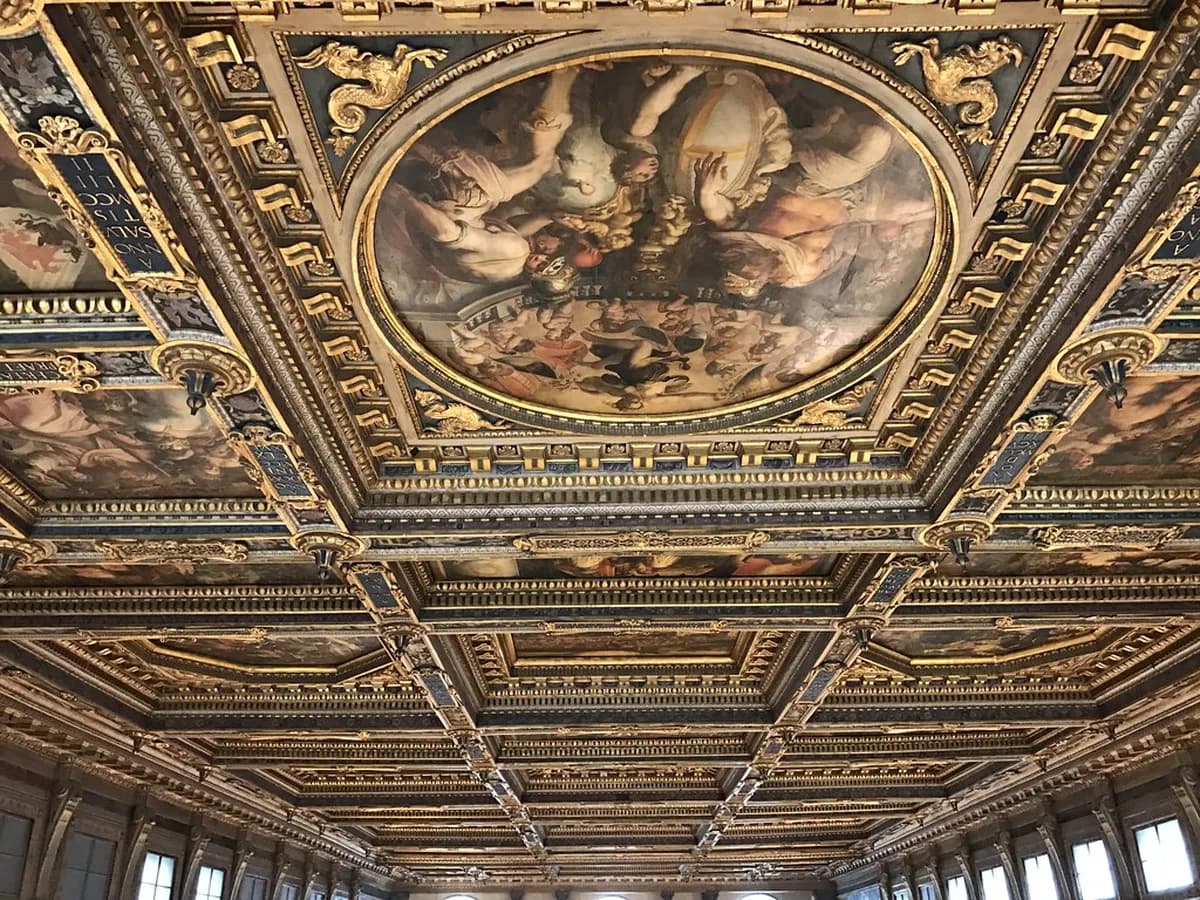
Palazzo dei Priori Perugia: Palace & Gallery Visit Guide
Perugia's Palazzo dei Priori holds a frescoed civic hall and the National Gallery upstairs. Here's how to visit both and pair them with Piazza IV Novembre.
On this page
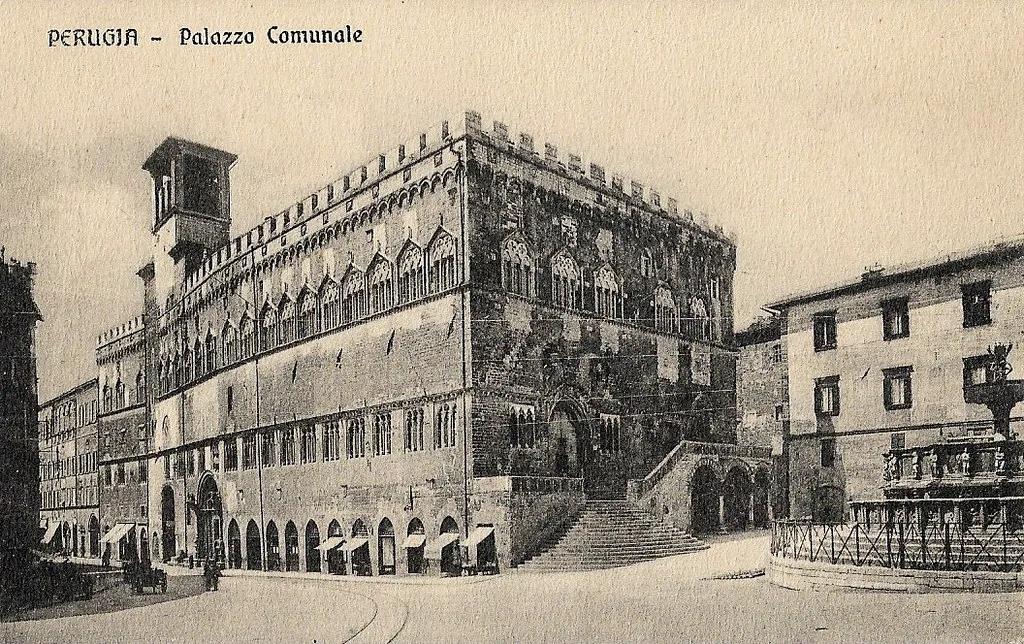
The Palazzo dei Priori is two visits in one building. On Corso Vannucci, its fortress-like front has anchored Perugia's civic life since the Middle Ages, and it still houses city offices today. That working-government character shapes what you can wander into and what you queue for.
Below the art, the palace keeps its civic memory in rooms such as the Sala dei Notari, the hall used by the city's notaries and covered in frescoes. Above, on the upper floors, sits the Galleria Nazionale dell'Umbria, the region's most celebrated art museum, with works by Perugino, Pinturicchio, Piero della Francesca and Fra Angelico.
Where the Palazzo Sits in Perugia's Old Town
The palace occupies the corner where Corso Vannucci meets Piazza IV Novembre, the square that has been the city's centre since Roman times. Because the street and the square meet here, the palazzo is the natural first stop of any walk through the historic centre rather than a detour.
Perugia's old town sits on ridges above the modern lower city, and the historic centre is compact enough that most visitors reach the palazzo on foot. Arriving by the escalator route from Piazza Partigiani or the minimetro brings you out close to Piazza Italia, a short stroll from Corso Vannucci. Save the wider sightseeing plan for the city's Perugia Attractions hub once you have fixed your palazzo slot.
Reading the Exterior Before You Go In
Started at the end of the 13th century and finished in stages during the 15th, the palace was built to impress and to express civic pride, which explains its heavy, castle-like front. The asymmetrical facade is the result of additions made over time rather than a single design.
The portal on Corso Vannucci is flanked by the lion and the griffin, Perugia's city symbols, and it leads into the Sala dei Notari. Look for those two animals first: they are the clearest signal that you are at the civic entrance rather than the museum one.
Perugia's medieval governors sat in this palace, and the building still serves administrative purposes today. Treat the ground-floor civic spaces as a working part of the city and expect signs, barriers or office traffic to shape how much of the interior you can see on a given day.
The Civic Layer: Sala dei Notari and the Guild Rooms
The Sala dei Notari takes its name from the guild of notaries and was used for municipal assemblies. Its large arches and frescoed walls, painted at the end of the 13th century, are the reason to step inside even if you skip the gallery upstairs.
The palace also contains the Nobile Collegio della Mercanzia, the former seat of the merchants' guild, and the Nobile Collegio del Cambio, the headquarters of the money-changers and bankers. The latter preserves a cycle of Renaissance frescoes by Perugino that ranks among the most important of the period; the separate Collegio del Cambio Perugino frescoes visitor guide covers that room in detail.
Do not assume one ticket opens every door. The civic hall, the guild rooms and the national gallery are distinct spaces with their own access arrangements, and the palazzo's own signage is the reliable guide on the day you visit.
The Gallery Layer Upstairs
The Galleria Nazionale dell'Umbria spreads across the upper floors of the palace and holds one of Italy's most important collections of medieval and Renaissance art. It traces Umbrian and central Italian painting chronologically across dozens of rooms, from Byzantine-influenced panels to works by Perugino, Pinturicchio, Piero della Francesca and Fra Angelico.
Housing a national museum inside a working city hall is unusual, and it makes the visit feel layered rather than sealed off. You pass through historic civic spaces adapted into galleries, which is more interesting to walk than a plain modern exhibition hall but also means the route is not a simple loop.
Plan for art fatigue. A collection this deep rewards a focused visit on a handful of rooms over an attempt to see everything, and the palace's position on Corso Vannucci makes it easy to break the visit, step outside for coffee and return.
Decisions and Trade-offs: Civic Rooms, Gallery or Both
If your time in Perugia is short, the civic rooms give you the palace's personality in a fraction of the effort: the frescoed hall, the guild rooms and the exterior symbols on Corso Vannucci. The gallery needs a genuine block of time of its own.
If Renaissance painting is the point of your trip, reverse the order: go up to the gallery while you are fresh, then finish in the square, where the Fontana Maggiore and the cathedral give the art historical context a physical setting. Trying to do both thoroughly on a half-day is the trade-off to avoid.
Pairing the Palazzo With Piazza IV Novembre
A compact loop starts on the palace steps, takes in the Fontana Maggiore in the middle of the square, and finishes at the cathedral of San Lorenzo. The fountain is a 13th-century monument carved with saints, angels, zodiac signs and biblical figures, and it also marked a real engineering achievement: it brought fresh water into the city.
The cathedral's facade was never completed, which is why it looks so stark from the square, while the interior holds frescoes and statuary. Remember this is an active place of worship: services take priority and visitors should dress modestly and keep quiet during Mass.
The square has been Perugia's civic stage for centuries, hosting everything from Roman debates to modern student gatherings. Sitting on the cathedral steps at the end of the loop is the classic way to close the visit.
Under an Hour vs Half a Day
Our editorial suggestion, not an official figure: if you have under an hour, view the exterior, step into the Sala dei Notari if it is open, and walk the square, leaving the gallery for another trip. That sequence captures the palace's civic role without pushing you through rooms you cannot absorb.
With half a day, give the gallery a substantial block, add the guild rooms and the Collegio del Cambio, and still leave time for the cathedral and the fountain. Build in a pause on Corso Vannucci between the two halves, because the street itself and its evening passeggiata are part of the experience.
What to Skip When Art Fatigue Hits
If the gallery starts to blur, stop trying to read every panel and focus on a few named works by Perugino and Piero della Francesca. The same artists appear in Perugia's churches and oratories, so you can meet their work again in a smaller setting later in the day.
Skip optional extras before you skip the core rooms. Chasing every display, exhibition and side room in one session is the fastest way to stop enjoying the palace, and the building will still be there on a return visit.
What to Check Before You Go
Opening days, last entry times and closure days for both the civic rooms and the gallery are not stable year-round, and published information changes. Confirm on the city's official site and the gallery's official site before planning your day around the palazzo.
Check ticket scope at the same time. Admission to the national gallery is a separate question from access to the civic hall and guild rooms, and no single published rule covers all three. Ask at the desk which ticket covers what before you pay.
Accessibility arrangements, lift provision and booking requirements are also best confirmed directly rather than assumed from a travel article. A short email or a look at the official pages will save a wasted climb.
Where to Go Next: Corso Vannucci, Rocca Paolina and Porta Sole
From the palace, Corso Vannucci runs to the Giardini Carducci, and the escalators from Piazza Italia descend through the vaulted remains of the Rocca Paolina. The fortress was built after the papal victory in the 1540s over land cleared of medieval houses, and today the underground route doubles as a pedestrian shortcut through the hill.
Above the town, the climb to Porta Sole rewards the effort with one of Perugia's best views across the old town and the valley. Villa views and quiet lanes like this are the subject of the city's guide to hidden gems in Perugia, which suits a slower second day.
If you want to extend beyond the centre, the Etruscan Arch at the end of Via Ulisse Rocchi is a short walk north and still bears its Roman inscription. The Etruscan Arch Arco Etrusco Perugia guide explains its place in the original city walls.
Day trips fit easily around a palazzo morning: Assisi is about half an hour away by car, and Lake Trasimeno sits just beyond the outskirts. Leave the palace for the morning and take the afternoon for the countryside.
Plan Your Visit
The Palazzo dei Priori rewards a deliberate choice rather than a rushed checklist. Decide in advance whether you are there for the frescoed civic hall, the national gallery or both, then confirm hours and ticket scope on the official city and gallery websites.
Whichever you choose, leave time to stand in Piazza IV Novembre afterwards. The palace makes most sense with the fountain, the cathedral and the passing life of Corso Vannucci in view, because that is the city it was built to govern.
Frequently Asked Questions
Which entrance should I use for the Palazzo dei Priori in Perugia?
The portal on Corso Vannucci, flanked by the lion and griffin, leads into the civic rooms including the Sala dei Notari. The Galleria Nazionale dell'Umbria occupies the upper floors of the same building. Because access arrangements can change, check the current entrance and route for each part at the information desk or on the official city and gallery websites before you commit.
Is the Galleria Nazionale dell'Umbria inside the Palazzo dei Priori?
Yes. The gallery occupies the upper floors of the Palazzo dei Priori, the Gothic town hall on Corso Vannucci. It holds a major collection of medieval and Renaissance art, including works by Perugino, Pinturicchio, Piero della Francesca and Fra Angelico, displayed chronologically across dozens of rooms.
Does one ticket cover the Sala dei Notari and the National Gallery of Umbria?
There is no published rule confirming a single ticket for both, so treat them as separate visits until you are told otherwise. Ask at the ticket desk which spaces your ticket covers before paying, and check the official gallery and city websites for current arrangements.
How long does a visit to the Palazzo dei Priori take?
There is no official visit length, so this is our editorial suggestion: allow under an hour for the exterior, the civic hall and the square, or half a day if you add the gallery and the guild rooms. The collection is deep enough that a focused selection of rooms beats trying to see everything.
Is the Palazzo dei Priori free to visit?
Admission arrangements differ between the civic rooms and the national gallery, and published prices change. Do not rely on older guides; check the current position on the official city and gallery websites, or ask at the desk, before you plan your budget around it.
Can I see the Palazzo dei Priori and Piazza IV Novembre in one hour?
With a tight hour you can see the palace exterior, step into the civic hall if it is open, and walk the square past the Fontana Maggiore and the cathedral. That is enough for an impression rather than a full visit, and it works best early or late in the day.
What is there to see in the Sala dei Notari?
The hall was used for municipal assemblies and takes its name from the guild of notaries. Its large arches and frescoed walls, painted at the end of the 13th century, make it the standout civic room in the palace and the quickest way to sense the building's medieval character.
Is the National Gallery of Umbria worth it if I have limited time in Perugia?
It is worth it if Renaissance and medieval painting is a priority for you, since it holds one of Italy's most important collections of Umbrian art. If your time is very short, the civic hall and the square give you more of Perugia per minute, and you can save the gallery for a return visit.
Sources
Continue exploring
More guides you'll find useful