Chiesa dei Domenicani Bolzano: Gothic Frescoes Guide
Plan a visit to the Chiesa dei Domenicani in Bolzano: Gothic nave frescoes, the 1655 Guercino altarpiece, the Cappella di San Giovanni and the former convent.
On this page
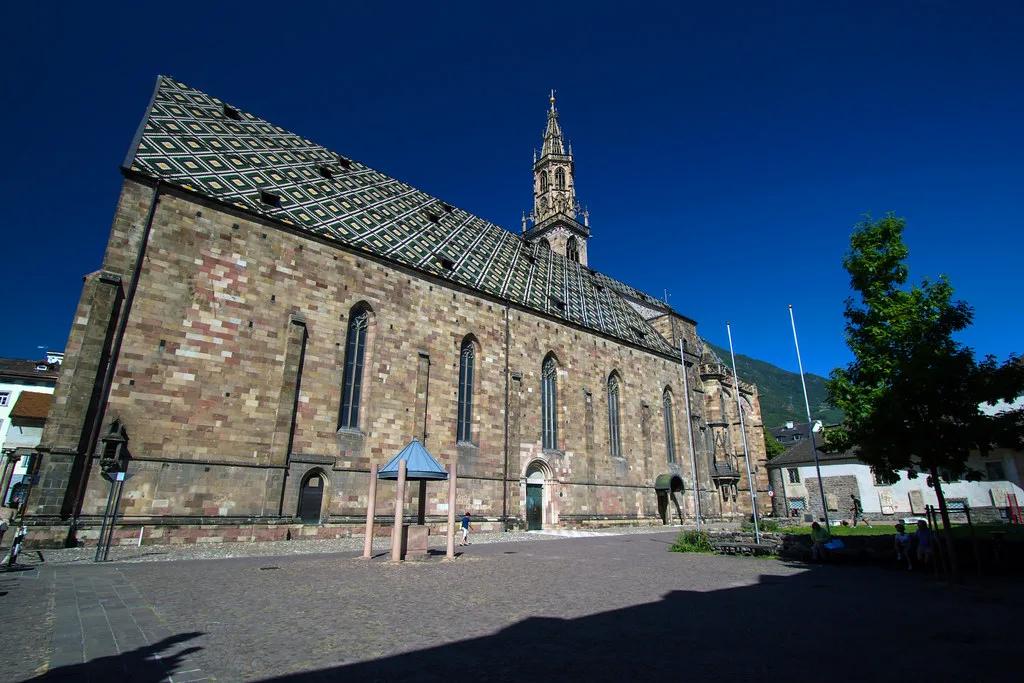
A few minutes from Bolzano's arcaded old town, the Chiesa dei Domenicani presents a sober facade on Piazza Domenicani that gives little away. Step inside and the scale changes: a three-aisled interior with the nave set slightly below street level, octagonal pillars, red-ribbed vaulting and medieval frescoes on the walls. For travellers working through the city's churches, this is an interior to slow down for rather than pass in a minute.
Plan the Dominican church as a suggested stop of roughly half an hour, long enough to read the nave walls, glance at the choir and walk the surrounding former convent buildings. Entry arrangements and opening hours are not published in the sources used here, so check the diocesan website before setting out. If the doors are open, the reward is a layered building that carries Gothic, Baroque and post-war reconstruction in the same space.
Where the Church Sits in Central Bolzano
The church stands on Piazza Domenicani in the heart of Bolzano, a short walk from the Portici arcades and the cathedral. That position makes it easy to fold into a morning of city sightseeing rather than a separate excursion. The tourism board's city pages frame Bolzano as a compact centre of porticoes, museums, castles and funicular rides into the surrounding mountains.
Inside, the nave floor sits a little lower than the street outside, so the first steps down come as a small surprise. Rows of octagonal pillars divide the three aisles, and the vault above is painted with symmetrical red ribs. Look up early in the visit, because the ceiling and the wall paintings compete for attention and the frescoes are easy to miss if you keep your eyes at head height.
Treat this as a working religious building first and a monument second. Keep voices low, avoid blocking the central aisle during services, and dress as you would for any city church in Italy. Photography and access rules are not confirmed in the sources here, so follow any notices at the entrance rather than assumptions carried from other churches.
Origins, 1272 to 1313
The Dominican order settled in Bolzano in 1272, close to the city walls and the Isarco river, and a first church dedicated to the Saviour is documented by 1276. Construction of the present church began around 1300, and by 1313 it had become the burial place of Anna of Bohemia, first wife of the Tyrolean ruler Henry. These dates matter when you look at the building, because the oldest surviving fabric belongs to that first Gothic campaign.
The monastery grew quickly in its early decades, gaining tax exemptions in 1287 and adding a sacristy, chapter house and cloister by around 1350. The monastic choir is described as one of the earliest examples of Gothic sacred architecture in the Tyrol, which helps explain why the interior feels taller and more slender than its modest exterior suggests. Read the east end of the church with that period in mind rather than judging it by later decorations alone.
The Cappella di San Giovanni
On the south side, the Cappella di San Giovanni was built by Giovannino de' Rossi, whose family came from Florence, and was completed in 1324. It is crowned by a tower and decorated with frescoes, and it forms a distinct pocket of the complex rather than an open part of the nave. When you enter the church, look for this chapel as a separate architectural unit attached to the main body.
The sources consulted here do not itemise the chapel's individual fresco subjects or their dates, so avoid guessing at them on site. Use the chapel to observe how a family-funded Gothic burial and devotional space was stitched onto a monastic church. If you want detail, ask at the church or check diocesan heritage material before your visit rather than relying on tour-shop summaries.
Reading the Frescoes on the Nave Walls
Several Gothic frescoes survive on the nave walls despite damage from time and war, and they are the main reason to linger. On the north wall, remnants of a twelve-part cycle show the life of Sant'Antonio Abate, alongside a large San Cristoforo dating from around 1500. Move slowly along that wall rather than trying to take in the whole surface at once.
The west wall carries a sequence that includes a Madonna in trono of 1379, the Volto Santo of Lucca and scenes of San Giorgio killing the dragon, painted in 1404 by Hans Stotzinger. Those dates span a little over two decades and show how the church was decorated in stages rather than in a single campaign. Compare the figure styles across the wall to see the shift for yourself.
Outside, above the main portal, a late Gothic rose window and a fresco of the Death of Mary attributed to Leonhard von Brixen face the piazza. Many visitors walk straight in, so step back across the square first and read the facade before crossing the threshold. It sets up the contrast between the plain exterior and the painted interior that defines the visit.
The Guercino Altarpiece of 1655
One of the church's most valuable works is a baroque altarpiece by Guercino, painted in 1655 and showing the miraculous appearance of Saint Dominic at Soriano. It was made for the former Cappella dei Mercanti and is now in an eastern wing of the complex, not in its original position. That relocation is the practical catch of a short visit: you have to know it exists to go looking for it.
The same eastern area holds sculptures of Faith and Hope by Domenico Tomezzoli and a Madonna and Child with Saint Anthony by Giuseppe Tortelli dated 1720. Together they make the eastern wing a compact lesson in how Counter-Reformation and later baroque art was layered onto a medieval church. Ask on arrival whether that section can be visited, since access arrangements are not confirmed here.
Baroque Reworking, Dissolution and Reconstruction
The interior visitors see today is a palimpsest. Stucco capitals were added to the late Gothic pillars in the seventeenth century, and the choir carries rococo stucco and painting over its tall Gothic proportions. In 1784 Emperor Joseph II dissolved the convent, and the buildings were later reused as a barracks, bakery, school and even a hospital during the First World War.
American bombing in 1944 destroyed the nave and tower, which were rebuilt by 1962, and further restoration was completed in 2008. Knowing this prevents a common misreading: some of what looks medieval is reconstruction, and the coherence of the space is partly a twentieth-century achievement. Look for the joins between restored surfaces and older masonry rather than expecting an untouched Gothic interior.
What the Former Convent Is Today
Part of the former convent now houses the Claudio Monteverdi Conservatory, home to the Ferruccio Busoni International Piano Competition, while another section serves as the Galleria Civica. That mixed use explains the everyday activity around the cloister buildings and why the complex is not simply a museum of the church. Treat those wings as working institutions and keep to areas that are clearly open to visitors.
Practical Visit Notes
Opening times, days, seasonal closures and any entry conditions for the church and the Cappella di San Giovanni are not confirmed by the sources used here, so do not plan around a remembered schedule. Check the diocesan site and the tourism office before travelling across town for it. The tourism board lists an information office on Piazza del Grano open Monday to Saturday from 10:00 to 18:00, closed on Sunday, and a second office on Via Alto Adige 60 open Monday to Friday from 9:00 to 17:00, closed at weekends and on public holidays.
Costs are likewise unconfirmed in this guide, so ask locally rather than assuming the church is free or ticketed. Etiquette is simpler: behave as in any active place of worship, keep phone calls outside, and leave time for other visitors who come to pray. If a service is in progress, wait or return later instead of walking the aisles.
Nearby in Central Bolzano
The Dominican church pairs naturally with the Portici arcades, the cathedral and the city museums, all within a walkable centre. The tourism board describes Bolzano as a gateway to the Dolomites, with funiculars lifting visitors to quiet viewpoints in minutes and a food culture that blends Tyrolean and Mediterranean cooking. Build the day around one indoor stop, one walk under the arcades and one ride upward.
If you want to go beyond the obvious sights, our guide to hidden gems in Bolzano covers overlooked corners that reward a slower afternoon. Our Bolzano Attractions hub collects sibling guides so you can compare churches, museums and castles before committing your time. Both are suggestions for shaping a route, not claims about crowds or access.
What to Prioritise
With limited time, give the nave walls your first ten minutes, then look for the Guercino altarpiece in the eastern wing and the Cappella di San Giovanni on the south side. The building rewards the visitor who knows that the baroque painting moved and that the Gothic surfaces are partly restored. Confirm opening arrangements before you go, then let the interior set the pace.
Afterwards, continue into the arcades or up a funicular for the mountain views that frame the city. For a wider shortlist of sights, start with the Bolzano Attractions collection and pick the next stop that fits your remaining hours.
Frequently Asked Questions
What can you see inside the Chiesa dei Domenicani in Bolzano?
Inside you find a three-aisled Gothic interior with the nave set slightly below street level, octagonal pillars and red-ribbed vaulting. The main draw is the medieval painting on the nave walls, plus baroque works in an eastern wing. The Cappella di San Giovanni is a separate chapel completed in 1324.
Which frescoes survive in the Dominican Church?
On the north wall are remnants of a twelve-part cycle of the life of Sant'Antonio Abate and a large San Cristoforo from around 1500. The west wall includes a Madonna in trono of 1379, the Volto Santo of Lucca and San Giorgio scenes painted in 1404 by Hans Stotzinger.
Where is the Guercino altarpiece in Bolzano?
The 1655 altarpiece showing Saint Dominic's appearance at Soriano was made for the former Cappella dei Mercanti but now stands in an eastern wing of the complex. Because it is not in its original chapel, visitors need to know about it in advance to find it.
Is the church the same as the former convent buildings?
No. The church is one part of a larger complex whose convent was dissolved in 1784. Part of the former convent now houses the Claudio Monteverdi Conservatory and another section the Galleria Civica, so those wings are working institutions rather than open museum space.
What should you know before visiting a working church in Bolzano?
Treat it as an active place of worship: keep voices low, dress modestly and avoid walking the aisles during a service. Opening times and photography rules are not confirmed here, so check the diocesan website and follow notices at the entrance.
How does the Chiesa dei Domenicani fit into a day in Bolzano?
It sits centrally, close to the Portici arcades and the cathedral, so it works as a suggested half-hour stop within a walking day. Pair it with one museum, a walk under the arcades and a funicular ride for mountain views.
Sources
Continue exploring
More guides you'll find useful