
Castel Roncolo Visitor Guide: Frescoes, Tours and Getting There
Plan a visit to Castel Roncolo, Bolzano's picture castle: the frescoed rooms, weekend tours, how to reach it on foot, ticket scope and a suggested visit length.
On this page
Castel Roncolo is the Italian name for Runkelstein Castle, the hilltop stronghold on Bolzano's northern edge that is often called the picture castle. What sets it apart is not its size but its painted walls: a cycle of secular frescoes that decorate the living rooms rather than a chapel. The castle has been open to visitors again since 2000, after extensive restoration, as the castle's own pages explain.
Treat a visit as a half-day outing that combines the climb, the painted rooms and the views back over the city. As a suggested plan rather than an official figure, allow around two hours at the castle itself, plus extra for getting up and down.
Why Castel Roncolo Is Called the Picture Castle
The castle stands on a rocky outcrop above the Talvera valley, and its nickname comes from the wall paintings that cover several interior rooms. The official site describes these frescoes as the most important and best-preserved secular cycle in the Alpine region, which is why the castle deserves a dedicated stop rather than a passing glance.
The two names confuse plenty of visitors. Castel Roncolo is the Italian form you will see on many maps, while Schloss Runkelstein is the German name used on much local signage. Bolzano is bilingual, so knowing both makes it easier to follow directions and to search for the castle online.
The Frescoed Rooms Explained
The painted rooms are concentrated in two buildings: the Westpalas and the Summerhouse. In the Westpalas, the frescoes focus on courtly love and aristocratic daily life, with scenes of dress and noble pastimes that give a picture of the late medieval courtly world.
The Summerhouse, built around 1400, holds a different programme: figures from northern legends and the Arthurian cycle, including scenes from the Tristan and Isolde story. Seeing the two buildings together shows how a wealthy family used painting to project both courtly sophistication and literary knowledge.
Some of the earliest painted work on the site dates from 1390 and can be seen in the castle chapel rather than in the main residential rooms, according to a visitor tip on the Komoot page for the castle. That is a user-contributed note rather than an official statement, so treat it as an orientation hint and check the room layout on arrival.
A Short History That Explains the Art
The Wangen brothers, Friedrich and Beral, began building the castle from 1237. Over the following centuries it passed through many hands, and in 1520 a gunpowder explosion damaged its gate and central tower, leaving a mark on the structure you can still read today.
The decisive moment for the art came in 1385, when the wealthy Bolzano merchant brothers Niklaus and Franz Vintler bought the castle and had it expanded and painted. In 1893 Emperor Franz Joseph gave the castle to the city of Bolzano, which still owns it.
After the Vintler era the castle declined: a lightning strike in 1672 damaged the east side, and the Summerhouse partially collapsed in 1868. Restoration between 1883 and 1888 rebuilt the keep and stabilised the buildings, and the castle reopened to visitors only in 2000 after further work.
Getting There on Foot
The castle is a few kilometres from Bolzano's centre and, despite the short distance, feels removed once you are on the wooded path. One described approach is to walk from the Talvera river meadows and promenade, partly on a managed path and partly on paved road, with the last stretch to the entrance climbing steadily.
Because the final approach is uphill, good shoes matter. A stroll along the riverside walk on the way back down is an easy way to round off the visit, and connecting the castle with other paths above the city makes for a fuller afternoon outdoors.
If you would rather build the castle into a longer walk, the paths above the city can be combined with the castle approach. Our guide to hidden gems in Bolzano lists additional quieter corners in and around town that pair well with the same afternoon.
Getting There Without Walking
Some older travel accounts mention a shuttle from Walther Square to the castle, but that claim comes from third-party pages written years ago and cannot be relied on for a current trip. Rather than assume a service runs, check the castle's own information pages and the Bolzano tourist office site for the transport options in place when you travel.
If you are staying in the centre, walking is a reasonable option; if mobility is limited, ask the tourist office directly which alternatives exist before you commit to the climb. No source here confirms current bus lines, timetables or accessible routes, so treat any specific transport detail as something to verify.
Tickets and What They Cover
Admission to the castle interiors gives access to the rooms where the frescoes are displayed. An older travel piece from 2016 quoted a full price for the interior and its exhibitions, but that figure is a historical anecdote, not a current tariff, and prices should never be assumed from an old article.
The path and the views are part of the setting rather than a separate attraction, and the frescoed interiors are the paid element to budget for. Check the official information pages for current ticket categories, including any reductions, before you set out rather than relying on this guide for prices.
Guided Tours and Languages
Guided tours are offered at weekends in German and Italian, and groups can reserve tours in advance on request. That means you do not necessarily need to book for a normal weekend visit, but you should not assume an English-language tour will run on the day you arrive.
School groups have a separate offering: educational tours adapted to different ages, using the wall paintings to explore themes such as medieval food, fashion, games and mythical creatures. For anyone travelling with children, these themed routes can make the painted rooms more accessible than a straight art-history walk-through.
If a guided tour in your language is essential, contact the castle before your trip and ask which languages are scheduled for your dates. Group tours are bookable by prior arrangement, but availability is not guaranteed.
Opening Seasons and Closures
This guide does not list current opening hours or annual closure periods because those details change from year to year. The castle's own site is the reliable place to confirm them, and you should check it shortly before your visit, particularly if you are travelling in winter or early spring.
Do not assume the castle is open every day of the year just because Bolzano's city museums keep regular hours. Treat the castle as a seasonal attraction until you have confirmed its schedule for your dates, and build flexibility into your day in case the hours do not match your plan.
How Long to Allow
As a suggested rule rather than an official figure, allow around two hours for the castle itself, split between the painted rooms, the courtyard and the views back over Bolzano. The castle is a compact complex, so an unhurried visitor can cover the main painted buildings without rushing.
If you are walking up from the centre, budget extra time for the climb in both directions, and consider combining the visit with the riverside path on the way back. A relaxed half-day works better than a tight schedule here.
Nearby Sights to Combine
Bolzano has a dense cluster of castles and museums within easy reach of the centre. Maretsch Castle sits close to the old town and is a private building generally not open to visitors, while Sigmundskron Castle houses the Messner Mountain Museum Firmian.
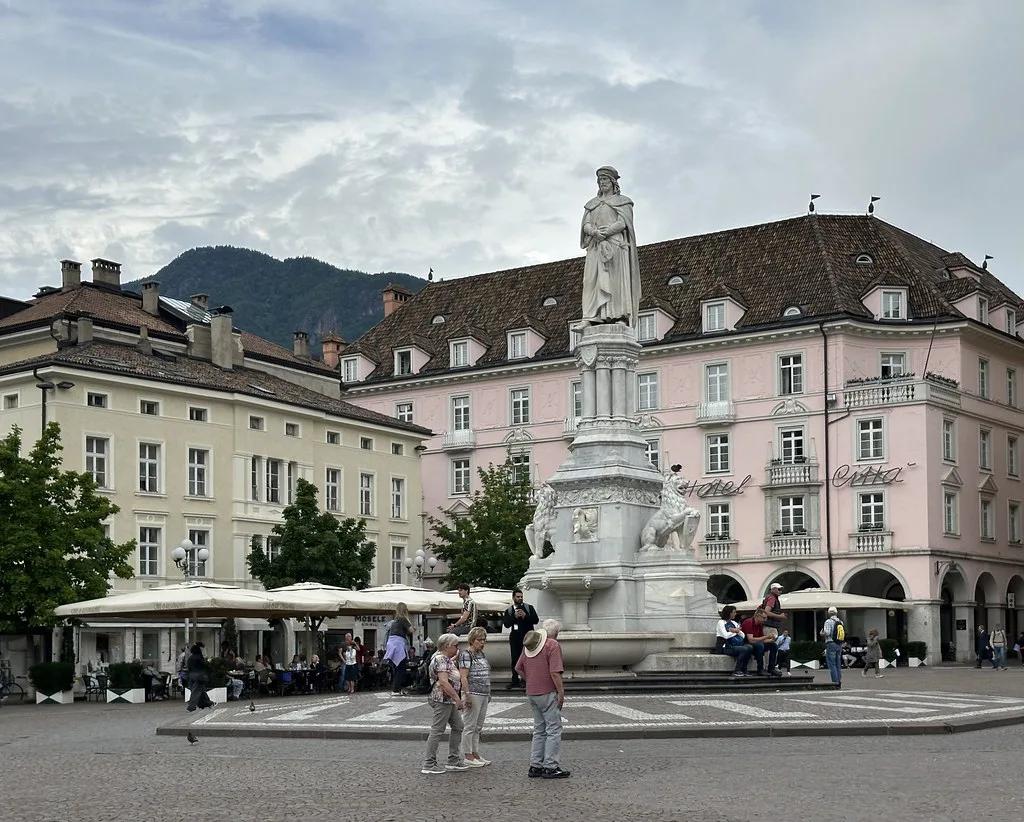
In the historic centre, the South Tyrol Museum of Archaeology displays Ötzi the Iceman and pairs well with a castle morning, but it is a separate ticketed museum with its own hours. The cathedral by Walther Square is a landmark worth a stop between the two, and our Bolzano Attractions hub is a good place to compare which sights deserve a full visit and which are viewpoints or exterior-only stops.
Practical Pitfalls
Wear shoes with grip for the climb and the uneven surfaces inside the castle, and carry water if you are walking up in warmer months. Check the language of any weekend tour before you plan your day around it, since German and Italian are the published options and English is not guaranteed.
Do not rely on old blog posts for shuttle services, prices or opening dates, however detailed they look. Verify hours, ticket scope and transport on the official site first, and use third-party sources only for context and background rather than for anything you need to book.
Plan Your Bolzano Castle Visit
Castel Roncolo rewards a little preparation more than most attractions: check its current schedule and ticket scope, decide whether you will walk or ride up, and pick a day when a weekend guided tour fits your language. The painted rooms themselves are the reason to come, and they merit unhurried time.
Use this guide as a starting point and confirm the changeable details on the official site before you travel. If you are building a wider Bolzano itinerary, the attractions hub and the city's quieter corners will help you balance frescoes, museums and walks across your stay. For related planning, see Castel Firmiano & MMM Firmian: A Practical Visitor Guide.
Frequently Asked Questions
Is Castel Roncolo worth visiting in Bolzano?
Yes, if you are interested in medieval art and history. The castle holds one of the most important cycles of secular frescoes in the Alpine region, painted for the Vintler family around 1400, and the painted rooms in the Westpalas and Summerhouse are the main reason to make the climb. Visitors with little interest in medieval wall painting should weigh the uphill approach against what they will see.
What can you see inside Castel Roncolo?
The interior focuses on two painted buildings. The Westpalas shows courtly love and aristocratic daily life, while the Summerhouse, built around 1400, depicts figures from northern legends and the Arthurian cycle, including Tristan and Isolde. Earlier painted work can also be seen in the castle chapel, according to a visitor tip, so check the room layout on arrival.
Are guided tours at Castel Roncolo in English?
The castle advertises weekend guided tours in German and Italian, and group tours can be reserved in advance. English is not listed as a standard language on the official site, so if an English-language tour is essential, contact the castle before your trip and confirm what can be arranged. If a group tour is essential, expect availability to be limited and book ahead.
How do you get to Castel Roncolo from Bolzano?
The most straightforward approach described in travel accounts is on foot from the Talvera river meadows and promenade, partly on managed paths and partly on paved road, with a steady climb on the final stretch. Some older accounts mention a shuttle, but that cannot be treated as current. Check the castle's own pages and the Bolzano tourist office for transport options before you travel.
Do you need to book Castel Roncolo in advance?
For a normal visit, no advance booking is required beyond buying admission, and the opening hours should be checked on the official site. Group tours can be reserved in advance by arrangement, but availability is not guaranteed. Weekend guided tours run in German and Italian, so check the schedule if you want to join one.
Is Castel Roncolo open year-round?
This guide does not give current opening hours or seasonal closure dates because they change. Confirm the schedule on the castle's own website shortly before your visit, especially in winter and early spring, and avoid assuming the castle follows the same calendar as Bolzano's city museums.
How long does a visit to Castel Roncolo take?
Allow roughly two hours as a suggested figure, covering the frescoed rooms, the courtyard and the views. Add time for a guided tour if you join one, and add extra for the uphill walk from the centre in both directions. This is a planning suggestion rather than an official duration.
Sources
Continue exploring
More guides you'll find useful





