
Orvieto with Kids: Underground Caves, Wells and Family Walks
Plan Orvieto with kids using the underground tour, St. Patrick's Well and easy stroller walks, with practical tips on timing, stairs and family food.
On this page
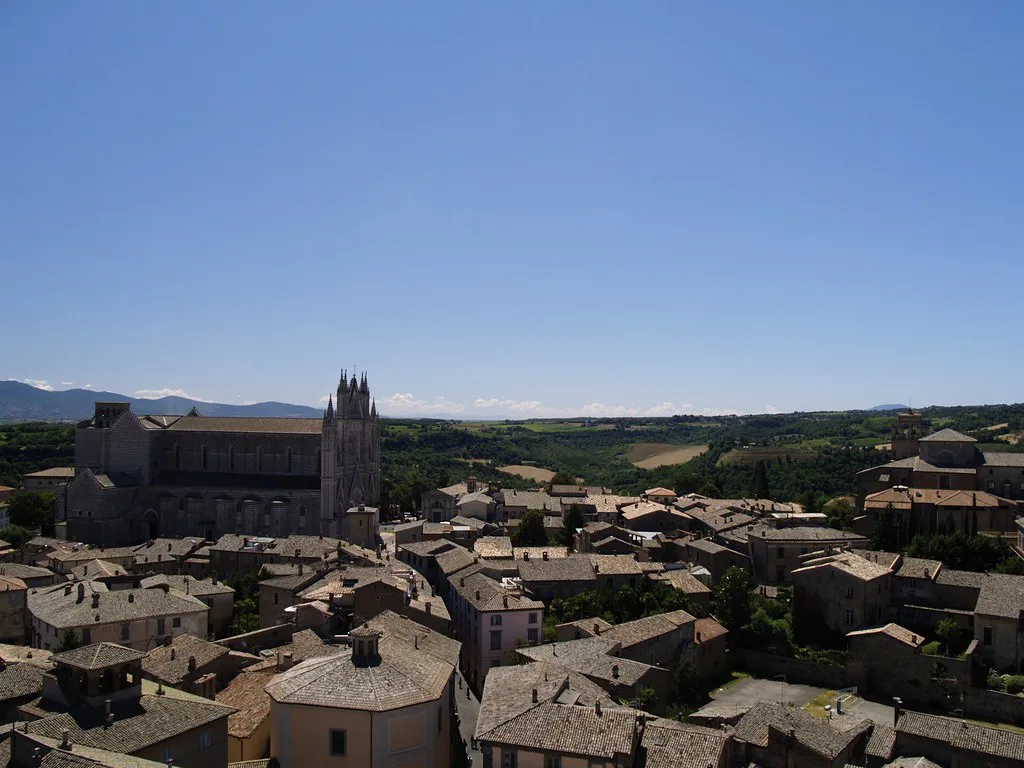
Orvieto sits on a tufa plateau above the Paglia valley, and that geography shapes everything a family does here. Most of the historic centre is compact and closed to through traffic, so you walk between sights rather than driving, but the same tufa streets are uneven and the star attractions involve stairs and tunnels. The result is a town that suits children well if you alternate underground stops with open-air play and accept that you will not see everything in one push.
A useful anchor is the Orvieto Underground tour, which the operator describes as a guided route of roughly one hour through cavities dug over about 2,500 years. Departures leave from Piazza Duomo 23, and the operator lists daily slots at 11:00, 12:15, 16:00 and 17:15, while advising phone or email booking for weekends and high season. Treat those published times as what the company currently advertises and confirm the day before you travel.
Why Orvieto Works Well for Families
The town gives children a clear loop of contrasting experiences within a short radius: a funicular ride up, a deep well, an underground maze, a striped cathedral and playgrounds with valley views. Because the centre is largely pedestrian, parents spend less time managing traffic than in larger Italian cities. The trade-off is vertical: stairs, ramps and low tunnels appear at almost every signature sight, so energy management matters more than distance.
Orvieto is also easy to combine with the rest of Umbria, and family travel writers treat it as a manageable day trip from Rome or Florence. That makes it a good first stop rather than an exhausting finale. If you are building an itinerary around lesser-known corners as well as headline sights, our guide to hidden gems in Orvieto pairs naturally with a family day here.
Getting Up to the Historic Centre Without the Stress
Many families park in the large free lot at Orvieto Scalo at the base of the hill and ride the funicular up rather than hunting for pay parking in the centre. Tickets are bought in the café at the edge of the lot, and the cable car itself is a short ride with a large front window that children tend to claim. One family guide notes the funicular leaves frequently and the trip takes only a few minutes, but frequency and operating hours should be checked locally on the day.
The base lot is free, which is the main argument for this route, but the funicular drops you near Piazza Cahen rather than the cathedral square. From there you either walk into the centre or take the city minibus that departs near the funicular station. Strollers fold onto the funicular and bus, and the walk through the centre is fairly flat once you are up top, though the cobblestones are bumpy in places.
Orvieto Underground with Children
The guided underground visit is the headline child-pleaser because it explains what the caves were for: storing and pressing olive oil, raising pigeons and sheltering from attack. The operator describes the route as easy and lasting about an hour, which matches a young child's attention span better than a long museum visit. Book by phone or email ahead of weekends and high season, as the company itself recommends.
Tours are not designed for children, so some kids drift during the explanations; the fix is to give them a job, such as spotting niches cut into the walls or guessing what each chamber stored. English-language visits are available according to family accounts, but the operator does not publish a fixed English timetable, so specify your language when booking. Strollers can be left outside the cave entrance in a gated area, and you return the same way to collect them.
If your child is restless or you have already paid for enough tickets, the operator's own network extends beyond Orvieto: the Patrimoni Condivisi agreement links Orvieto Underground with sites such as Narni Sotterranea and Orte Sotterranea and offers reciprocal ticket discounts. That is worth knowing if you are touring Umbria for a week rather than a day. Check the current partner list and discount terms on the operator's site before relying on it.
Pozzo della Cava and the Labirinto di Adriano: Self-Paced Alternatives
When a guided hour feels like too much, Pozzo della Cava is the practical alternative. It is a privately run underground museum you explore at your own speed, with written explanations rather than a guide's narration, and family writers recommend it as a good choice for children who prefer to move on quickly. You pay at the entrance there, so check the current ticket price on site rather than budgeting from an old figure.
Local tourism editors group the underground sights for children as Orvieto Underground, Pozzo della Cava and the Labirinto di Adriano, which gives you a menu to pick from rather than a checklist to complete. All three are underground, so in hot weather they double as shade. Confirm opening days directly with each site, since small independent museums vary their hours by season.
St. Patrick's Well: Stairs, Slippery Steps and Small Children
St. Patrick's Well sits next to the top of the funicular, which makes it the natural first stop before small legs tire. The double helix of stairways lets visitors descend on one side and come up the other, and children generally find the spiral thrilling. The steps are wide but become damp and slippery toward the bottom, so hold hands and discourage running.
Parents of babies should think carefully: one family account judges the well dark, not interesting for infants and awkward with a carrier, and warns against carrying a baby in your arms on the stairs. A sensible split is for one adult to descend with older children while the other waits above with the baby and stroller, since strollers cannot go down. Check the well's official visitor rules before you go for any current restrictions.
The Duomo with Children
The cathedral facade is an outdoor lesson that costs nothing: hunt for snakes and dragons in the stone reliefs, trace Bible scenes in the mosaics and name the four evangelist symbols in bronze. Inside, the Chapel of the Madonna di San Brizio holds Luca Signorelli's frescoes, which include skeletons and figures rising from the dead; preview them before deciding how much to explain. Dress rules apply at Italian churches, so shoulders and knees should be covered.
Behind the cathedral, the DOMO Museum lets children see mosaics up close, and the cathedral's underground area is a short two-minute loop that suits short attention spans. These are separate ticketed spaces, so decide as a family whether the interior and museum are worth it or whether the facade and piazza are enough. Our wider guide to the Duomo di Orvieto explains what each part contains before you commit.
Playgrounds, Gardens and the Torre del Moro Climb
The Giardini comunali near Piazza Cahen sit inside the walls of the Fortezza Albornoz, with views over the Paglia valley and a small play area for younger children. Nearby, a quieter shaded playground near the walls is where local families tend to gather, and both have water fountains. In spring and summer you can also walk part of the Anello della Rupe, the ring path around the tufa cliff, from the old Porta Soliana.
Older children with energy left should climb the Torre del Moro clock tower, where a lift covers the first stretch and the old clock mechanism is visible on the way up. The reward is a 360-degree view over the town and the Umbrian countryside. Strollers can be left at the ticket area inside the building, and there are free toilets there, which makes the tower a convenient mid-afternoon pause.
The tower is one of several vertical stops in a small area, and it is worth deciding in advance whether the climb fits your family's energy budget. Our overview of Orvieto Attractions lets you compare the tower, the wells and the underground sights side by side before committing.
Half-Day or Full-Day: A Realistic Plan
For a half day, ride the funicular up, descend St. Patrick's Well while everyone is fresh, walk into the centre for the Duomo facade, then finish with the underground tour or Pozzo della Cava before heading back down. That is three ticketed stops at most and leaves room for gelato. Trying to add the tower and both playgrounds usually pushes young children past their limit by mid-afternoon.
With a full day, keep the morning for the well and the cathedral, break for lunch and a playground, then take a later underground slot and climb the tower in the late afternoon light. If the day is hot, put the underground and well in the middle of the day and save the shaded playground and gardens for the cooler edges. The distances in the centre are short enough that this reshuffling costs little walking.
Strollers, Cobblestones and Toilet Stops
Orvieto is more stroller-friendly than its cliff-top setting suggests: the centre is fairly flat, and although the cobblestones are bumpy they are generally passable. The limits are at specific sights rather than the streets, with strollers left outside the underground entrance and at the tower's ticket area. Do not assume every tufa lane or stairway has a ramp, and check the route to your hotel before booking if you are carrying luggage and a buggy.
Plan toilets around the sights you are visiting rather than expecting to find them on every corner. Family guides point to facilities at the bottom of the funicular, in Piazza del Duomo to the right of the cathedral, in the public gardens and in the Torre del Moro building. Public bathrooms typically cost a small fee, so carry coins, and nappy supplies are available at the PAM grocery store and most pharmacies.
Family Food in Orvieto: Keep It Simple
The easiest family pattern is a picnic assembled from the Piazza del Popolo outdoor market, where children can help choose fruit, bread and cheese and practise a little Italian at the stall. Orvieto's pedestrian centre makes eating outdoors straightforward, and the gardens and playgrounds give you somewhere to sit. Market days and hours vary, so check locally rather than planning a whole meal around it.
For sit-down meals, look for trattorias with simple pasta and Umbrian staples rather than chasing a particular recommendation, and eat slightly earlier than Italian families to avoid the peak. Gelato is the reliable reward after a stair-heavy morning; one family suggests Gelateria Pasqualetti on Via del Duomo as a favourite, which is a suggestion to check rather than an endorsement. Carry water bottles and refill at the playground fountains.
What to Skip When Children Are Young or the Day Is Hot
With toddlers, drop the tower climb and treat the cathedral interior as optional, focusing on the facade, the funicular and one underground stop. Skip the deeper well descent entirely if you are carrying a baby, and substitute the shaded playground. If the day is very hot, reverse the order: do the underground in the afternoon heat and keep the morning for open-air viewpoints.
Rain changes the calculation: the underground caves and the well offer shelter, but slippery steps become more hazardous and the playgrounds are out. Keep a short indoor list and check each site's opening before setting out, because small museums close on varying days. Our full set of Orvieto Attractions guides helps you match the weather forecast to the right stop.
Combining Orvieto with Nearby Family Day Trips
Orvieto works best as the cultured half of a family day, paired with something outdoors nearby. The cliff-top village of Civita di Bagnoregio is a short drive away and the walk across the footbridge is itself an adventure for older children. Families based in Umbria for several days can also loop in the parks and picnic areas outside town, which local tourism editors list as easy half-day outings.
Wherever you extend the trip, confirm current opening days and any family ticket options directly with each site before you travel, since small Umbrian attractions adjust hours by season. Book the Orvieto Underground slot early for weekends and school holidays, and build in a slow hour somewhere green. That combination, one underground tour plus one well plus one playground, is the version most families actually remember. For related planning, see Necropoli del Crocifisso del Tufo, Orvieto: A Slow Etruscan Walk.
Frequently Asked Questions
How many hours do you need in Orvieto with kids?
A half day covers the funicular, St. Patrick's Well, the cathedral facade and one underground visit. A full day adds the tower climb, a playground break and a relaxed lunch. The town is compact enough that walking between stops is quick, so the constraint is energy rather than distance.
Is Orvieto Underground suitable for young children?
The operator describes the route as easy and about an hour long, which suits most school-age children. The content is not written for children, so give them a spotting task to keep them engaged. Toddlers may find the tunnels dull, in which case the self-paced Pozzo della Cava can be the better fit.
Can you take a stroller to Orvieto Underground and St. Patrick's Well?
Strollers can be left in a gated area outside the underground entrance and collected on the way back. They cannot go down St. Patrick's Well, and one adult should wait above with the baby and buggy. Elsewhere in the centre, cobblestones are bumpy but generally passable.
Is St. Patrick's Well safe for toddlers?
The steps are wide but become damp and slippery near the bottom, so hold hands and do not let children run. Family accounts advise against carrying a baby down in your arms and suggest one adult waits above. Check the well's current visitor rules on arrival for any restrictions.
What can families do in Orvieto on a rainy or very hot day?
In heat, put the underground tour and the well in the middle of the day, since both are shaded and cool. In rain, the caves and cathedral interiors are the sensible choices, but slippery well steps need extra care. Always confirm opening days directly with each site, as small museums vary by season.
Sources
Continue exploring
More guides you'll find useful





