
Trieste Day Trips: Miramare, Duino, Muggia and the Carso
Choosing between day trips from Trieste: Miramare and Barcola, Duino's Rilke cliff path, Muggia's small centre and the Carso plateau, with what to verify.
On this page
Trieste works unusually well as an excursion base: the Habsburg castle of Miramare sits just along the coast, the cliffs of Duino rise beyond it, the small Istrian town of Muggia lies across the gulf, and the Carso plateau climbs directly behind the city. The city's tourism portal organises these into museums, castles and itineraries, which makes it a sensible first stop when you are deciding what is actually currently open and visitable.
These four days out are not interchangeable. One is built around a ticketed castle interior and a coastal promenade, one around a clifftop path and a second castle, one around wandering a compact town centre, and one around a plateau where caves, nature reserves and farm restaurants depend on schedules and reservations. Choosing the rhythm that fits your energy and the weather matters far more than ticking off all four.
How to Choose: Castle, Cliff Path, Small Town or Plateau
Treat Miramare as the coastal-culture day. The residence, its gardens and the seafront at Barcola form a natural half-day or relaxed full day. The essential planning distinction is between the outdoor spaces, which are why many people come, and the museum interiors, which are a separate ticketed visit. Do not assume one admission covers the castle, the gardens and every collection inside the complex. For wider planning, see Miramare Castle Visitor Guide.
Duino deliberately trades the urban setting for cliff scenery and a wind-exposed path toward Sistiana. It rewards people who would rather walk a coastal trail than queue for museum rooms, but it is also the outing most exposed to weather. Muggia is the opposite: a compact centre and marina that suits a slow, low-commitment wander rather than a checklist.
The Carso is the day that most depends on planning. Its appeal lies in the plateau landscape around Val Rosandra, in the osmize and agriturismi where the surrounding food and wine culture is on show, and in winery visits that usually need arranging in advance rather than turning up. If your ideal day involves reservations and an early start, pick the Carso instead of the coast.
Castello di Miramare and the Barcola Promenade
Miramare is the excursion most visitors already know they want: a nineteenth-century Habsburg residence set on a promontory with landscaped grounds and the sea on three sides. Budget roughly a half day if you want the grounds and the exterior, and longer if you plan to go inside; that is a suggested pace, not an official visiting time. The natural companion is the Barcola promenade, a long seaside walk back toward the city that locals use for strolling and swimming in season. For wider planning, see Miramare Park visitor guide.
Before you go, check the castle's own published information for current ticket scope, opening days and any seasonal variation. The city's tourism portal groups current museum, castle and itinerary listings, but listings carry dates, so check the dates attached to each one rather than the headline alone. A third-party itinerary is not a reliable substitute for the operator's page.
Grotta Gigante and the Carso Underground
Grotta Gigante is one of the show caves of the Carso and a genuinely different kind of stop from the coastal castles: you visit a vast subterranean space as part of an organised tour rather than wandering freely. That means your visit is tied to a departure time, so a cave trip structures the rest of your day around it.
Confirm tour times and whether you should book ahead directly with the cave operator before you build an itinerary around it. The same caution applies to the site's opening calendar, which is unlikely to be fixed year-round in the way a town square is. Treat any timetable you find on a travel blog as indicative and verify it at source.
Duino: Castle and the Rilke Cliff Path
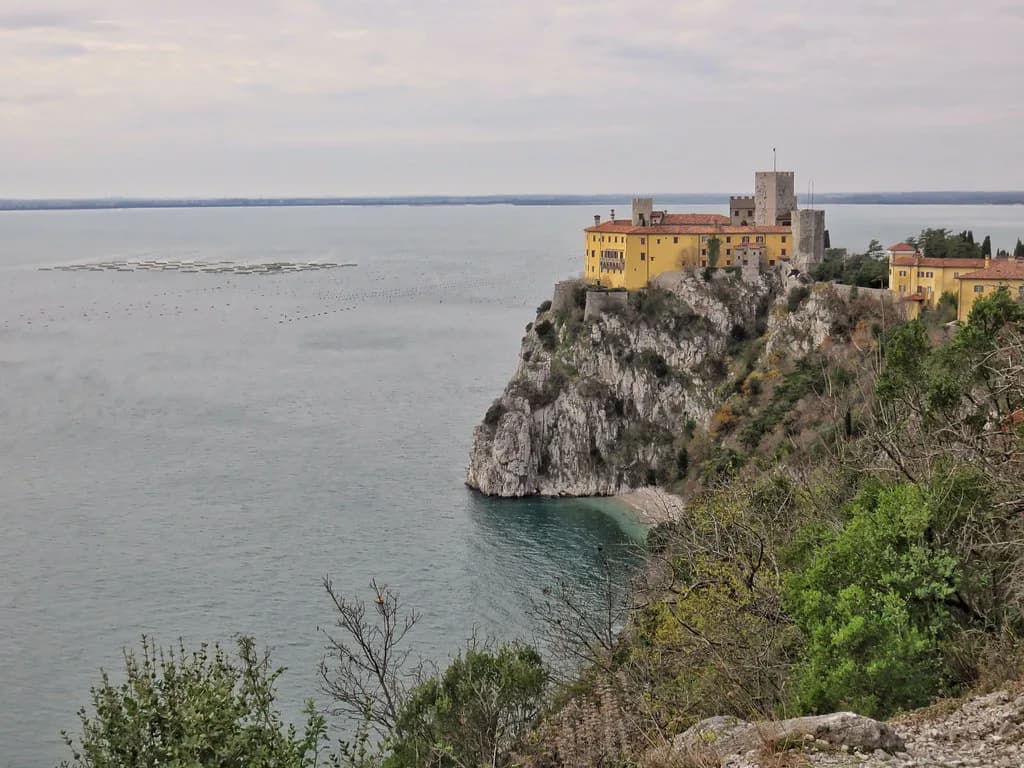
Duino pairs a castle perched above the sea with the Sentiero Rilke, a clifftop path running toward Sistiana with wide views over the Gulf of Trieste. The walk is the main event for many people, and it is a one-way stretch of roughly an hour to an hour and a half at an easy-to-moderate pace, so plan how you will return rather than assuming a loop.
This is the outing where wind matters. The path is exposed, and a blustery day on the cliffs is a very different experience from a calm one, so check the forecast and dress for it. Sturdy shoes are worth the space in your bag, and a windproof layer makes the walk far more comfortable outside high summer.
Castle opening times at Duino vary seasonally, so check with the castle itself rather than relying on a guidebook. If the castle and the path are both on your list, start early enough that a closed interior does not derail the day, and keep the walk as the flexible part of the plan.
Muggia and the Istrian Shore
Muggia is a small Istrian town with a compact historic centre, Venetian-influenced architecture and a marina, and it makes a gentle contrast to Trieste's grand squares. It suits a slow half-day of narrow lanes, waterfront walking and a long lunch rather than a schedule of sights. Its scale is the point.
Getting there is a question to resolve with current information rather than assumption: ferry services are seasonal and operator-dependent, and road or public transport options change. Check the city tourism portal's practical transport pages and the operator's own timetable before deciding whether to go by sea or land, and confirm whether a crossing is running on your date.
Piran in Slovenia is the tempting extension, but treat it as a separate cross-border trip rather than an add-on to a Muggia morning. Border crossings can involve queues, and the practicalities of taking a car or public transport across are best confirmed with current operator and official information close to your travel date. If you want a relaxed day, Muggia alone is enough.
The Carso Plateau: Val Rosandra, Osmize and Wineries
Behind Trieste the Carso rises as a limestone plateau of villages, vineyards, gorges and farm restaurants. The Val Rosandra nature reserve offers hiking in a dramatic setting, while the plateau's osmize and agriturismi are where the area's food and wine culture is most accessible. This is walking-and-eating country rather than monument country.
Winery tastings on the Carso generally need to be arranged in advance, and small producers may have limited capacity, so contact them directly rather than turning up. The same goes for agriturismi at busy times of year. Local wines such as Terrano and Vitovska are the reason to make the effort.
A car makes the plateau far more flexible, since sights are spread out and rural buses are limited. If you are relying on public transport, pick one base and build the day around a single walk plus a meal rather than trying to cover the whole plateau. Either way, confirm opening arrangements with each farm or winery before you travel.
Practicalities to Verify, Not Assume
Transport is the single detail most often wrong in online itineraries. Rather than relying on quoted bus numbers or journey times, use the tourism portal's information on getting around and arriving, then confirm times with the operator. The portal also describes services such as the hop-on hop-off bus, which is one way to see the main sights without driving.
Tickets, opening hours and closures all change, and a plan from a previous season proves nothing about today. For any site where you plan to pay an entry fee, check the official site or the operator's page in the days before your visit. For city-run museums and civic sites, the Comune di Trieste is the source to trust over secondary guides.
The city tourism portal also publishes an events calendar, but listings carry dates, and an expired event should be treated as history rather than something to plan around. Check the dates attached to each listing rather than the headline alone, and look for what is running during your stay.
Pairing Excursions: Realistic One-Day and Two-Day Plans
A sensible single day combines Miramare with the Barcola promenade, keeping everything on the coast and avoiding a second transfer. That gives you a castle, gardens and a seaside walk without rushing, and leaves the evening free for the city. Adding Duino to the same day is possible only if you start early and accept a shorter visit at each stop.
With two days, give one to the coast and one to the plateau, or swap the plateau for Duino if you prefer cliffs to caves. Muggia works best as a slower half-day folded into a city day rather than a full excursion. Our Trieste 2-Day Itinerary can help you see how the pieces fit around the city's own sights.
If you have a third day, the Carso deserves it: a morning walk in Val Rosandra and a long lunch at an agriturismo is a fuller experience than squeezing the plateau into an afternoon. The city itself rewards time too, so keep a day free for the centre and its cafés. For wider planning, see A Practical 3-Day Trieste Itinerary.
Plan Your Visit
Trieste's advantage as a base is that these four outings are genuinely different from one another, so you can match the day to your energy and the weather. Pick a coastal culture day at Miramare, a cliff walk at Duino, a gentle town wander at Muggia, or a reserved-in-advance food and walking day on the Carso, and confirm the specifics that matter with the operator before you go.
Back in the city, the smaller pleasures are worth leaving time for, from the Canal Grande di Trieste to the historic cafés. Our wider guide to the hidden gems in Trieste covers the corners visitors most often miss between excursions.
Frequently Asked Questions
Is Miramare Castle worth it?
For most visitors the promontory setting, the gardens and the sea views are the attraction, and the castle interior is an added ticketed layer. Decide in advance whether you want the grounds alone or the museum rooms too, since they are separate. Check the castle's own current information for what each ticket covers before you travel.
How many days do you need in Trieste?
Two full days let you see the city centre and add one excursion, such as Miramare with the Barcola promenade. Three or four days allow a second outing to Duino or the Carso without rushing. Beyond that, you can add Muggia as a slower half-day and still keep time for the city's cafés and museums.
What not to miss in Trieste, Italy?
The waterfront squares and historic cafés of the centre, the San Giusto hill with its cathedral and castle, and at least one excursion outside the city. Miramare is the obvious first choice, while the Carso plateau offers a different day of walking and food. Confirm opening days and tickets for interior visits before you go.
Can you visit Miramare and Duino in one day?
It is possible but tight, since both require travel along the coast and each rewards a proper visit. Starting early and accepting a shorter stop at one site is the realistic approach. Check transport connections and opening arrangements for both before committing, because a closed interior or a sparse timetable can undermine the plan.
Do you need a car for the Carso?
A car makes the Carso much more flexible because sights, villages and wineries are spread across the plateau. Without one, choose a single base with a walk and a meal rather than trying to cover everything. Confirm any bus times with the operator and check that your chosen farm or winery is open and expecting you.
Do you need to book Grotta Gigante in advance?
Visits to Grotta Gigante are organised tours tied to departure times, so it is worth contacting the cave operator directly about current tour times and whether advance booking is recommended. Do not rely on a travel blog's timetable, which may reflect a previous season. Build the rest of your Carso day around the time you secure.
Sources
Continue exploring
More guides you'll find useful





