
Trieste 2-Day Itinerary: City Center, Miramare & the Carso
Plan two days in Trieste: day one in Piazza Unità and the coffee district, day two at Miramare and the Carso. Walkable routes, food ideas and transit tips.
On this page
Trieste rewards a short stay because its main sights sit close together: the waterfront square, the canal district and the hilltop old town can all be reached on foot across a single day. The city's tourism portal presents Trieste as a place of sea, coffee and Central European layers, and it is the sensible place to confirm what is currently open before you travel.
Day one stays in the center, moving from Piazza Unità d'Italia through Borgo Teresiano to San Giusto hill and the old town lanes. Day two heads out to Miramare Castle and then either the Karst plateau around Opicina or the Grotta Gigante cave, depending on weather and what is running. Keeping the second day loose lets you swap it with day one if the bora wind or heavy rain makes a seafront or hill walk uncomfortable.
Why Two Days Works for Trieste
Trieste is a port city where Italian, Austro-Hungarian and Slovenian influences meet, and that mixture shows up in its squares, cafés and food. Lonely Planet describes it as a melting pot of European influences, which is a fair summary of why the center feels different from other Italian cities. The compact scale means you do not spend the first day in transit between sights; most of day one is a continuous walk.
Treat the plan as a shape rather than a schedule. Build day one around the center so it survives a delayed train or a late start, and keep day two for Miramare plus one Karst-side stop. If you find you want more time in the museums and cafés, the honest fix is a third day rather than squeezing Miramare into an evening.
Before You Go: What to Book and What to Check
Book the fixed pieces first: rail or flight arrival, accommodation and any castle or cave visit that requires a timed entry. Everything else, including which Karst-side option you take, can be decided the evening before once you have seen the forecast. The tourism portal groups practical information on getting around, maps and transport under its Organizza section, so start there rather than relying on outdated blog posts.
Confirm current opening days, ticket prices and tour times directly with each site or the official tourism office before you commit, because these change by season and are not published consistently across third-party pages. The same applies to public transport: check whether the Opicina tram is running and what the fare is with the operator, not in an itinerary written years ago. Carry a card as a backup for payment, but buy tickets where the local guidance says to.
Day 1 Morning: Piazza Unità d'Italia and the Waterfront
Start at Piazza Unità d'Italia, the broad square that opens directly onto the gulf, and walk its edge to feel how the city faces the sea. From there, take the Molo Audace pier out into the water for a look back at the palace facades, then follow the waterfront promenade in whichever direction suits your pace. This orientation walk costs nothing and sets the geography of the rest of the day.
Keep the morning unhurried. The square is the busiest part of the center, so arriving early gives you clearer views and easier photography. If cruise ships are in port, expect crowds to build through the late morning; that is the moment to slip into the side streets toward the canal rather than waiting for the square to empty.
Day 1 Midday: Canal Grande, Borgo Teresiano and a Coffee Stop
Walk inland to the Canal Grande and the Borgo Teresiano grid behind it, where the streets were laid out for the city's merchant era and now hold shops, cafés and offices. The canal area is one of the more photogenic corners of the center and a good place to slow down before lunch. Historic cafés such as Caffè degli Specchi and Antico Caffè San Marco appear on many suggested routes, so pick one that fits your position rather than crossing town for a name.
Trieste takes coffee seriously, and the tourism portal gives it a section of its own as the city of coffee. Try a capo in b, a small glass cappuccino, or simply ask for the house espresso and drink it standing at the bar. Menus and bar prices are displayed on site, so check the board before ordering rather than assuming a citywide standard.
Day 1 Afternoon: San Giusto Hill and the Old Town Lanes
Climb toward San Giusto hill for the castle, the cathedral and the Roman Theatre remains set into the slope. The walk up through the old town lanes is short but steep in places, and the reward is a view over the rooftops to the gulf that makes the geography of the city clear. Allow time to wander rather than treating the hill as a single photo stop.
Check before you go whether the castle interior and the museums on the hill are open on your chosen day, and whether entry is free or ticketed; the tourism portal lists current museum offers and any free-entry periods. The cathedral and the outdoor Roman Theatre area are separate experiences from any paid collection, so do not assume one ticket covers everything.
Come down through the Città Vecchia, the narrow old-town streets, where the city's layered history is easiest to read in the mix of religious buildings, plaques and small squares. This is the part of Trieste best explored without a checklist.
Day 1 Evening: Aperitivo and a Triestine Dinner
Return to the center for an aperitivo, then eat either seafood or a buffet-style spread of local dishes. The tourism portal describes Trieste's food as a fusion of Mediterranean and Central European cooking shaped by migrations from across the region. Order jota, a sauerkraut and bean soup, or goulash if you want the Central European side of the menu, and look for seafood if you want the Adriatic side.
For a quieter evening, choose a neighborhood trattoria away from the main square rather than the first menu you see on the waterfront. Prices vary widely by location and season, so compare the posted menu before sitting down and ask about the cover charge if it is not stated.
Day 2 Morning: Miramare Castle and Its Grounds
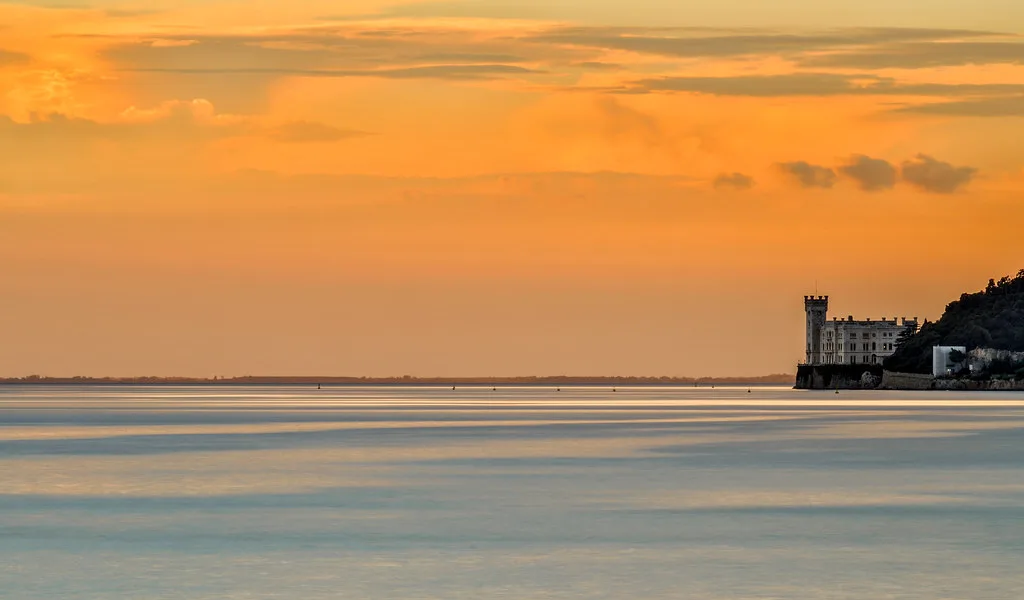
Take the bus or a taxi north along the coast to Miramare, the white castle built for Archduke Ferdinand Maximilian on a rocky promontory above the sea. The grounds and the castle interior are separate experiences: the park can be walked independently, while the furnished rooms require a timed visit with its own ticket. Decide in advance which you want, and check current hours and prices with the site itself.
Budget the morning generously. The park paths and viewpoints alone take time, and adding the interior means waiting for an entry slot. If you are short on hours, choose one and do it properly rather than rushing both; the seafront setting is the part most visitors remember.
Day 2 Midday: Barcola Seafront or a Picnic
On the way back toward the center, stop at Barcola, the seaside promenade where people walk, swim and sit on the rocks in warm weather. It is a natural lunch break if you have picked up supplies. The Mercato Coperto in the center, listed by the tourism portal, is a good place to assemble bread, cheese and fruit for a picnic before heading north, and it doubles as a look at everyday Trieste.
In cooler months the promenade is better for a brisk walk than a swim, and the bora wind can make the exposed seafront genuinely unpleasant. Check the forecast in the morning and move the picnic or the walk to a sheltered spot if the wind is strong.
Day 2 Afternoon Option A: Opicina and the Karst Plateau
Head up to Opicina on the Karst plateau for a different landscape: limestone, wind-shaped vegetation and views back over the gulf. From the village you can walk a stretch of the Strada Vicentina, a panoramic path that follows the edge of the plateau. Sturdy shoes and water matter more here than in the center, since the terrain is rougher and the weather turns faster.
An osmiza, the farmhouse that serves local wine and cold cuts from the surrounding farms, is the classic Karst lunch. The tourism portal lists them as part of local food and wine, but they are seasonal and their opening days vary, so confirm before you set out rather than assuming one will be open. Eating this way is often simpler and cheaper than a restaurant meal, and it puts you in the middle of the landscape you came to see.
The historic Opicina tram has long been a scenic way up, but its current operating status, timetable and fare must be checked with the local transport operator before you plan around it. If it is not running, use a bus or taxi instead, or choose the Grotta Gigante option below.
Day 2 Afternoon Option B: Grotta Gigante as an Alternative
Grotta Gigante is a large show cave on the Karst side of the city and a sensible substitute on a wet or windy day, since the visit is underground and guided. Ticket prices, tour times and language options change by season, so confirm them directly with the cave before travelling, and allow for the fact that entry depends on the next guided departure rather than on walk-in access.
Choose between the plateau walk and the cave based on the weather and your energy. The cave suits a rainy afternoon and requires less walking, while the plateau rewards clear light and a longer stay. Either way, keep the evening free for a return to the center.
Day 2 Evening: A Final Coffee or a Quiet Dinner
Come back into the city for a last coffee at a historic café or a low-key dinner in one of the residential quarters. If you have walked the Karst all afternoon, this is not the night for a long queue at a name on a list. Pick somewhere near your accommodation and end early.
Practical Logistics: Walking, Buses and the Tram
The center is compact and best covered on foot, which keeps the first day simple and cheap. For Miramare and the Karst, use the local bus network. The tourism portal has pages on getting around by bus and tram, plus information on reaching the city and bike sharing operated by Trieste Trasporti. Use those pages to confirm routes and ticket rules.
Do not rely on specific bus numbers or journey times from a guide written earlier. Check the operator's current timetable on the day, and allow a buffer for the return from Miramare or Opicina, because waits at rural stops can be longer than in the center. The Opicina tram should be treated as unconfirmed until the operator says it is running.
Food and Budget Strategy
Spend where it matters and save where it does not. An osmiza lunch, a covered-market picnic and a standing coffee at the bar keep the day affordable, leaving room for one good dinner. Avoid anchoring your budget to any single published daily figure, since accommodation and season change the maths enormously.
Check current prices on menus and at ticket desks when you arrive, and use the official tourism and transport sites for passes. The tourism portal has a page on the FVGcard, and discount amounts and validity differ, so compare against what you actually plan to visit rather than buying on assumption.
Weather, the Bora Wind and Swapping Days
Trieste's weather is the main variable in a two-day plan. The bora wind can arrive suddenly and make exposed places along the waterfront and on the plateau uncomfortable, while summer heat argues for early starts and a midday break. The tourism portal includes a weather page in its practical section, which is a sensible morning check before committing to the seafront or the hill.
If the forecast turns, swap the two days: keep the center for the wet or windy day, when cafés, churches and museums give you shelter, and take the coastal and Karst outing on the clearer day. Barcolana, the city's large sailing regatta, has a dedicated page on the tourism portal and fills the waterfront in October, so check the dates and plan around it if you want a quiet stay.
Where to Stay
For a first visit, staying near Piazza Unità d'Italia puts day one on your doorstep and simplifies evening plans. Borgo Teresiano suits travelers who want café culture and a slightly quieter grid of streets, while the area near the train station is practical for early departures and onward trips. Each choice changes your walk to the bus for Miramare, so weigh convenience against atmosphere.
Plan Your Visit
Two days in Trieste work best when you protect day one for the center and stay flexible about day two. Walk the square, the canal and the hill, drink coffee the local way, then use the second day for Miramare and one Karst-side choice depending on weather and transport. Confirm opening days, ticket prices and transit details with the tourism portal and each site before you lock anything in.
If you want more time, extend the trip rather than compressing it. The Trieste 3 day itinerary adds room for museums and a slower Karst day, while the Trieste 1 day itinerary is the honest option for a single stopover and covers only the center.
Frequently Asked Questions
Is two days enough for Trieste?
For the main central sights plus one outing, two days are workable. Day one can cover Piazza Unità d'Italia, the canal district and San Giusto hill on foot, and day two can handle Miramare plus either the Karst plateau or Grotta Gigante. If you want museums at an unhurried pace, add a third day rather than rushing the center.
Is Trieste walkable for a two-day trip?
The historic center is compact and easy to cover on foot, including the climb to San Giusto hill. Miramare and the Karst side are better reached by bus or taxi, so it is not a wholly walking trip. Check current routes and ticket rules through the city tourism portal before travelling.
What is the best time of year for a two-day Trieste itinerary?
Spring and early autumn are the most comfortable for walking and sightseeing, with milder temperatures and longer daylight. Summer heat favors early starts, and the bora wind can make the waterfront and plateau uncomfortable in winter. October brings the Barcolana regatta, so check the dates if you want a quiet waterfront.
Should I visit Miramare or Grotta Gigante on day two?
Do both only if you start early, since Miramare and the cave are separate excursions. Miramare suits a clear day when you want the park and sea views, while Grotta Gigante is a sensible choice in rain or strong wind because the visit is underground and guided. Confirm current hours, ticket prices and tour departure times with each site.
What food should I try in Trieste in two days?
Aim for jota, goulash, seafood and a standing espresso or capo in b, plus a meal at an osmiza on the Karst side. The Mercato Coperto is useful for picnic supplies. Check menu prices on site and confirm osmiza opening days directly, as they vary by season.
What happens if the bora wind is blowing?
Move the exposed parts of your plan to a calmer day and keep the center for the windy stretch, using cafés, churches and museums as shelter. The waterfront and the Karst plateau are the least comfortable places when the bora is strong. Check the local forecast each morning and swap your two days if needed.
Sources
Continue exploring
More guides you'll find useful





