
Treviso Two-Day Itinerary: What to Add Beyond the Centre
A suggested two-day Treviso plan: day one in the walled centre, day two for riverside walks, castles or Prosecco hills, with honest timing trade-offs.
On this page
Treviso rewards a second day because the compact walled centre is best walked without a deadline. On day one you can cover the squares, the canals, the cathedral area and the circuit of the Renaissance walls; on day two you decide whether to use the province around you or stay put and eat well. That decision, not a longer list of sights, is what makes a two-day plan work.
As an editorial suggestion rather than an official programme, give day one roughly a full walking day and reserve day two for a single commitment: a half-day hike, a longer castle excursion, a full-day mountain trip or an unhurried gastronomic loop. Trying to stack two of these produces a rushed trip and long transfers.
Day One Morning: Piazza dei Signori, Castello Romano and the Walls
Start in Piazza dei Signori, described as the city's heartbeat and framed by notable architecture including the tall Palazzo della Prefettura. Sit with a coffee and use the square as a compass point: most of the old town lies within a short walk. Arriving early keeps the plaza usable as an orientation stop rather than a crowded through-route.
Walk from the square to Castello Romano, a medieval fortress above the section of the walls known as St Paul's bastion. It began as a guard point for boats arriving on the River Sile, so its position explains how the city once controlled the waterway. Read it as a piece of civic engineering as much as a viewpoint.
If you want more of Treviso's overlooked corners between these stops, the hidden gems in Treviso guide covers the smaller waterways and quiet lanes that a square-to-square walk skips. Keep the morning to two or three named stops so the afternoon stays light. The Treviso Attractions hub is a sensible place to preview the individual sights before you fix an order.
Day One Afternoon: Fontana delle Tette, the Duomo and the Mosaic Passage
Head next to the Fontana delle Tette, a small fountain whose name translates as the Fountain of Tits and which, according to local travel writing, once flowed with red and white wine during Venetian celebrations. It is a five-minute curiosity rather than a sight to build an hour around. Pair it with a slow lunch nearby instead of treating it as a destination in itself.
Behind Treviso Cathedral, a narrow passageway leads to ancient floor mosaics thought to be the remains of an early Christian baptistery and excavated in 1967. Access arrangements and any charges for the cathedral complex are not something to assume, so check locally on the day before planning your afternoon tightly around it. Treat the mosaics as the reward for walking past the main door rather than under it.
Day One Late Afternoon: The Walls and Three Historic Gates as a Loop
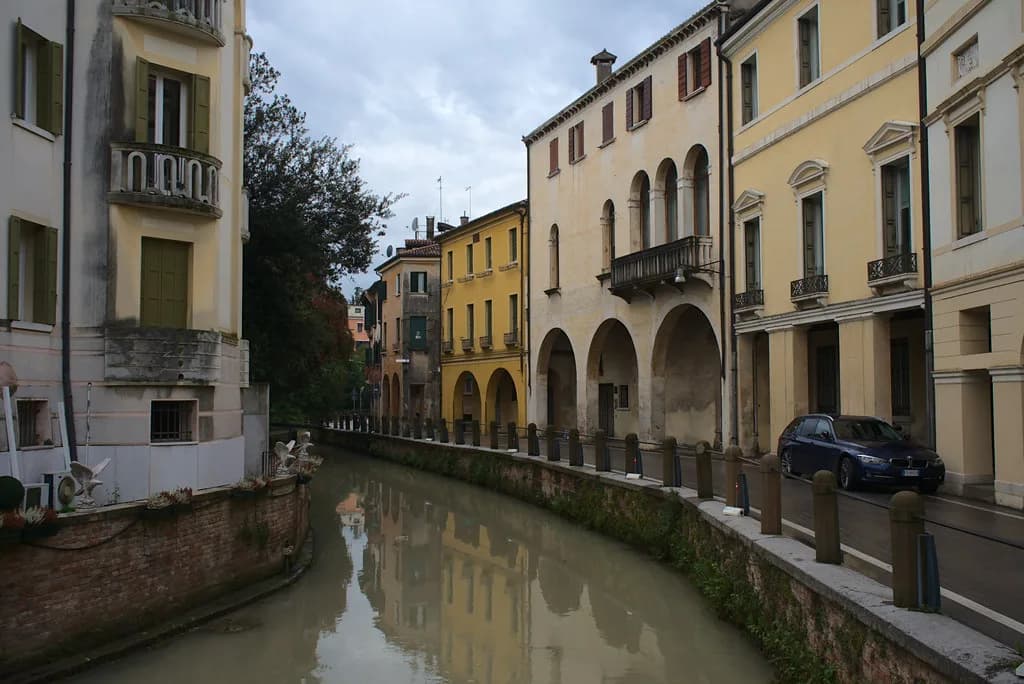
Finish the day on the sixteenth-century walls built under Venetian rule, which now serve as a walking and jogging circuit lined with willows and canals. The route also passes the three historic gates: Porta San Tomaso, Porta Santi Quaranta and Porta Altinia. Naming them turns a vague amble into a loop with checkpoints, which matters when light fades early.
Because the old town is so compact, the practical rule for day one is foot travel only; there is no reason to move a car between stops inside the walls. Plan the wall walk for the last hour of daylight and leave dinner unbooked in case the loop takes longer than expected.
Why Day Two Should Leave the Centre
The centre delivers architecture, frescoed facades, canals and a wall circuit, but it cannot give you vineyard hills, a rural castle approach or alpine scenery. That is the honest argument for spending day two outside the walls: you are trading depth in one small city for a different kind of landscape. If you only have one day, stay in the centre and skip this entirely.
The wider province also runs a changing calendar of fairs, exhibitions and food events, and Trevisoinfo lists many of them with dates that shift year to year. Check its current events page close to your travel dates rather than assuming a particular fair or show will be running. A listed past edition tells you the event exists, not that it repeats on your dates.
Day Two Option A: A Half-Day Hike Through Prosecco Country
The gentlest outside option is a half-day walk into the countryside north of Treviso, following lanes and farm tracks through vineyards. Local guides describe a roughly five-hour route toward Castello San Salvadore, heading north on Via Sottocroda, veering left onto a farm trail marked by gates, then connecting with Via Strada di Collato. Treat those directions as a starting point to verify on a map rather than a guaranteed waymarked path.
The landscape here belongs to the Conegliano Valdobbiadene Prosecco Superiore DOCG hills, a wine zone the Consorzio describes through its territory, history and vineyard itineraries. It is a region to walk through rather than a single stop with one entrance, so plan a loop you can shorten if weather turns. Carry water and check the forecast; vineyard tracks offer little shelter.
A realistic shape for this day is a morning start, a packed lunch, and a return to Treviso by late afternoon, leaving the evening free. If you would rather taste than hike, pair a shorter walk with a visit to a winery, but confirm opening times and whether tastings need booking directly with the producer.
Day Two Option B: Castello San Salvadore as a Longer Excursion
Castello San Salvadore, described as one of the largest castles in northern Italy, sits well outside the old town and is the more ambitious version of the vineyard walk. The same travel account puts it around an hour away by bus or half an hour by car, and its route overlaps the five-hour hike. Those figures come from that account, so re-check current transport before relying on them.
This option demands more of your day than the half-day loop: a longer approach, a demanding finish and less margin for error if a connection fails. It suits travellers with a car or a firm plan for the return leg. Without either, keep the shorter walk and accept the castle as the view at the end rather than the whole objective.
Day Two Option C: The Dolomites as a Big Trade-Off
The Dolomites are within striking distance of Treviso, which makes a day trip tempting, but the cost is a long day dominated by travel rather than a slow one in the province. Local guides suggest booking a day trip with a Treviso-based operator, which shifts the logistics onto someone else. Verify the operator's current schedule and what the day includes before committing.
Choose this only if mountain scenery is your priority and you accept an early start and a late return. Anyone who wants to eat well in Treviso, walk the walls again or visit a producer will get more from staying closer. The two plans are not interchangeable; they produce entirely different days.
Day Two Option D: Stay Close, Eat and Drink Instead
The lowest-stress second day keeps you in and around Treviso with food and wine as the theme rather than distance. The province is Prosecco country, and the Consorzio's site sets out the wine's types, serving guidance and vineyard itineraries you can use to choose a cellar visit. Cross-check any producer's hours and booking rules directly before setting out.
Build the day around one long lunch and one short walk, then return to the centre for the evening. This is also the sensible fallback when the weather is poor or when you are travelling without a car. It keeps the trip's pace slow, which is the whole point of giving Treviso two days.
Combining Day Two Ideas Without Overloading It
Pick one anchor for day two, whether a hike, a castle, a mountain tour or a long lunch, and let everything else be optional. A useful pattern is a committed morning, a flexible afternoon and a fixed return to Treviso for dinner. If you find yourself checking three separate timetables for one day, you have planned too much.
Where to Base Yourself and How the Compact Old Town Shapes the Plan
Because the entire old centre is walkable and the main sights cluster inside the walls, a base within or just outside them removes the need for daily transport. That also makes an early start on day two easier, since you can leave luggage and return without crossing the city. Read the Treviso Attractions hub before choosing a base if specific sights matter to you.
Travellers who want the quiet canals rather than the squares should look at the Canale dei Buranelli area, covered in the hidden gems in Treviso guide. It is a short walk from the centre but feels calmer in the evening, which suits a two-day trip built around slow mornings.
Practical Checks Before You Commit to Day Two
Confirm three things before leaving the city: the current weather forecast, the transport timetable for your chosen direction and whether any site or producer requires advance booking. Trevisoinfo is a reasonable starting point for what is on in the province, while the Consorzio's site helps with wine-zone geography and itineraries. Neither replaces a direct check with the venue or operator.
Seasonal fairs and exhibitions in the province change from month to month, so a listed event from a previous edition is history, not a promise. If a particular show or fair is the reason for your trip, verify the current dates on the organiser's own page. Otherwise, keep day two flexible and choose it the evening before.
Plan Your Visit
A two-day Treviso itinerary works best when day one stays inside the walls and day two commits to one contrasting experience. Walk the squares, the mosaic passage and the gates first, then choose between vineyard paths, a longer castle excursion, the Dolomites or a slow food-and-wine day.
Before you travel, check current opening arrangements, transport and event dates with the venues and organisers themselves, since details change and a past listing proves nothing about your dates.
Frequently Asked Questions
Is two days enough for Treviso?
Two days is a comfortable amount for the walled centre plus one day outside it. Day one covers the squares, the cathedral area and the wall circuit on foot; day two needs one clear choice rather than a list. If you have only one day, stay in the centre.
What should I add to a Treviso itinerary beyond the old centre?
Choose one of four kinds of day: a half-day walk into the Prosecco hills, a longer excursion toward Castello San Salvadore, a Dolomites day trip, or a slower food-and-wine day close to town. Each uses the day differently, so pick according to energy and whether you have a car.
Can I do a day trip from Treviso to the Dolomites in one day?
It is possible but it dominates the day, with long travel on both ends. Local guides suggest booking with a Treviso-based operator, and you should confirm the current schedule and inclusions directly with them. If you would rather keep the trip slow, choose the vineyard walk instead.
Is the Castello San Salvadore hike worth a full day?
It is the more ambitious option, involving a longer approach and a demanding finish; one travel account puts the castle roughly an hour away by bus or half an hour by car. Treat those figures as a starting point and re-check transport. Without a car or a firm return plan, the shorter vineyard loop is the safer choice.
What can I see in Treviso's centre in one day?
Piazza dei Signori, Castello Romano above St Paul's bastion, the Fontana delle Tette, the mosaic passage behind the cathedral and the sixteenth-century walls with their three gates. That is a full walking day if you stop for lunch and take the wall loop slowly.
Do I need a car for day two outside Treviso?
Not necessarily, but a car makes the castle and vineyard options easier to time. Without one, plan around published transport and keep a shorter walk as the fallback. Confirm current timetables before you commit to a distant destination.
When should I keep day two inside Treviso instead?
Stay in town if the weather is poor, if you are without a car and transport looks awkward, or if a long day of travel would spoil the trip. A long lunch with a local wine and an evening walk by the canals is a legitimate second day rather than a compromise.
Sources
- Hotel Treviso Alberghi bed and breakfast B&B ristoranti treviso agriturismi
- Home - Prosecco.it — Conegliano Valdobbiadene DOCG Conegliano Valdobbiadene: il Prosecco DOCG - Prosecco.it — Conegliano Valdobbiadene DOCG - Prosecco Superiore dal 1876
- Visiting Treviso, Italy? Here's THE Travel Guide | Wanderlust Duo
Continue exploring
More guides you'll find useful





