
Ravello Ceramics and Local Crafts: A Practical Buying Guide
A practical guide to Ravello ceramics and local crafts: what studios sell, how to tell usable pieces from souvenirs, and how to ship pottery home safely.
On this page
A plate from Ravello is not a fridge magnet in a different shape. The ceramics sold in the town's historic centre belong to a workshop culture that stretches along the Amalfi Coast, and the difference between a souvenir and a piece you will actually use comes down to how it was thrown, painted, glazed and fired.
Walking the shop-lined lanes takes twenty minutes; choosing well takes longer. This guide covers what Ravello studios sell, how to separate decorative objects from functional ones, how to read the signs of handwork, and how to plan for weight, packing and shipping before you agree to a purchase.
A Craft Tradition That Flows From Vietri sul Mare
Ceramic production is woven into the Amalfi Coast's landscape, not just its shops. Vietri sul Mare is widely described as the heart of that tradition, with majolica-style colour work flourishing between the 15th and 17th centuries and continuing in the workshops found across the region today.
In Ravello, ceramics also spill onto buildings: majolica tiles appear on church domes, floors, stairways and courtyards around the region, which is why the palette of deep blues, lemon yellows and terrace greens feels tied to the place rather than invented for tourists.
For a craft-focused trip, treat Ravello as one stop in a wider geography. Amalfi and Vietri sul Mare hold related workshops, and planning those stops alongside the rest of your sightseeing makes it easier to buy once and buy well.
What Ravello Studios Actually Sell
Ravello's ceramics range from small, packable objects to furniture that requires planning. Tableware, tiles, wall plates, vases, amphorae, planters and decorative panels are typical, and lava-stone tables appear among the larger and heavier pieces sold by studios in the area.
Sizing your purchase early keeps the rest of the decision simple. A wall plate or a set of small bowls fits in hand luggage with care; a planter or lava-stone table involves freight, delivery timing and possibly import paperwork, so deciding the category first narrows which studio conversation you need to have.
How the Pieces Are Made
At Ceramiche d'Arte Pascal, the process is described as wheel-throwing by expert artisans, decoration by a team of master painters, and finishing with selected glazes. That sequence explains why no two pieces match exactly: the clay, brushwork and glaze each add variation.
Minor irregularities are a quality marker, not a defect to negotiate down. Uneven brushwork, a slightly irregular rim or subtle colour shift between two plates of the same design is consistent with handmade and hand-decorated work, and the studio itself frames this as a quality of handmade art.
Colour in this tradition is not random either: the glazes and motifs draw on the Amalfi Coast's visual language of sea blues, lemon yellows and hillside greens. If a piece looks suspiciously uniform and repetitive across a shelf, ask how it was decorated before assuming it was painted by hand.
Decorative Versus Useful: The Core Buying Decision
The most important question in a Ravello ceramics shop is what the piece will do at home. Serving platters, dinner plates and bowls need glazes that are safe for food contact; ask directly whether a piece is food-safe if you plan to eat from it, because the answer should come from the studio, not from an assumption.
Outdoor pieces answer to a different test. If you are buying a planter, garden table or panel for a terrace or balcony, ask about frost resistance and UV stability, since glazed ceramics left outside in freezing or high-sun conditions can age differently from indoor pieces.
This is where the souvenir-versus-useful distinction becomes practical rather than snobbish. A decorative panel can hang indoors for decades with simple care; a dinner service bought without asking about the glaze may never leave the cupboard, which defeats the point of paying for craft.
Named Studios to Look For
Ceramiche d'Arte Pascal in Ravello works under the artistic name of founder Pasquale Sorrentino and describes a style that reinterprets Amalfi Coast ceramic traditions through contemporary forms. The studio presents tableware, decorative objects, lava-stone tables and made-to-measure projects through its online catalogue.
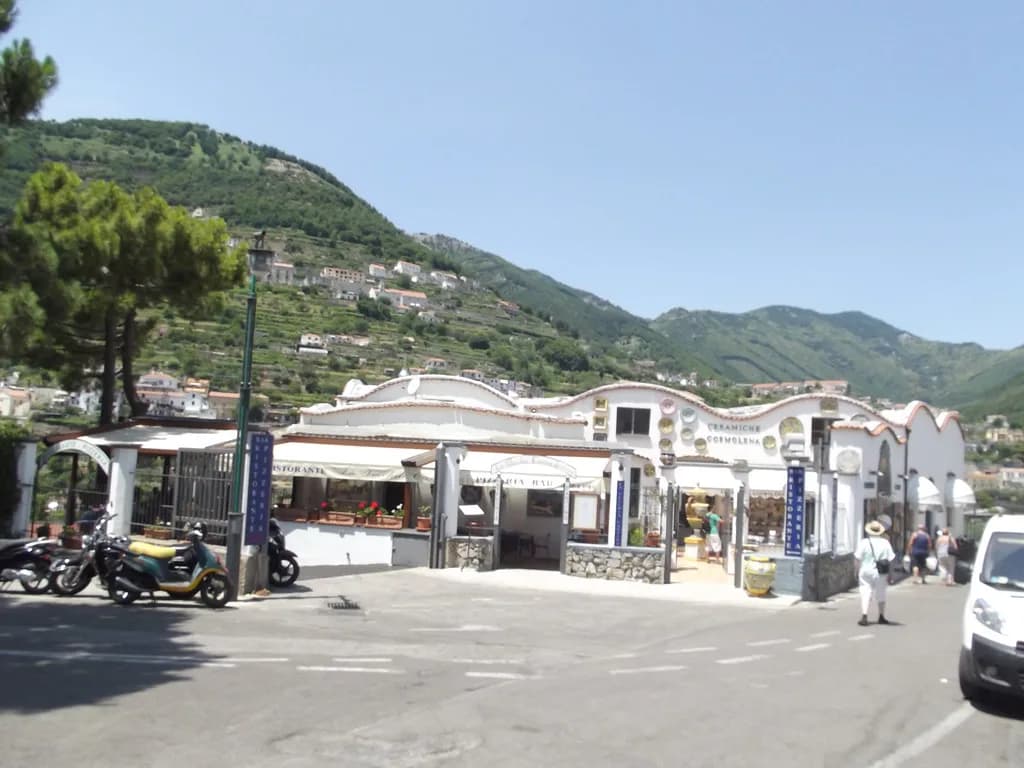
Ceramiche Cosmolena, also in Ravello, is associated with the sunny lemon motifs and marine blues of the coast, with full table settings, planters and wrought-iron-based ceramic tables among its typical offerings. Treat any current collection or stock level as something to confirm on the spot rather than as fixed.
In Amalfi's historic centre, Ceramiche Il Ninfeo is a nearby comparison point for hand-decorated plates, bowls, pitchers, tiles and small gifts, with motifs running from lemons and florals to fish and classical borders. For anyone comparing studios, it adds a useful second town without adding a long detour.
How to Spot Genuine Handmade Work
Turn the piece over. Many studios sign or stamp the base, which gives you a maker's mark, and a handwritten or stamped mark is far harder to fake convincingly than a pretty pattern on the front.
Then ask technique questions: was it thrown by hand, hand-painted, and where was it fired? A studio that can answer plainly, and show you the work in progress or the differences between pieces, is giving you the evidence you need to justify the price.
Treat signage and packaging as secondary evidence. Beautiful wrapping proves nothing about the clay underneath, so base the decision on the object, the maker's mark and the answers you get before paying.
Customisation and Lead Times
Several studios in the area can adjust shape, colour, pattern and finish, and some describe full bespoke projects that move from concept to prototype to production. The value is real, but customisation turns a purchase into an order with dependencies.
Ask how long the work takes and how the finished piece will be delivered before any deposit is discussed. A handcrafted workshop describes delivery of commissioned orders as depending on product availability and the technical time needed to make the piece, so treat any date as something to confirm in writing rather than a fixed promise.
If your trip ends before production finishes, plan for the piece to arrive at home rather than to your hotel. That decision affects address details, any import rules for your country and whether the timing works at all.
Weight, Packing and Shipping
Big ceramics rarely travel well in a suitcase. Professional packing and courier shipping is generally the safer route for large or fragile pieces, and many studios along the coast can arrange international shipping, which is why it pays to ask before you fall in love with a table.
For international orders, Pascal's studio notes that imports outside the European Economic Community must follow each country's specific procedures, so check customs rules for ceramics in your own country in advance. It also states that shipment is handled through carriers such as DHL, UPS, Mail Boxes and FedEx.
Before you leave the shop, confirm what is included: packing materials, insurance, tracking and who handles customs charges. Get the arrangement in writing, since an unexpected freight bill on a heavy lava-stone table can double the real cost of the purchase.
Sourcing Beyond Ravello
Vietri sul Mare is the region's ceramic capital, and its narrow streets are lined with workshops whose tiles and majolica facades show how deeply the craft runs. Including it on a coast itinerary gives context to what you see in Ravello, though it works best as a separate stop rather than a quick detour.
Stacking two or three ceramics stops into one trip risks overload, and weight adds up fast. If your schedule is tight, plan the pieces you want first, then decide which town is best suited to buy them, and pair the shopping with a slow afternoon exploring the hidden gems in Ravello.
Between studio visits, leave time for the town itself, which is easier to enjoy when you are not carrying a wrapped platter up a staircase. A relaxed lunch before shopping gives you the energy to compare pieces properly, and our Ravello local food guide covers where to eat.
Smart-Buying Checklist
Before paying, ask four questions: Is it handmade and hand-painted, where was it fired, is the glaze food-safe if you plan to serve on it, and how will it be packed and shipped? Ask for the answer on the piece you are actually buying, not on a display sample.
Check weight and dimensions with your own luggage in mind, and skip anything you cannot carry comfortably or ship reliably. If you are customising, confirm shape, colour, pattern and finish in writing, along with the delivery estimate and who arranges transport.
Finally, keep a note of what you paid and what was promised. If the work is commissioned, a written summary of the specification and shipping arrangement is worth more than any verbal reassurance given at the counter.
Plan Your Visit
Ravello is small enough to browse in an afternoon but rich enough in ceramics to deserve a plan. Decide whether you are buying a usable table piece or a decorative object, check the glaze and outdoor suitability for its intended home, and treat weight and shipping as part of the price.
Use the town's studios as your starting point rather than the whole story, and check current details such as stock, customisation timing and any municipal information directly with the studio or the town before travelling.
Frequently Asked Questions
What are Italian ceramics called?
Italian glazed earthenware decorated with colourful patterns is usually called majolica, a tradition strongly associated with the Amalfi Coast and especially Vietri sul Mare. In Ravello you will see the term applied to hand-painted tableware, tiles, vases and decorative panels, with the palette often drawn from sea blues, lemon yellows and hillside greens.
Are Amalfi Coast ceramics food-safe?
Not automatically. Food safety depends on the glaze, so ask the studio directly whether a specific plate, bowl or platter is intended for food contact before buying it. Decorative pieces such as wall plates and panels should be treated as display objects unless the maker says otherwise, and care instructions for the glaze are worth confirming in writing.
How do I get a large ceramic piece home from Ravello?
For anything large or fragile, plan on professional packing and courier shipping rather than a suitcase. Studios in the area commonly arrange international shipping through carriers, but you should confirm the packing, insurance, tracking, customs arrangements and delivery timing with the seller before paying, and check your own country's import rules.
Can I customise a piece bought in Ravello?
Yes, several studios offer changes to shape, colour, pattern and finish, and some work from concept through prototype to production. Custom work brings lead-time dependency, so ask how long production takes and how delivery will be handled before committing, and get the specification and shipping arrangement confirmed in writing.
Where else should I look for ceramics beyond Ravello?
Amalfi's historic centre has hand-decorated plates, bowls, pitchers and tiles, while Vietri sul Mare is the wider region's ceramic capital with workshops lining its narrow streets. Visiting one or two of these alongside Ravello gives you a comparison point for style and quality, but keep travel time and weight limits in mind.
Do I need tickets or a booking to visit ceramics studios in Ravello?
There is no confirmed ticketed or booking system for browsing studios in Ravello, and opening details can change by season or without notice. Check current information with the individual studio or the town before travelling, and do not rely on a general guide for a specific day's availability.
Sources
Continue exploring
More guides you'll find useful





