
Perugia Viewpoints and Terraces: A Practical Views Guide
Plan a walk between Perugia's hilltop viewpoints, from the Porta Sole climb to the Rocca Paolina escalator route and central rooftop pauses.
On this page
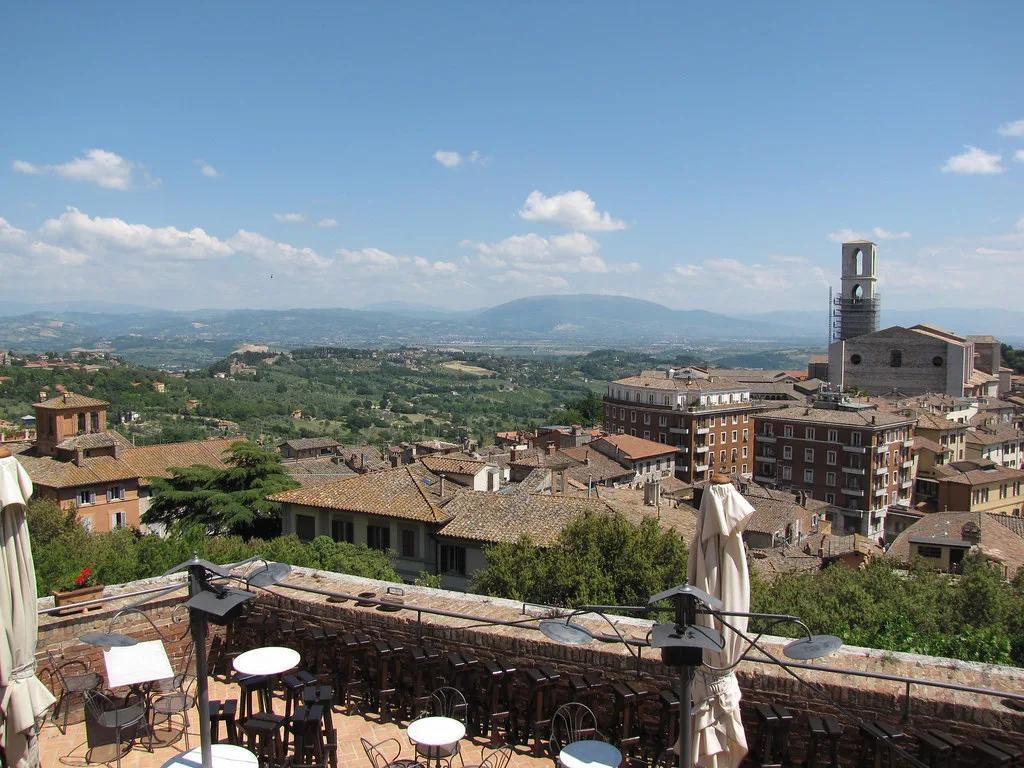
Perugia is built on a hill, and that single fact shapes every view in the city. Streets tilt, stairways cut between levels, and terraces open suddenly over terracotta roofs and the Umbrian hills beyond. This guide links the main lookout points into a walkable route rather than a list of separate pins, and it is honest about which details still need checking before you set out.
Why Perugia's Hilltop Setting Shapes Every View
The historic centre sits uphill from the transport hubs, which is why even a short walk between sights involves climbing. Many visitors treat that as a chore, but in Perugia the ascent is the attraction: each change in level delivers a fresh angle over the rooftops. Budgeting energy for the climbs is more useful than planning a strict timetable of viewpoints.
Perugia also has a lively student population and feels less crowded than nearby Tuscan cities, which makes slow wandering between lookouts genuinely pleasant. Food and wine are part of the backdrop, and local specialties such as strangozzi pasta and Baci chocolate give you reasons to pause between climbs. For a wider list of quieter corners beyond the classic panoramas, see our guide to hidden gems in Perugia.
Orientation: Uphill Streets, Stairs and Escalators
Two practical realities organise any viewpoint walk here. First, the centre is hilly and stair-heavy, so comfortable shoes and a realistic pace matter more than a long checklist. Second, the city has helpfully engineered some of its level changes, most notably the underground route through Rocca Paolina, which visitors can use to move between lower and upper parts of town.
One visitor account describes reaching the centre from the station as a thirty-minute walk or a short bus ride uphill, with bus tickets bought from shops or on board. Exact fares and current service details change, so check locally rather than relying on older figures. Use that climb as a warm-up and keep the steep stair sections for the middle of your day, not the end.
If you are still choosing which sights deserve your time, our Perugia Attractions hub breaks down individual sights and what each one involves. Read it before fixing a route, because some stops need more of your day than a quick photo stop.
Porta Sole (Arco dei Gigli): The Stair Climb and the Panorama
Porta Sole, known to Perugians as the Arco dei Gigli, is one of the ancient gates in the Etruscan walls and sits at one of the highest points in the city. The climb involves quite a few stairs from the piazza below, and the reward is a broad panorama over medieval roofs. Treat it as a proper leg of the walk rather than a quick detour.
Salt in our Hair recommends arriving early, describing sunrise over the medieval roofs as the best moment with fewer crowds. That is a visitor suggestion rather than official guidance, so treat the timing as advice and confirm access yourself on arrival. If an early start does not appeal, the view still works later, just with more company.
Perugia's official website does not publish clear information on whether the gate and terrace are free or ticketed, so check its pages before you go if cost matters to your budget. The climb itself is the reliable part: stairs up, panorama at the top.
Rocca Paolina and the Underground Escalator
Rocca Paolina is the most useful viewpoint stop that is not really a viewpoint. The buried streets beneath the fortress form a network that visitors can explore, and an underground escalator connects different levels of the city. Think of it as a moving walkway through history that also saves your legs on a hot afternoon.
One visitor notes that the underground area stays cool, making it a sensible escape from summer heat for an hour of exploring. That makes it a natural midday stop between outdoor lookouts rather than a competitor to them. Step out at the upper end and the city opens up again above you.
The city's official website does not publish detailed rules about who may use the escalator, when, or under what conditions. Do not assume it replaces every stair on your route, and check current access on arrival. Where official information is thin, asking at a tourist information point is more dependable than a blog post.
Giardini Carducci and Corso Vannucci: A Central Pause
Giardini Carducci is named in visitor accounts as a panorama spot above the city, and it pairs naturally with a stroll along Corso Vannucci. That elegant, traffic-free street is where Perugians sit at cafes, eat gelato and watch the city go by. Use it as the breather between the Porta Sole climb and the underground route.
The same account places the gardens with other elevated lookouts over terracotta roofs and the Umbrian hills, and describes golden hour from such viewpoints as particularly striking. That is an impression, not a verified orientation, so do not build an itinerary around a guaranteed sunset. Arrive with time to spare and let the light do what it does.
The historic core around Piazza IV Novembre, with the Fontana Maggiore in the middle, is the natural anchor for this central stretch. The Palazzo dei Priori faces the same square, and its museum interior is a separate, ticketed visit rather than part of the terrace experience. Keep the two ideas apart when planning your time and spending.
Torre degli Sciri: What to Check Before Planning
Torre degli Sciri appears in visitor material as one of the city's elevated panorama spots, but that is essentially where the reliable detail ends. The city's official website does not confirm whether the tower can be climbed, whether entry is ticketed, or what the current access arrangements are. Treat it as a landmark to admire from the street until you have checked further.
If tower access matters to your trip, verify it through the city's official channels close to your visit date rather than trusting an old blog entry. Ask directly whether there is a viewing level open to visitors and whether stairs or a lift are involved. A quick check avoids a wasted climb across town.
A Suggested Half-Day Walking Loop
Start high and work downward: climb to Porta Sole while your legs are fresh and the morning is cooler, then descend toward the centre for a pause on Corso Vannucci or in Giardini Carducci. From there, drop into Rocca Paolina and use the underground route to change levels without retracing every stair. The order matters more than the clock.
Half a day is a reasonable personal suggestion for this sequence, but it assumes a moderate pace and a stop or two. Anyone who wants to linger at each lookout, or who finds stairs tiring, should allow longer or split the route across two outings. Perugia rewards unhurried movement rather than tick-box efficiency.
If you have more time in the region, the city works as a base for day trips, with Assisi roughly half an hour away by car or about twenty minutes by train according to one visitor account. Confirm current connections locally before committing a day. Pairing a viewpoint morning with an afternoon excursion keeps the walking manageable.
Where the Light Falls: Honest Limits
It is tempting to promise a specific terrace for sunset, but nothing in the reliable material confirms which direction any of these viewpoints faces. The honest approach is to pick a lookout that suits your route and see what the light gives you. Morning visitors to Porta Sole have reported quieter conditions, which is a useful reason to start early regardless of orientation.
Season changes the experience too. One visitor found May warm and sunny with fewer crowds than summer, and described the city as generally quieter than better-known Italian destinations even in peak months. Spring and autumn therefore suit a walking route with plenty of outdoor pauses. Check a current forecast before you rely on clear skies.
Free Views Versus Ticketed Sites
Separate the public viewpoints from the paid interiors. City squares, streets and gates are part of the everyday urban landscape, while museums and galleries inside historic buildings are separate visits with their own arrangements. The National Gallery of Umbria inside Palazzo dei Priori is one such interior, described in a visitor account as a ticketed museum with roughly ten euros entry and free admission for minors, with advice to check opening times beforehand.
Prices and opening times shift, so verify any figure with the operator before you go. The point of separating these visits is planning: a museum stop eats into the time you have for viewpoints. Decide whether your priority is the panorama or the collection, then build the day around that choice.
For a structured look at individual sights and what each involves, the Perugia Attractions hub is the sensible next read. It keeps the ticketed and the open-air in separate compartments, which is exactly how this walk works.
Practical Constraints: Stairs, Weather and Hill Fatigue
The main constraint is cumulative climbing. Perugia is hilly, and the stair-heavy approach to Porta Sole is the clearest example. Plan the steepest section early, keep water with you, and do not stack three climbs back to back. Shade is patchy in the centre, so a hat in summer is not an affectation.
Weather can change your route quickly. Rain makes stone steps slippery, and summer heat pushes the sensible walking window into the morning and evening. The underground route through Rocca Paolina gives you a useful indoor alternative when conditions turn. Build in one flexible indoor stop so a shower does not end the day.
A note on access: the sources do not describe step-free routes, lifts or accessibility provisions for these viewpoints. If stairs are a concern, contact official visitor services before travelling and ask specifically about the route you intend to take. That is more reliable than assuming any terrace can be reached without climbing.
Rooftop-Style Stops and an Aperitivo With a View
For a softer version of the same pleasure, combine your last lookout with a drink. One visitor recommends Punto di Vista, close to Rocca Paolina, for an aperitivo with views. That is a bar suggestion rather than a public terrace, so check current opening hours and reservations before planning your evening around it.
The city's food culture supports this slow finish: aperitivo, a plate of strangozzi and a piece of Baci chocolate make a fitting close to a walking day. None of that requires another climb. If you want more overlooked corners to fill an extra morning, our hidden gems guide is the place to browse.
Plan Your Viewpoint Walk
Treat Perugia's views as a route, not a checklist: climb to Porta Sole early, use the Rocca Paolina route to move between levels, and let the central streets deliver the rooftop pauses in between. Check current access and any charges through the city's official channels before you rely on them. The panorama is reliable; the logistics need a quick verification.
Frequently Asked Questions
Is Porta Sole free to visit?
The city's official website does not publish clear information on whether the gate and terrace are free or ticketed, so check with Perugia's official visitor information before planning around it. What is clear is that reaching the Arco dei Gigli involves a steep stair climb from the piazza below.
Do I need tickets for Perugia's viewpoints?
Some viewpoints sit in public streets and squares, while interiors such as museums and galleries inside historic buildings are separate visits. Confirm current access and charges for any specific site directly with the operator, since conditions change.
Which Perugia viewpoint is best at sunrise?
A visitor account recommends Porta Sole for early mornings, describing quieter conditions and sunrise light over the medieval roofs. No official source confirms which direction the terrace faces, so treat that as a suggestion rather than a guarantee.
Can you go up Torre degli Sciri?
The available material presents the tower as an elevated panorama spot but the city's official website does not confirm visitor access or ticketing. Ask the city's official visitor services before travelling across town, and enjoy it as a landmark in the meantime.
How do you reach Rocca Paolina on foot?
Visitors can enter the buried streets beneath the fortress and use an underground escalator to change levels in the city. The city's official website does not publish detailed access rules, so verify current arrangements locally before depending on the route.
Are Perugia's viewpoints accessible without stairs?
The sources do not describe step-free routes or accessibility provisions for these lookouts, and the climb to Porta Sole is explicitly stair-heavy. Contact official visitor services in advance to ask about the specific route you plan to take.
Sources
Continue exploring
More guides you'll find useful





