Perugia Underground: Ticket Scope, Route and Free Sites
Perugia's underground sites are separate attractions. Learn what the pass covers, what you see on the route, and why Rocca Paolina is already free to enter.
On this page
Perugia's underground is not a single attraction with one entrance and one ticket. It is a group of separate sites beneath and around the historic centre. The ticketed archaeological area lies under the cathedral complex; the surviving rooms of the Rocca Paolina are freely accessible; the Etruscan Well is a separate visit. Confusing these is the easiest way to pay twice.
The practical starting point is the Isola di San Lorenzo ticket page, which describes admission to the archaeological area as including a guided tour. That one line already tells you the pass is for a specific site, not for every underground space in the city. Check the current inclusions and price before you buy, because a figure quoted on a third-party page can go stale.
Where the underground sites sit, and why they are not one route
The archaeological area under San Lorenzo is entered from the cathedral side and follows a guided path below the streets around the cloister and Piazza Cavallotti. The Rocca Paolina occupies the lower slopes between Piazza Italia and Piazza Partigiani, where the escalator system carries people up into the centre. The Pozzo Etrusco sits close to Piazza IV Novembre but has its own entrance and its own ticket.
A few other underground or semi-underground spaces are sometimes lumped into the same list. The oratories at the Chiesa del Gesù can be visited with private or group tours on set days, and the Postern of the Conca is visitable by reservation or on special occasions, according to Bella Umbria. Neither belongs to the cathedral archaeological area, so neither should be planned as if a single ticket opens their doors.
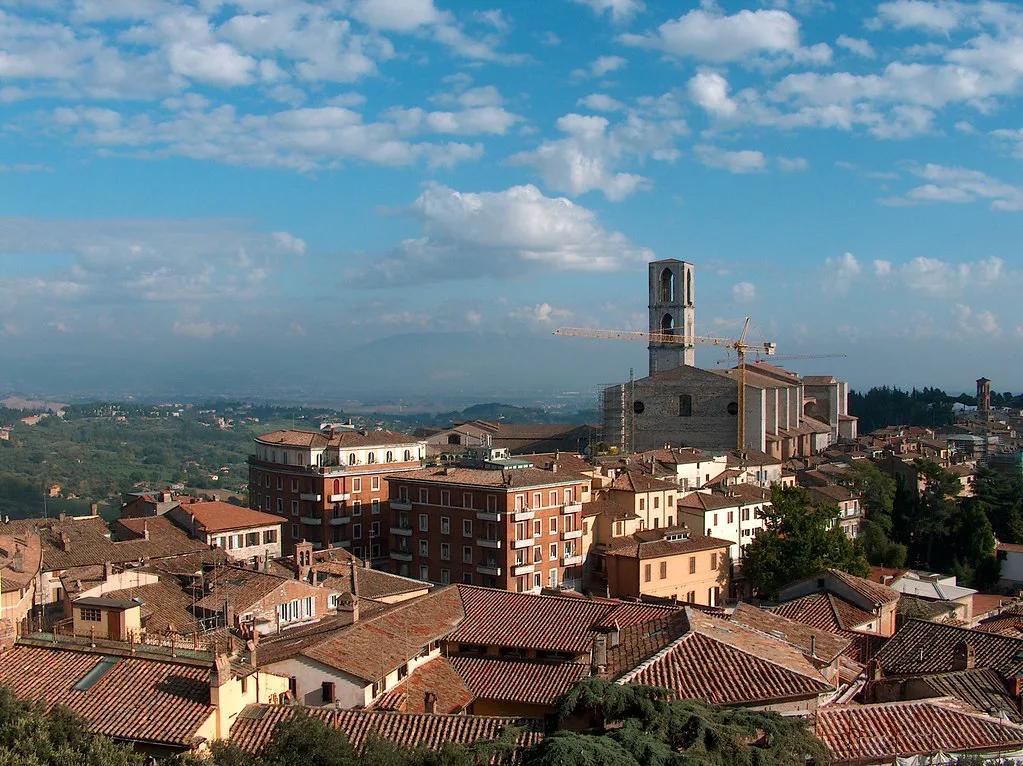
The wider street pattern of Perugia is part of the same story. Steep lanes, stairways and viewpoints such as Porta Sole show how the city was built in layers above the underground spaces you are about to visit.
What the Isola Pass covers, and what it does not
The Isola Pass is the ticket for the Perugia Underground archaeological area under the cathedral complex. The operator describes it as admission to that archaeological area including a guided tour. It is a ticket for one site with a fixed format, not a city-wide underground card. Confirm the current scope and price at the ticket desk or on the operator page before you rely on any figure you have seen elsewhere.
The pass does not cover the Rocca Paolina, whose remaining rooms are freely accessible, and it does not include the Etruscan Well, which is a separate attraction. If a combination ticket is offered at the time of your visit, verify it at the desk rather than assuming it exists. The official event site is the place to check what is currently on offer and how to reserve, since third-party listings can lag behind.
The route under San Lorenzo: conclave hall, Etruscan walls and Roman road
The visit begins at the cloister beside the cathedral and works backwards through the city's building phases. An early stop is the Sala del Conclave, a large hall where four popes were elected. The room is now divided by consolidation walls built in the last century to support the cathedral floor above, so its present shape is itself part of the archaeological record, not just a setting.
Further along, the path passes substantial Etruscan terracing walls built to make the acropolis more imposing, and the site of a temple probably dedicated to Juno. A medieval vault that helps carry the cathedral's foundations shows how the same ground stayed in use without a break. Then comes the stretch most visitors remember: an ancient road, first Etruscan and later Roman, with the ruts of wagon wheels still cut into the paving.
The walk ends beneath Piazza Cavallotti, so you surface in a different place from where you entered. That matters for planning: do not leave companions waiting at the cathedral door, and check the meeting and exit arrangements when you book. The route is an archaeological space rather than a museum corridor, so it is worth asking on the day about lighting, headroom and the pace of the group.
Rocca Paolina: the underground space that is already free
The Rocca Paolina is the underground stop you can make without buying a ticket. What remains of the sixteenth-century fortress commissioned by Pope Paul III is essentially a lower city of vaulted streets and rooms, restored and freely accessible. The escalator system built through it now functions as an everyday pedestrian route between the lower town and the historic centre.
Because the fortress was built over a demolished neighbourhood, walking through it feels closer to walking through a buried streetscape than visiting a monument. Some rooms have had their past functions reconstructed, and parts of the complex host exhibitions, but the main experience is the scale of the vaults and the way daylight appears at either end. Free access does not necessarily mean every single room is open, so treat any closed-off space as a local arrangement rather than a false claim about the whole complex.
Visitors who ride the escalators down into the fortress often treat it as a practical shortcut rather than a sight, which is exactly how it works for residents and commuters. If you stop to look up, keep to the side and let people pass. The free route through the Rocca is also a gentle introduction if you are unsure about enclosed spaces: the vaults are high and open at the ends, unlike the tighter passages below the cathedral.
The Etruscan Well: a separate ticket and a separate visit
The Pozzo Etrusco is a feat of ancient hydraulic engineering, a deep shaft sunk through the tufa to supply the city with water. It sits close to Piazza IV Novembre but belongs to a different visit from the cathedral archaeological area. Expect a cool, damp, confined space rather than a sequence of open rooms, and check at the entrance exactly what the ticket you are buying includes, because the well is sometimes paired with a nearby palace rather than with the underground archaeological route.
Opening days and times for the well have varied, so confirm them on the day. A listing that publishes hours is a useful starting point, but hours change for services and events, and the venue's own notice is the one that counts. Do not assume the Isola Pass will get you into the well; it will not.
Guided tour or independent visit? What to expect
For the cathedral archaeological area, the guided format is part of the ticket rather than an optional extra. That suits travellers who want the sequence of Etruscan, Roman and medieval phases explained on site, and it keeps a group moving through narrow passages. The trade-off is pace: a guide sets the rhythm, and on a busy day with several groups the commentary can become brisk.
The physical conditions deserve as much attention as the storytelling. The underground environment is cool and the ground uneven, with dimly lit sections and some tight passages, so sturdy shoes and a light layer matter more than a notebook. If confined spaces make you uncomfortable, the open vaults of the Rocca Paolina are a better first step, and they cost nothing if you decide to turn back.
Independent visits work best for the free sites: the Rocca Paolina and the churches. Paid sites with fixed entry times reward a little planning, because turning up without checking can mean waiting or missing the next departure. Decide which experience you actually want, then build the day around that rather than trying to collect every underground space.
A suggested half-day route linking paid and free sites
A sensible half day links the free and paid sites on foot without pretending they are one attraction. This is an editorial suggestion, not an official itinerary. Begin at the Rocca Paolina, riding the escalators down and walking through the vaults at your own speed, then climb to Piazza IV Novembre for the cathedral and, if it is open, the Etruscan Well. Book the archaeological area for a fixed slot and treat it as the anchor of the morning or afternoon.
Allow generous margins rather than a tight schedule. The cathedral area involves a descent, a guided route and a different exit point, and the well is a separate stop with its own ticket and possible queue. In summer, the cool underground spaces are a welcome break from the heat, which also makes them busier in the middle of the day.
If time is short, choose one paid site and one free one. A route that combines the Rocca Paolina with the cathedral archaeological area gives you both the civic and the sacred layers of the city without rushing. Add the well only if you have a clear hour and have confirmed it is open.
Common mistakes to avoid
The biggest error is assuming one ticket covers everything. The Isola Pass covers the archaeological area under San Lorenzo; the Rocca Paolina is free; the Etruscan Well is separate. Buy each on its own terms, and ask at the desk whether any combination is available on the day rather than assuming one exists.
The second is arriving without checking hours. Underground sites keep their own schedules, and church-based sites can close for services or restoration. Confirm the day's opening before you set out, especially outside the main season, and have a fallback such as the cathedral itself or a walk along the medieval aqueduct.
The third is dressing for a museum rather than an excavation. Uneven floors, dim light and cool air are part of the experience, so wear shoes with grip and carry a layer. If you are claustrophobic, start with the Rocca Paolina's high vaults and judge from there whether the tighter passages under the cathedral will suit you.
Practical pre-visit checklist
Before leaving your hotel, note which sites are paid and which are free, and check the operator page for the Isola Pass so you know what the ticket includes and what it costs on the day. Confirm the Etruscan Well's opening separately. Decide whether you want the guided cathedral route or would rather spend the time on the free fortress and the churches.
Carry whatever the ticket desks accept, and keep a light layer and grippy shoes in your bag. If you are travelling with someone who dislikes enclosed spaces, plan a meeting point above ground. Finally, leave room in the day for the surface city: the underground is most interesting when you can connect it to the streets and walls above.
Plan Your Underground Visit
Perugia's underground works best when you stop looking for a single route and start treating it as a set of distinct places. The free vaults of the Rocca Paolina, the guided archaeological area under the cathedral and the separate Etruscan Well each offer a different kind of descent, and each has its own ticket or lack of one. Check the operator's page for the Isola Pass before you buy, confirm the well's hours on the day, and build the walk around what you actually want to see.
If you have time afterwards, climb to Porta Sole for the view back over the rooftops, which makes the layers you have just walked through easier to picture.
Frequently Asked Questions
Does one ticket cover all of Perugia's underground sites?
No. The Isola Pass covers the archaeological area under the cathedral, while the Rocca Paolina is freely accessible and the Etruscan Well is a separate attraction with its own arrangements. Check each site's inclusions before buying.
Is Rocca Paolina free to visit?
The surviving vaulted rooms of the Rocca Paolina are freely accessible, and the escalators through the fortress are used as an everyday route between the lower town and the centre. Some individual rooms or exhibitions may have separate arrangements.
How long does the Perugia Underground visit take?
The operator describes the guided visit to the archaeological area as a fixed-length tour, so allow extra time for the descent, the exit and any queue. Do not plan the Etruscan Well in the same slot without checking its hours separately.
Is the Etruscan Well included in the underground ticket?
No. The Pozzo Etrusco is a separate attraction from the cathedral archaeological area and needs its own ticket. Check at the entrance what any combined offer includes before you pay.
Do you need a guide to see the underground archaeological area?
The Isola Pass includes a guided visit to the archaeological area, so the guide is part of that ticket rather than an optional extra. The Rocca Paolina and most churches can be visited independently.
Is the underground route suitable for claustrophobic visitors?
Parts of the cathedral route are tight and dimly lit, which may not suit everyone. The Rocca Paolina's high vaults are more open, so start there if you are unsure, and ask staff about the route before booking.
Sources
- PERUGIA UNDERGROUND - Castello di Giomici
- Top Pick: Perugia Sotterranea : guided tour of the archaeological area - What to Expect | Listen to the Podcast on Spotify
- Perugia Underground | Bella Umbria
- Official event website
- Isola Pass
- Etruscan Well, Perugia Travel Guide | Evendo
- Perugia – Tour Guide Umbria
- Perugia, Italy – A Complete Travel Guide to The Capital of Umbria
- 21 Things to Do in Perugia, Umbria's Picturesque Capital - Our Escape Clause
Continue exploring
More guides you'll find useful