
Perugia Medieval Centre: A Corso Vannucci Quarter Guide
Walk Perugia's medieval centre along Corso Vannucci: Piazza IV Novembre, Fontana Maggiore, Rocca Paolina and Etruscan Well, with free sights and ticketed interiors.
On this page
Perugia's medieval centre is stacked on a hilltop in layers: Etruscan walls, civic palaces, a cathedral with an unfinished facade and a papal fortress built over a buried neighbourhood. The simplest way to read it is to use Corso Vannucci, the short pedestrian street at the heart of the upper town, as your spine rather than as one sight to tick off.
The street takes only a few minutes to cross from Piazza IV Novembre toward the Giardini Carducci, according to one local guide, so distances inside the walls are modest. What takes time is the vertical city: escalators and side alleys that drop into the Rocca Paolina or climb toward quieter terraces. Readers planning around overlooked spots should keep the hidden gems in Perugia guide alongside this quarter walk.
Why the centre clusters around one short pedestrian street
Corso Vannucci is Perugia's main thoroughfare and its social meeting point, where students, residents and visitors gather for an evening stroll or an aperitivo. Because it is pedestrian and compact, it works as a navigational device: once you can place yourself on the corso, the surrounding monuments, cafés and alleyways fall into position around it.
Along the street you pass the Palazzo dei Priori, the Gothic civic palace that houses the National Gallery of Umbria and the Sala dei Notari, with the Fontana Maggiore a short walk away in Piazza IV Novembre. Boutiques, historic bookshops, cafés and restaurants line the same stretch, so one street delivers civic architecture, art, shopping and food without a bus.
Treat the corso as a spine and you avoid a common mistake: crossing it quickly on the way somewhere else. A slower walk with pauses at the square and at least one side alley shows how the medieval core funnelled daily life through a handful of open spaces.
What the quarter covers, and what sits beyond easy strolling
The hilltop core covered here runs from Piazza IV Novembre to the Giardini Carducci at the southern end of the corso, taking in the cathedral, the Palazzo dei Priori, the Fontana Maggiore and the buried Rocca Paolina. All of that is reachable on foot inside the upper town. Treat the edge of the walls, the abbey district and the archaeological museums as separate outings rather than stops on the same loop.
Two sights at the edge deserve their own planning. The Basilica of San Pietro stands on Borgo XX Giugno in the southern part of the centre, and one travel guide puts the walk from Piazza IV Novembre at roughly twenty to thirty minutes, which is a useful planning estimate rather than an official timing. The National Archaeological Museum of Umbria occupies the former Dominican convent beside San Domenico.
For orientation across the city's major sights, the Perugia Attractions guides break them down one by one, which helps when deciding whether a particular interior earns its place on a short trip.
Start in Piazza IV Novembre: fountain, cathedral and civic palaces
Piazza IV Novembre is the civic stage of the quarter, anchored by the Palazzo dei Priori and the Cathedral of San Lorenzo, with several streets fanning out from the square. The Fontana Maggiore at its centre was carved by Nicola and Giovanni Pisano between 1275 and 1278 and carries dozens of reliefs showing the months, the zodiac, the liberal arts and legendary scenes. It is an open-air civic monument, free to read without a ticket or a timetable.
The cathedral is easy to recognise because its facade was never finished, leaving bare stonework where a marble frontage was planned. Inside, the mood is sober compared with the grander duomos of other Italian cities, and services take priority over sightseeing. The Cathedral of Perugia was built between 1345 and 1490 and preserves Umbrian Renaissance works, so give it a short, respectful visit rather than a photograph from the steps.
Across the square, the Palazzo dei Priori has been the seat of civic power since the Middle Ages and now holds the National Gallery of Umbria, the state collection tracing Umbrian and central Italian painting. The gallery is a ticketed interior with its own published hours, so check its official pages before building a day around it.
Walking the corso: what to notice by day and after dark
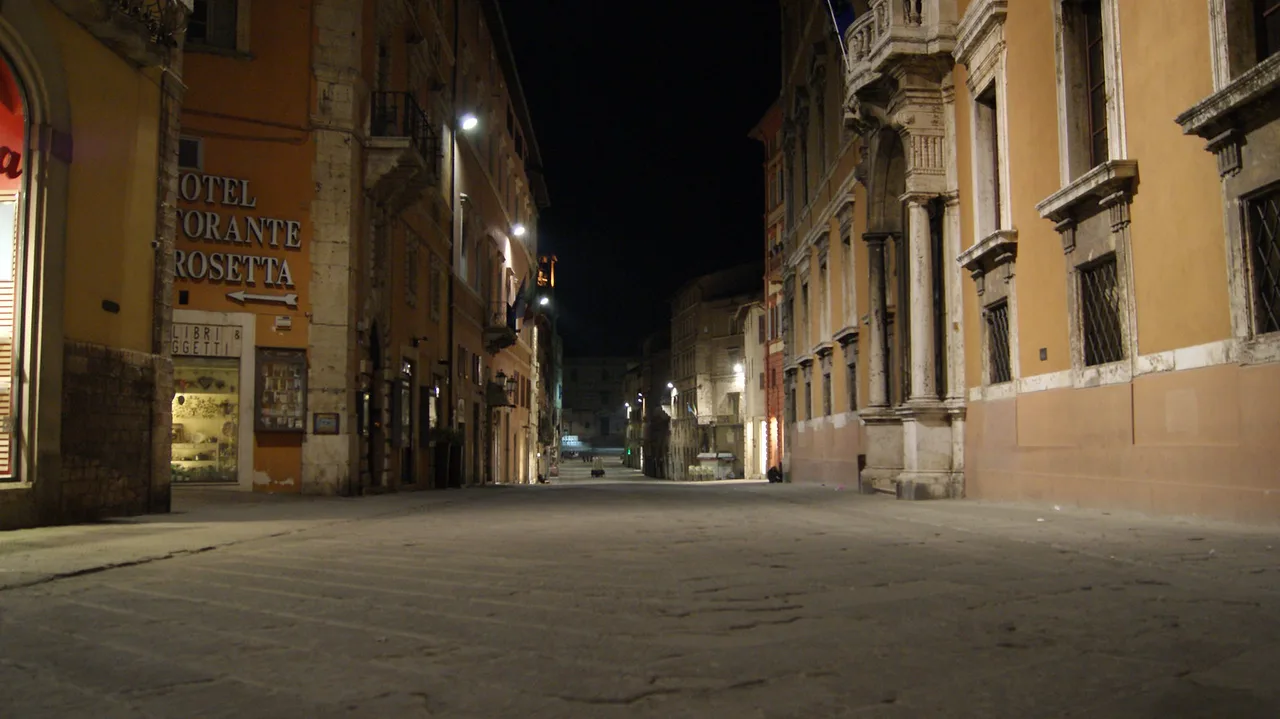
By day the corso is animated by students, street performers and visitors, and mornings are generally calmer if you want space to study the stone facades and historic shop signs. Photographers favour long perspectives along the street and the small dramas at outdoor café tables. An offline map helps, because the side streets form a genuine maze and signal between tall buildings can be patchy.
In the evening, warm lights and the passeggiata change the mood entirely, turning the street into a place for strolling and aperitivo rather than for covering ground. Plan museum interiors for daylight hours and save the corso for the softer light, when the atmosphere is the point.
Festivals transform the same street. During Eurochocolate the corso fills with stands and the smell of cocoa, and during Umbria Jazz it becomes an open-air stage, making the centre more crowded and more lively at once. If you are in town during a festival, stay longer on the corso instead of fighting through it on a schedule.
Rocca Paolina: the buried quarter and the reassembled Porta Marzia
The Rocca Paolina is not simply a fortress ruin. When Pope Paul III built it after Perugia's revolt against a salt tax in 1540, the Porta Sole quarter was filled with earth and used as foundations rather than demolished, so houses, workshops and streets survived inside the embankment. Today you can walk the old via Bagliona under sixteenth-century vaults, with doorways and windows still in place.
Look for the Porta Marzia in the outer wall on the viale Indipendenza side: an Etruscan gate of the third century BC taken apart stone by stone and rebuilt a few metres away to clear the new bastion. It now serves as a pedestrian entrance, so you pass under an Etruscan arch into a medieval alley roofed by a Renaissance vault. The fortress above was largely demolished in 1860, but the buried foundations were left alone.
The Rocca is free and functions as a public route through the city, and the escalators climbing from the Piazza Partigiani car park run through it for commuters between the lower and upper town. Entrance times and escalator hours are published by the city and can change, so confirm them on the Comune di Perugia site before a late or early visit.
The Etruscan Well behind the cathedral
A few minutes from Piazza IV Novembre, at Piazza Danti 18, the Etruscan Well drops about thirty-seven metres below Palazzo Sorbello and was dug in the second half of the third century BC as the city's main water reserve. Its travertine roof beams form a stone truss that has held without mortar for more than two thousand years, and a metal walkway takes you down to within a metre of the water. The walls show squared travertine blocks below and cut rock above.
The confusing part is the ticket. The well has no ticket office of its own: you visit it from the Casa Museo di Palazzo Sorbello on a combined ticket covering the house museum and the well, and both are included in the city museum card. Do not assume a single ticket covers Perugia's other museums, and check the Casa Museo's own pages for current prices and hours before setting out.
The house museum adds a furnished noble apartment, library and ceramics to the descent, so allow extra time if you want both. Entry is at Piazza Piccinino, and the well is about five minutes on foot from the cathedral.
Where to eat and drink along the corso and just off it
Cafés and restaurants on and around the corso serve Umbrian specialities including artisan chocolate and torta al testo, while the surrounding streets add trattorias, pizzerias, pastry shops and gelaterie. Vegetarian options sit alongside truffle pasta and porchetta, so mixed groups usually find something workable without leaving the quarter.
For the full Perugian ritual, take an aperitivo in the early evening and eat later, when the city's rhythms settle into their own pace. Because there is less tourism filling tables at odd hours, some bars only come alive well after dark, so a quiet eight o'clock room is normal rather than a bad sign.
Historic cafés on the corso, including the long-established Sandri dal 1860, keep vintage interiors and a brisk, old-school service; published hours for such places vary by season and closure days, so confirm before making one the centrepiece of a morning.
Where to stay inside the walls, and the trade-offs
Staying inside the walls puts the corso, the square and the Rocca within a short walk, which is valuable on a short break when you want evenings in the centre without climbing back up from the lower town. Central hotels and guesthouses range from old-school charm to more contemporary rooms, and several sit within easy reach of Piazza IV Novembre.
The trade-offs are noise and access. Rooms close to the corso can be lively during festivals and warm evenings, and some historic buildings have stairs rather than lifts, so ask directly about both before booking. Quieter streets a few minutes from the corso usually give you the same walking distance with less late-night sound.
Practical tips for timing, navigation and quieter corners
Aim for mornings if you want the corso with fewer people and late afternoon for the aperitivo atmosphere, then return after dark for the lit facades. To avoid the busiest stretches, walk the side alleys that lead off the corso toward small squares and terraces; many hide workshops and taverns and are calmer than the main street.
Pair the corso with a smaller square for a quieter pause, and keep an offline map downloaded because the side streets twist and dead-end. Wear shoes that cope with cobbles and slopes, and remember that the escalators are a practical commuter route, not an accessibility guarantee for every visitor or every hour.
If you want viewpoints and overlooked corners beyond the main circuit, the hidden gems guide picks up where this quarter walk ends, including the terrace and gate area at Porta Sole.
Checking times, tickets and closures before you go
Opening hours and prices in Perugia change with the season and with temporary exhibitions, so use the city and regional tourism sites as a final check rather than relying on older blog posts. The Comune di Perugia publishes civic information, while Umbria Tourism carries regional listings for museums and events.
Some sites at the edge of the quarter close for restoration work with little notice. Check any burial site, necropolis or outlying monument directly before travelling, and keep a flexible alternative in the centre, such as the Rocca Paolina walk or the cathedral, in case a plan falls through.
Plan Your Visit
Perugia rewards a slower approach: use Corso Vannucci to orient yourself, give Piazza IV Novembre the time it needs, and treat the Rocca Paolina and the Etruscan Well as two distinct underground visits with their own entry arrangements. Check current hours and ticket scope on official pages before you go, then leave room for the side alleys that make the quarter feel like a maze worth wandering. For related planning, see What to Eat in Perugia: Local Food Guide to Umbrian Dishes.
Frequently Asked Questions
How long should you allow for walking Corso Vannucci and Piazza IV Novembre?
The corsos itself takes only a few minutes to walk, but plan at least an hour if you want to pause at the Fontana Maggiore, look into the cathedral and stop for coffee. Add more time for the National Gallery of Umbria or the Rocca Paolina, since both are substantial visits rather than quick detours.
Is the Etruscan Well included with Perugia's other main sights?
No. The Etruscan Well has no ticket office of its own and is visited from the Casa Museo di Palazzo Sorbello on a combined ticket for the house museum and the well, with the city museum card also covering it. Street-level sights such as the Fontana Maggiore and the corso are free to walk, while museum interiors have their own arrangements.
When is the quietest time to walk the corso?
Mornings tend to be calmer, before the cafés fill and the evening passeggiata begins. Weekend peak hours are busier, and festival periods such as Eurochocolate and Umbria Jazz bring crowds and stands to the same street, so plan around those if you want space.
Is the medieval centre easy to explore with children?
The pedestrian corso and the main square are straightforward for a slow walk with breaks, and the Rocca Paolina's public route through the buried quarter gives children a memorable sense of going beneath the city. The Etruscan Well involves a descent on a walkway and a house museum, so judge it on your child's comfort with confined, dim spaces.
How do you reach the Rocca Paolina from the lower town?
Escalators climb from the Piazza Partigiani car park through the Rocca Paolina up to the upper town, and locals use them as an everyday route. You can also enter at ground level from Porta Marzia on viale Indipendenza; confirm current escalator hours with the Comune di Perugia before relying on them late at night.
What should you check before visiting Perugia's outlying monuments?
Check directly with each site or with Umbria Tourism, because restoration work and seasonal hours can close places at short notice, and ticket scope varies between museums. Keep a central alternative ready, such as the cathedral or the Rocca Paolina walk, in case a planned stop is unavailable.
Sources
- Corso Vannucci: Perugia’s beating heart | WellStay Perugia
- Official event website
- Official event website
- Basilica of San Pietro, Perugia | Religiana
- Abbazia di San Pietro: History, Architecture & Travel Guide
- 13 Wonderful Things To Do in Perugia, Italy — ALONG DUSTY ROADS
- 21 Things to Do in Perugia, Umbria's Picturesque Capital - Our Escape Clause
- Fontana Maggiore: things to do in Perugia - Italia.it
- Underground Perugia: Rocca Paolina and Etruscan Well
Continue exploring
More guides you'll find useful





