
Getting to and Around Perugia: Escalators, MiniMetro & Hills
Plan arrival in Perugia and movement between the lower town and hilltop centre, with the MiniMetro, Rocca Paolina escalators, parking hubs and walking notes.
On this page
Perugia's historic centre occupies a ridge above a modern lower city, and almost every arrival question comes down to how you climb from one to the other. The rail station sits at the foot of the hill, and a short automated people mover, the MiniMetro, links that lower level to the old town. Understanding this split before you book accommodation or plan a day saves a lot of unnecessary hill hauling.
Once you are up top, the centre is compact and largely pedestrian, so most sightseeing happens on foot. The catch is gradient: streets regularly turn into stepped lanes, and even short distances can involve a climb. Build slack into any itinerary that pairs museums, churches and viewpoints, and treat the escalators and lifts as part of the transport network rather than a novelty.
The MiniMetro: From the Station Side to Pincetto
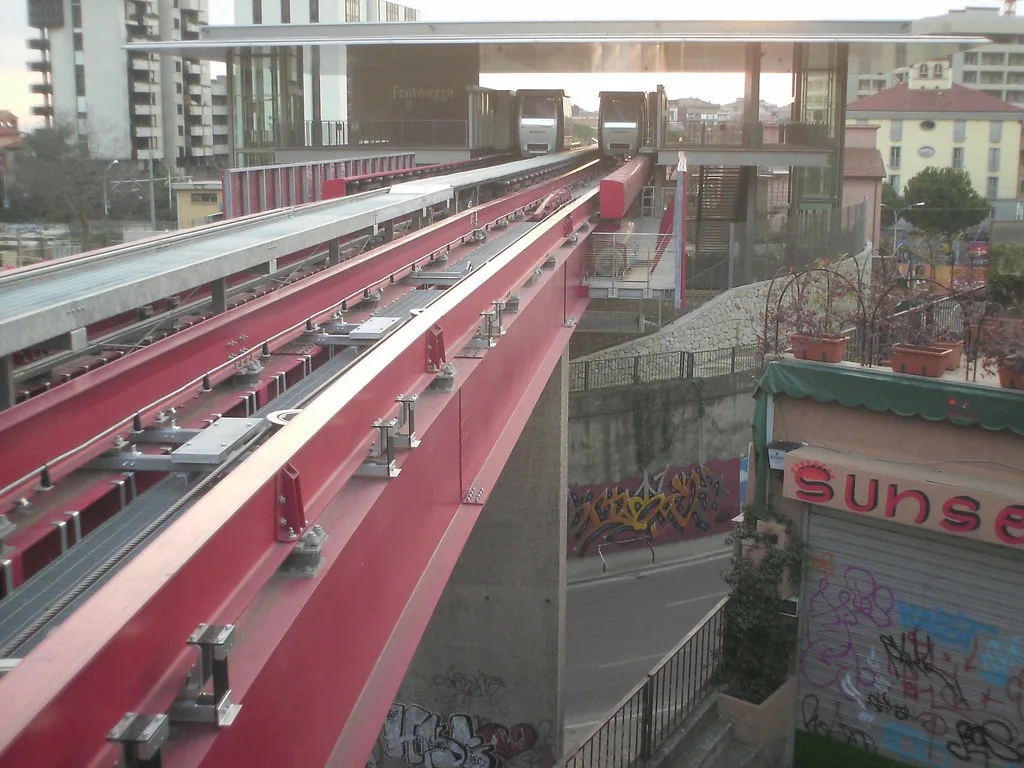
The MiniMetro is a single-line automated service that connects the area around the main railway station with Pincetto, high in the historic centre. Rides are short and the route has several stops, so it functions as a genuine hill-climbing shuttle rather than a tourist ride. Arrive by train, walk the short distance to the station-side stop, and ride to the terminus instead of dragging luggage up the slopes. Further visitor details appear in Official event website.
At the top, escalators continue from the Pincetto stop up to the Giardino del Pincetto, a garden terrace with east-facing views that stretch towards Assisi. It is a useful orientation point: from here you can walk into the core of the old town without immediately facing the steepest gradients. Check current fares and operating times with the operator or the city before relying on a late-night ride.
Two practical notes. First, trains are frequent during service hours but the published schedule should be confirmed on the day, since timetables change seasonally. Second, the MiniMetro does not reach every corner of the centre; it delivers you to one edge of the ridge, and the rest is walking. Plan your first stop accordingly, ideally somewhere near Pincetto or along Corso Vannucci.
The Escalator Network: Pincetto, Rocca Paolina and the Buried Street
Perugia has turned its vertical geography into infrastructure. Escalators and elevators connect the lower town with the centre at several points, most usefully at Pincetto and through the Rocca Paolina complex. These are not museum exhibits with turnstiles in the main passages; they are working routes that residents use with shopping bags and commuters use on the daily commute.
The Rocca Paolina route is the most memorable. Escalators rise from the Piazza Partigiani area through the foundations of a sixteenth-century papal fortress, passing vaulted chambers and the buried remains of a medieval neighbourhood that was filled in to support the fortress above. Much of the underground complex is free to walk through, with museum and exhibition areas in parts of it, so you can treat the passage as a through-route into the centre.
If you have an interest in the engineering, allow extra time. One account suggests roughly an hour to cross the Rocca at a slow pace, and notes that the Porta Marzia gate was dismantled and reassembled into the fortress wall. Opening times for the passages and escalators are published by the city and the operator, and they change; confirm before a late arrival. Further visitor details appear in Underground Perugia: Rocca Paolina and Etruscan Well.
Piazza Partigiani as an Arrival Hub
Piazza Partigiani is the practical gateway for anyone arriving by intercity bus or driving into the city. It sits on the lower edge of the historic centre and hosts a large car park, with escalators climbing from the piazza through the Rocca Paolina remains directly into the old town. This makes it a sensible drop-off point whether you are parking for a day or starting a longer stay.
Parking in the centre itself is restricted, so the well-marked car parks around the old town's edge are the realistic option. Piazza Partigiani is one of the most convenient, and the escalator connection means you do not have to walk up the road with bags. Rates and availability are managed by the operator, so check current prices at the pay station or the city's parking pages rather than relying on older figures.
Arriving by Train from Florence or Rome
Perugia is not on Italy's high-speed rail spine, but connections are reasonable. One travel guide notes a direct train from Florence taking about two hours, and a Rome journey of similar length that requires a change at Foligno. Treat those as indicative and confirm times and connections with the operator before you travel, since regional timetables and rolling stock change.
The station is small and easy to navigate, which makes the onward connection simple: exit, find the MiniMetro stop nearby, and ride up rather than queue for a taxi. If you arrive with heavy luggage and the MiniMetro is not running, a taxi to the centre is the fallback. Keep the return leg in mind too, and leave generous margin for the descent.
Arriving by Air: San Francesco d'Assisi Airport
Perugia's small airport sits outside the city and handles a limited roster of European services. One traveller account describes buying a bus ticket on board, in cash, after discovering there was no ticket desk at the airport, and warns that buses are timed around flights rather than running frequently through the day. Conditions change, so check the airport's own transport information before departure rather than assuming that arrangement still holds.
The same account notes the ride into the city took roughly half an hour, with good views on the way. Because the airport is small, allow extra time on the return for check-in and the bus connection, and confirm the current pickup point and payment method with the airport or the bus operator.
Arriving by Car: The A1 and the Old Town Edge
By road, Perugia connects easily to the A1 motorway, which runs a short distance to the west, making the city reachable from Rome or Florence in roughly two hours according to one guide. The same source mentions a fast road towards Siena. Those figures are indicative; use a live route planner for current driving conditions and tolls.
Inside the city, expect restricted traffic zones in the historic core. The practical approach is to leave the car at an edge car park and continue on foot, by escalator or by MiniMetro. Choose a car park with a documented escalator or lift connection, such as the Piazza Partigiani area, and read the signs carefully before entering narrow streets that may be camera-controlled.
Walking the Centre: Steps, Gradients and Realistic Routes
In Perugia the streets themselves are the obstacle course. Lanes cross the ridge and frequently break into flights of steps as they climb and drop into ravines, so a route that looks short on a map can take far longer than expected. Wear shoes with grip, especially after rain, when polished stone becomes slippery.
A sensible day plan clusters stops by elevation rather than by theme. Start high, at Pincetto or along Corso Vannucci, and work downhill through Piazza IV Novembre towards the lower sights, using an escalator or the Rocca Paolina passage to return if your legs are done. If you want the best-known viewpoint, the climb from the centre to Porta Sole is steep but rewarding, and it sits naturally alongside the quieter corners in this guide to the hidden gems in Perugia.
Walking times in the centre are also affected by crowds. During Umbria Jazz in July and chocolate festival periods, the main streets and squares fill up and progress slows. If your schedule is tight, keep the walking legs short and rely on the MiniMetro for the lower-town connection.
A First-Afternoon Arrival Plan
Arrive at the station, take the MiniMetro to Pincetto, and ride the escalators up to Giardino del Pincetto for a first look over the rooftops. From there, walk into the centre along Corso Vannucci towards Piazza IV Novembre, stopping at the cathedral and the Fontana Maggiore. Keep the first afternoon light and leave the museums for when you have full energy.
If you arrive by car or coach, park at Piazza Partigiani and climb through the Rocca Paolina instead, treating the buried street as your introduction to the city. Carry small change for any bus or parking payment you need, and confirm the day's opening hours for the passages before committing to a late arrival.
Day Trips and When a Car Helps
Perugia works well as a base for the surrounding hill towns, with Assisi and Lake Trasimeno around half an hour away according to one guide, and Gubbio reachable in under an hour by car. For those trips a car is convenient, but you can also use the regional rail network for some destinations, so check connections for each specific town before deciding.
If you do rent a car, keep it parked at the edge of the old town for the days you spend in Perugia itself, and use the escalators and MiniMetro for the centre. That way the car serves the countryside trips without forcing you to negotiate restricted streets every day.
Plan Your Visit
Perugia rewards a little planning around its two levels. Use the MiniMetro from the station side to Pincetto, lean on the escalators through Rocca Paolina from Piazza Partigiani, and expect the centre itself to be a series of climbs and staircases. Confirm current fares, operating hours and parking details with the city or operator before you go, since these are the facts most likely to change.
Frequently Asked Questions
Is there only one train station in Perugia?
The main station is at the foot of the hill, below the historic centre, and it is the one most travellers use. From there the MiniMetro provides the onward climb to Pincetto. Check the operator's site for the full list of stations serving the city before booking.
How do I get from Perugia station to the historic centre?
Take the MiniMetro from the station-side stop to Pincetto, then use the escalators up to Giardino del Pincetto and walk into the centre. Alternatively, a taxi handles the climb with luggage. Confirm current operating times before a late arrival.
Where can I park near Perugia's old town?
Piazza Partigiani is a convenient edge car park with escalator access into the centre through the Rocca Paolina remains. Rates and availability are set by the operator, so check at the pay station or the city's parking pages rather than relying on older figures.
How hilly is walking in Perugia?
Very. Lanes regularly turn into stepped paths as they cross the ridge, so short distances can take longer than expected. Cluster stops by elevation, wear shoes with grip, and use the escalators or MiniMetro when your legs need a break.
Can I reach the centre from Piazza Partigiani without climbing the hill?
Escalators rise from the Piazza Partigiani area through the Rocca Paolina complex into the old town, so the climb is mechanical rather than on foot. The passages have published opening times, so check them before a late arrival.
How long does it take to reach Perugia from Rome or Florence by train?
One guide gives about two hours from Florence on a direct train, and a similar time from Rome with a change at Foligno. Treat those as indicative and confirm times and connections with the operator before travelling.
Sources
Continue exploring
More guides you'll find useful





