
Parma Two-Day Itinerary: Cathedral Square, Pilotta and Food
A compact two-day Parma plan that separates cathedral-square tickets from the Pilotta's multi-museum pass, sequences Correggio's domes and builds in real breaks.
On this page
Parma packs an unusual density of art and food into a small historic centre, so two days can cover the cathedral square, the Pilotta complex and a few well-chosen meals without rushing. The organising principle is simple: group tickets by complex, and see Correggio's two domes in the order he painted them.
Everything below is a suggested editorial pacing, not official guidance. The Fabbriceria of the cathedral runs the Piazza Duomo sites and publishes visiting passes and hours on its own site, so confirm the day you plan to visit before setting out.
Why Parma Suits a Two-Day Plan
The cathedral, baptistery, Pilotta and main squares sit within a compact walkable core, which means you spend time looking rather than moving between sights. You can see one dome in the morning and another after lunch without crossing the city.
The trade-off is that two days are still not enough for everything. Parma's appeal also lies in quieter corners, and our guide to the hidden gems in Parma helps you weigh whether to spend an afternoon on a lesser-known stop or return to a museum.
Before You Go: Grouping Tickets and What to Check
Treat the cathedral square and the Pilotta as two separate ticketing worlds. The cathedral itself is free to enter, while the baptistery and the Diocesan Museum Benedetto Antelami are ticketed and generally offered together, according to the cathedral square's own visitor pages.
The Pilotta is the reverse situation: entry there is ticketed as a whole, and the one complex holds the national gallery, the archaeological museum, the Palatine library and the Teatro Farnese. Do not assume a Duomo pass or a Pilotta ticket gets you into the other site, so budget for both if you want both.
Book ahead for any guided visit, cooking class or food walk, and confirm meeting points and start times with the operator. If you want the city's own events calendar as a cross-check for what is on during your dates, the Comune di Parma publishes an events section.
Day 1 Morning: San Giovanni Evangelista First
Start two minutes behind the cathedral at San Giovanni Evangelista, where Correggio painted his Vision of St John on Patmos in the early 1520s, a few years before the cathedral's Assumption. Seeing the smaller dome first makes the cathedral's later, larger version easier to read.
The church also holds frescoes by Parmigianino in the left aisle chapels, painted when he was very young, so two of Parma's major painters appear in a single unassuming parish church. The church is free, and a suggested forty minutes covers the dome and the chapels comfortably.
Behind the church, the monastic complex includes cloisters and the Spezieria di San Giovanni, a Benedictine pharmacy preserved with its shelving, majolica jars and mortars. Access is managed separately from the church and hours vary, so ask inside rather than assuming you can walk in.
Day 1 Late Morning: Piazza Duomo in Sequence
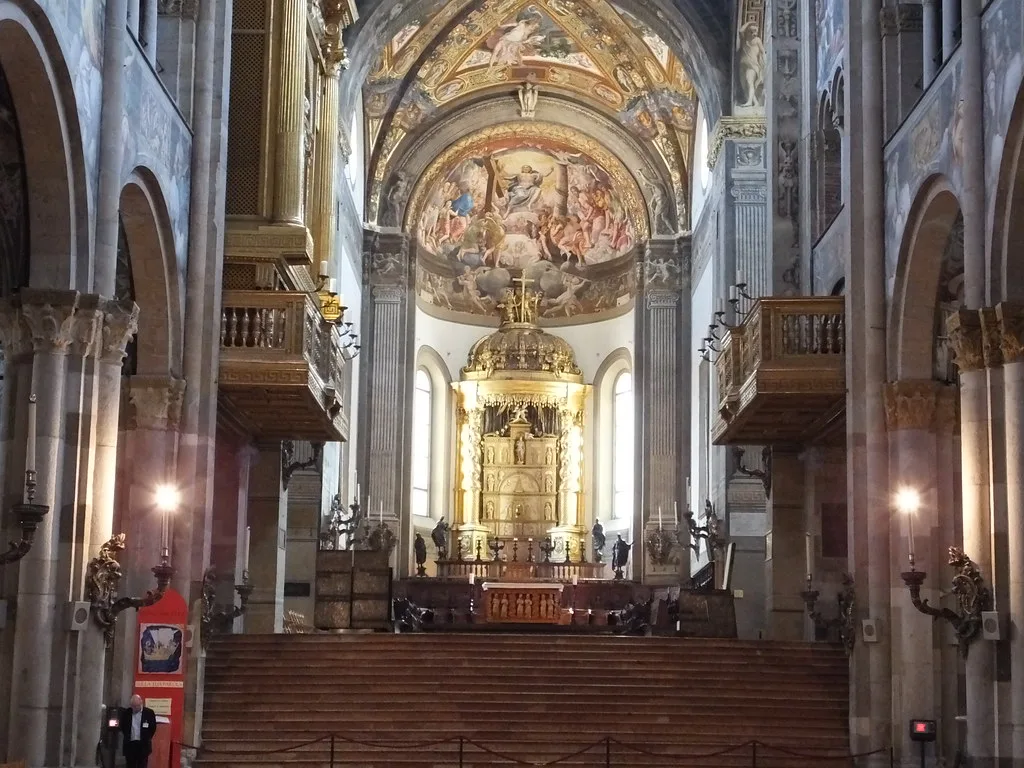
Move on to the cathedral, which combines Romanesque architecture with Correggio's Assumption fresco in the crossing dome. Entry to the church is free, and a suggested hour is enough for the nave, the Antelami sculpture and the dome itself.
Then step into the Baptistery of San Giovanni Battista, the octagonal building of pink Verona marble begun in 1196 by Benedetto Antelami. It is a ticketed interior sold through the cathedral square's system, so buy the combination with the diocesan museum if you intend to see both rather than paying twice.
Finish the morning in the Diocesan Museum, which holds the church's art collection and is where the visitor passes are managed. If you are short on time, the exterior of the baptistery and a walk around the square costs nothing and still gives you the ensemble's effect.
Day 1 Midday: Lunch and a Real Break
Resist stacking a third interior before lunch. Parma's food culture is part of the point of the trip, and a seated lunch of tortelli or a plate of local cured meats resets the day far better than a rushed sandwich eaten standing up near the next ticket desk.
If you prefer your food structured, a guided walking tour can fold tasting stops into the middle of the day. Visit Emilia lists a private half-day Parma food walk with five food and wine stops, a three-hour duration and a meeting point in front of a restaurant on Piazza Garibaldi, with vegetarian and gluten-free options available on prior notice.
Day 1 Afternoon: A Lighter Block
Keep the afternoon deliberately light, since the morning has already delivered two domes. Visit Emilia's literary route through the city links Piazza Garibaldi and Piazza Duomo to writers of the past and treats the square's outdoor tables as part of Parma's everyday life, which suits a slow wander rather than another ticketed interior.
If you would rather see a smaller collection, the Museo Glauco Lombardi in Palazzo di Riserva on Strada Garibaldi gathers objects tied to Maria Luigia d'Asburgo and the eighteenth- and nineteenth-century duchy of Parma. It has its own ticket, hours and event programme, so check those directly before you go.
Day 1 Evening: Aperitivo or the Opera House
Piazza Garibaldi is the natural evening anchor, with outdoor tables and the Palazzo del Governatore clock tower overhead. An aperitivo here is a low-effort way to end a museum-heavy day, and the literary route treats the square's café terraces as part of the city's social rhythm.
For something grander, the Teatro Regio is the city's opera house, founded under Marie Louise, Duchess of Parma. Guided visits run when there is no rehearsal, so check the theatre's own programme rather than turning up and expecting a tour.
Day 2 Morning: The Pilotta Complex
Give the Palazzo della Pilotta roughly half a day as an editorial suggestion, because a single ticket covers several collections under one roof. The national gallery, the archaeological museum, the Palatine library and the Teatro Farnese are all inside, so decide in advance which matters most to you and let something go if time runs short.
The palace was an unfinished Farnese project, and its austere exterior hides a dense interior. Arrive near opening time to move through the galleries before groups build, and check the complex's published hours and any partial closures on the day, since individual rooms can be shut for maintenance.
Day 2 Midday: Teatro Farnese, Then a Slow Lunch
The Teatro Farnese is the visual climax of the Pilotta rather than a separate stop, so save it for the end of your palace visit. Built in 1618 for Duke Ranuccio Farnese, the all-wood theatre was destroyed by Allied bombing during the Second World War and rebuilt from its own fragments, reopening in 1962. Further visitor details appear in Teatro Farnese Reviews | Tripexpert.
After that scale of interior, lunch should be slow. Sit down properly, order something regional and resist squeezing in one more museum before the afternoon, because the Pilotta is the most tiring single stop in this itinerary.
Day 2 Afternoon: Steccata and Smaller Collections
Santa Maria della Steccata sits close to Piazza Garibaldi and offers a quieter change of register after the Pilotta, with its dome visible from the square. It works well as a short, undemanding stop that keeps you moving through the centre without another heavy ticket.
Read our full Parma Attractions hub if you want to compare the remaining sights and decide what your second afternoon is worth. It is more useful than adding a fourth museum on a whim when the day already has a major palace in it.
Food-focused travellers may prefer to swap this block for a market visit or a producer tasting out of town. Visit Emilia also documents Parma's connections to writers such as Giovannino Guareschi and the lower Parma area, which suits anyone who wants a literary half-day instead of a museum one.
Day 2 Evening Options
Choose between a proper trattoria dinner and one last walk. A slow dinner of local pasta and cured meats is the obvious close, but a passeggiata through the lit centre costs nothing and lets you revisit Piazza Duomo when the day-trippers have gone.
If you would rather eat your way through the evening, ask a guide or operator directly about later food-walk departures and availability on your exact date. Do not rely on a listed start time alone, since private tours can be arranged flexibly.
Pacing Trade-Offs: What to Cut
With one day rather than two, keep Piazza Duomo and one dome, then choose either the Pilotta or a food walk, not both. San Giovanni Evangelista and the cathedral together give you Correggio in sequence for free, which is the highest-value hour in the city if art is the priority.
If you are weighing Parma against a bigger neighbour, note that Busseto and Modena appear in many regional itineraries as separate excursions rather than substitutes for Parma itself. Parma's compact centre makes two days feel generous, while a multi-city plan rarely allows a proper lunch.
Anyone planning to combine Parma with other Italian stops will find our wider Italy guides useful for sequencing, but keep Parma's two days anchored to the cathedral square and the Pilotta rather than to day trips.
Practical Notes Before You Go
Hours, ticket combinations and cloister access change with the season and the liturgical calendar. Confirm current opening times and pass options on the Piazza Duomo site and the Pilotta's own pages in the week before you travel, and treat any price you saw in an older guide as unreliable.
For orientation, use the Comune di Parma site for events, civic notices and information on getting around, and verify anything a resale site claims through official channels instead.
Plan Your Visit
Two days in Parma work best when you separate the cathedral square's passes from the Pilotta's single multi-museum ticket, and when you protect a real lunch between them. Put San Giovanni Evangelista before the cathedral if you want Correggio's domes to make sense in order.
Before you travel, confirm hours and pass options with the Fabbriceria for Piazza Duomo and with the Pilotta for the palace complex, and check the Teatro Regio's programme if an opera evening appeals. Those checks are the difference between a smooth two days and a lot of locked doors. For related planning, see Parma Music and Festivals: Verdi, Opera and the Teatro Regio.
Frequently Asked Questions
Is two days enough to see Parma?
Two days cover the cathedral square, San Giovanni Evangelista, the Pilotta complex and a couple of food stops at a comfortable pace. It is not enough for every museum and day trip, so choose either the smaller collections or an outing rather than trying to do both.
Should you visit the cathedral or the Pilotta first?
Do Piazza Duomo first, and see San Giovanni Evangelista before the cathedral if you can, because Correggio painted that smaller dome earlier and it explains the later one. The Pilotta deserves its own morning or half-day, since one ticket there covers several collections.
Is the Parma cathedral free to enter?
Yes, entry to the cathedral church is free. The baptistery and the Diocesan Museum are ticketed and generally sold through the cathedral square's visitor system, so check the current options on the Piazza Duomo site before you go.
How long does the Pilotta complex take?
Allow roughly half a day as a suggestion, not an official figure. The complex holds the national gallery, the archaeological museum, the Palatine library and the Teatro Farnese, so decide what matters most and check opening days before you commit.
Where do you eat between sights in Parma?
The centre around Piazza Garibaldi and the streets near Piazza Duomo have plenty of seated options for tortelli, cured meats and pastries. Guided food walks also exist with tasting stops built in, and operators ask for dietary requirements at booking.
Sources
- Homepage - Comune di Parma
- Gastronomic tour for the life of the center of Parma | Visit Emilia
- San Giovanni Evangelista, Parma: Correggio's Other Dome
- Literary itinerary in Parma and surrounding areas | Visit Emilia
- Museo Glauco Lombardi – Maria Luigia e Napoleone – Parma tra '700 e '800
- Piazza Duomo Parma - Cathedral, Baptistery, Bishop's palace
- The Cathedral of Parma: Between Romanesque and Renaissance | Vivere in Italien
- Teatro Farnese Reviews | Tripexpert
Continue exploring
More guides you'll find useful





