
One Day in Modena: A Realistic Walking Itinerary
Plan one day in Modena on foot: the UNESCO core in the morning, a market lunch, Palazzo Ducale and Galleria Estense in the afternoon, with cutting advice.
On this page
Modena rewards compact planning. The cathedral, the tower and the market all sit inside a small historic centre, which is why one day here works best as a short walking loop rather than a checklist of museums spread across the province. This itinerary assumes you arrive by train, stay on foot, and want one sit-down pause rather than two.
Everything below is sequenced so the free sights come first and the ticketed interiors come later, when you know how much energy and time you have left. Prices, opening hours and reservation rules change, so treat the official tourism portal as your starting point and confirm each visit before you travel.
Start with the Bookable Sights, Not the Square
Before you leave home, spend ten minutes on the official Modena tourism site. It lists the Ghirlandina Tower, the historic rooms of the town hall and the Ex Albergo Diurno as individually bookable visits, alongside guided city tours at classic, slow, family and cathedral-focused levels. Booking the tower in advance is the single most useful decision, because it sets a fixed time around which the rest of the day bends.
The portal also publishes a fixed-date programme of themed and theatrical visits through the year, plus temporary exhibitions with their own run dates. If a listed show or festival falls inside your travel dates, check that it is still open before planning around it, since some entries carry dates well into the future.
Treat third-party blogs as background reading only. They are useful for atmosphere and for explaining what each place is, but their ticket figures and opening times can be years old, so use them to decide what interests you and the official site to check what is true this week.
Morning: the UNESCO Core in Piazza Grande
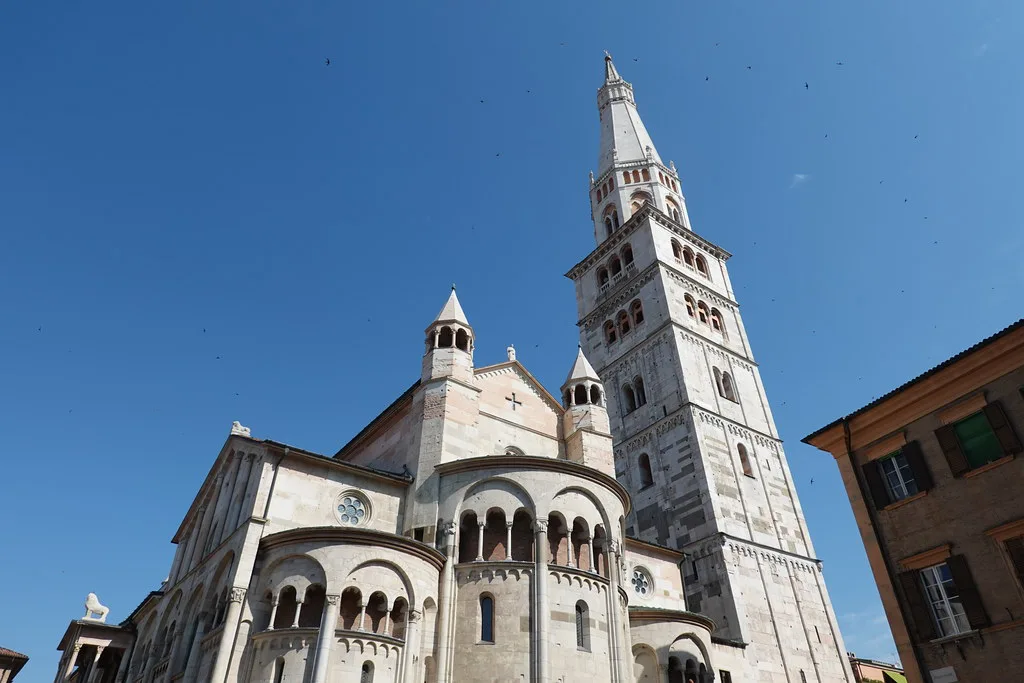
Begin where the city does: the paved square that holds the cathedral, the bell tower and the civic buildings together as a single UNESCO World Heritage site. Mornings are the calmest window for the marble facade, the sculpted portals and the surrounding colonnades, so resist the urge to rush straight up the tower. Read the carvings on the facade before you go inside; they are the reason the building is studied.
Entry to the cathedral itself is free, which makes it the easiest stop to keep in the plan even if the day slips, and it takes a surprisingly short time to see the main interior. Hours posted by travel blogs vary and may not be current, so check the cathedral's own information or the tourism office rather than relying on an old guidebook. If a service is under way, step out and come back rather than treating the church as a sight.
The square is also the natural place to slow down. Cafes ring the piazza, and a standing coffee here costs you minutes rather than a table service. Use the pause to work out how far your booked tower slot is, and to decide whether the Galleria Estense or a motor museum gets your afternoon.
If you want a broader set of less-obvious corners to fold in later, the city's quieter churches, porticoes and small courtyards are worth a separate look. You can read more about the city's hidden gems in Modena before you decide where the morning ends and the afternoon begins.
Climbing the Ghirlandina: What the Tower Adds
The Ghirlandina is the cathedral's bell tower, and it is a separate visit from the church. It rises above the rooftops and gives the view that makes the UNESCO cluster legible: the square, the cathedral roof line, the long arcades running out towards the edges of the centre. The climb also explains the tower's history, including the much-told story of the stolen bucket.
The official tourism site sells timed tower admission, which is exactly the kind of thing to reserve rather than improvise on the day; check the current price and availability on that page, because figures quoted elsewhere are not reliable. Slot your climb after the cathedral so you are not rushed by a booking.
Budget the climb as the longest single stop of the morning, stairs included, and remember that views are weather-dependent. On a clear day it earns its slot; in flat grey light you could drop it and bank the time for the market lunch instead.
Midday: Mercato Albinelli for a Standing Lunch
Walk a few minutes from the square to the covered Albinelli market, a 1930s Art Nouveau hall that is the most enjoyable lunch stop in the centre. Stalls sell fresh pasta, cheese, cured meats, pastries and local specialities, and several counters serve prepared food, so you can eat for a fraction of a restaurant lunch without booking anything. Pick up a filled flatbread or a slice of savoury greens pie and eat at a counter.
The market is a daytime stop, so place it before mid-afternoon rather than at the end of the day. Opening days and closing times are the kind of detail that changes with season and is reported inconsistently in blogs, so confirm the hours on the market or tourism site the week you travel and keep a backup bakery in mind if it is shut.
If you want a sit-down lunch instead, book it ahead and accept that it costs you a sight. A proper trattoria meal in Modena is a two-hour affair, which is fine on a slow trip and fatal on a one-day dash.
Afternoon: Palazzo Ducale from the Outside
After lunch, cross to Piazza Roma for the Palazzo Ducale, a vast baroque palace that still houses Italy's military academy. As a default, treat it as an exterior and square stop: you see the facade, the piazza and the sense of scale in a few minutes, and you lose nothing by not going in.
Interiors depend on a guided visit arranged through the tourist office, not on a drop-in ticket. The official portal lists a weekend guided visit to the palace, with a per-person fee and a note that it closes in August; verify the current schedule and book ahead if the interior matters to you. Otherwise, photograph the facade and move on.
This is the point in the day where the itinerary becomes a choice rather than a list. You have roughly one afternoon slot left, and the sensible options are the art gallery or a car museum, not both.
Galleria Estense inside Palazzo dei Musei
The Galleria Estense occupies the upper floors of the Palazzo dei Musei complex and holds the art collection of the d'Este family, who ruled the city for centuries. Expect paintings, sculpture and objects rather than a single blockbuster, with works by artists including Correggio and El Greco in the mix. It suits travellers who want one quiet, indoor hour after a morning outdoors.
Blogs disagree on the gallery's opening hours and admission, and the building's lower floors have different access rules from the gallery itself, so do not assume one ticket covers everything. Check current hours and ticket scope before you commit the afternoon to it.
Pace it as a short visit: choose two or three rooms that interest you, see them properly, and leave. Trying to cover the whole gallery on a one-day trip is how people end up sprinting through the tower at four in the afternoon.
The Food-and-Cars Trade-Off
Modena's other headline draw is motorsport. The Enzo Ferrari Museum sits just outside the historic centre and is walkable from the square, while the Ferrari museum and factory in Maranello are a separate trip that needs a bus or car; do not fold Maranello into a walking day. Related guide: Museo Enzo Ferrari Modena: Tickets, Hours & Visit Guide.
The Enzo Ferrari Museum charges a substantial adult ticket and offers a combined ticket with Maranello, and opening times shift by month, so check the official museum site for both before choosing. If cars win the afternoon, drop the Galleria Estense entirely; a rushed version of either is worse than one done properly.
A middle path works if you have a long day: see the art gallery's highlights early in the afternoon and walk to the Ferrari museum's exterior and modern hall afterwards. That is a compromise, not a full visit, and it only fits if the morning ran to schedule.
What to Drop When You Are Late
Work down this priority ladder rather than cutting randomly. Keep the cathedral and the square, since they are free, central and quick. Keep your booked tower slot if you already paid for it. Keep the market for lunch unless it is already past its closing time, in which case switch to a bakery or cafe near the square.
Drop the Palazzo Ducale interior first, because the exterior still gives you the square and the facade in minutes. Drop the Galleria Estense second, and do not replace it with a rushed car museum. If the morning went badly, cut the tower, eat early and give the afternoon to one paid interior done properly.
Train times are the hard boundary. Check departures before you sit down to lunch and set a phone alarm for the walk back to the station, so the last hour does not become a sprint through streets you never really saw.
Getting Around and Arriving from Bologna
Modena's centre is compact and flat, and the stops in this plan sit within a short walk of one another, so you will not need a bus for the core. Sensible shoes matter more than a transport pass. Buses and taxis become relevant only if you add a car museum outside the centre or an acetaia in the countryside.
From Bologna, regional trains run frequently and the fastest journeys take well under half an hour, which makes Modena a genuinely easy day trip. Advance fares are cheap, and buying through the train operator's own app keeps the ticket on your phone; check times on the operator's site rather than relying on a blog's timetable.
Bologna airport is the usual arrival point for the region, reached by a short shuttle ride to the main station before the onward train. If you are carrying luggage, use station left luggage or a hotel bag drop rather than dragging a case over cobbles around the cathedral; confirm current left-luggage availability locally before counting on it.
Should You Stay the Night?
A single day covers the UNESCO core, one marketplace lunch and one afternoon anchor. What it does not cover is the wider province: balsamic vinegar cellars, the countryside walks and bike routes, or Maranello and its factory. Those are reasons to sleep in Modena or return rather than to squeeze more into a single afternoon.
If you stay, use the evening for the arcaded streets and a proper dinner, and give the second morning to whichever paid interior you dropped on day one. The city's tourism office publishes itineraries and bookable experiences by theme, which is the cleanest way to build that second day.
Plan Your Visit
One day in Modena works because the best of the city is close together: a free cathedral and square, a bookable tower, a market lunch and one paid afternoon interior. Decide before you arrive which interior matters more, the art gallery or the car museum, and book the tower slot that anchors the morning.
Confirm prices, opening hours and tour availability on the official tourism site in the week before you travel, since blog figures age quickly. Then keep the plan simple: walk, stop for coffee, and leave something undone for next time. For related planning, see Free Things to Do in Modena: A Slow, Low-Cost City Guide.
Frequently Asked Questions
Is Modena worth visiting for just one day?
Yes, if you stay in the historic centre. The cathedral, the square and the tower form one compact UNESCO cluster, and the Albinelli market is a short walk away, so a single day covers the core comfortably. What you will not cover is the surrounding province, including balsamic vinegar cellars and Maranello, which belong to a second day or a separate trip.
Do you need to book the Ghirlandina Tower in advance?
It is the sensible approach. The official Modena tourism site sells timed tower entry, and reserving a slot fixes the shape of your morning. Check the current price and availability on that site rather than trusting an old blog figure, and book only after you have confirmed your train times.
Can you visit Modena and Parma in the same day?
It is possible by train, since the two cities are close, but it leaves too little time in each. Modena alone rewards a full day with one afternoon anchor. If you want both cities, give each its own day and keep the walking plans separate.
Should you choose the Ferrari museum or the Galleria Estense in an afternoon?
Choose one, not both. The Enzo Ferrari Museum suits car enthusiasts and has a separate ticket and variable opening hours, so check the official museum site. The Galleria Estense suits travellers who want a quiet indoor hour of paintings and sculpture. Whichever you pick, drop the other rather than rushing both.
Do you need a car in Modena for one day?
No, for the centre. The cathedral, tower, market, Palazzo Ducale and Palazzo dei Musei are all within a walk of each other. A car or bus becomes useful only for out-of-town visits such as Maranello or a countryside vinegar cellar, and those are better treated as a separate excursion.
Sources
Continue exploring
More guides you'll find useful





