
Day Trips from Modena: A Practical Base-City Guide
Use Modena as a compact, walkable base on the Via Emilia, then plan a day around timed tower slots, market mornings and paid museum interiors.
On this page
Modena is often treated as a half-day stop between Bologna and Parma, yet its historic core packs a UNESCO square, a landmark food market and a 1931 covered hall into a few walkable blocks. Treating the city as your base rather than a stopover changes the day: you can sequence a market morning against a fixed tower slot instead of rushing both. This guide organises the city around real constraints and keeps the bigger excursions optional.
The first thing worth knowing is that entry structures here differ sharply from site to site. The cathedral nave is free, the Ghirlandina requires a reserved time slot, and the Ducal Palace only opens through a guided visit. Plan in that order and the rest of the city falls into place. For wider planning, see Hidden Gems in Modena.
Beyond the centre, Bologna and Parma sit along the Via Emilia as natural add-ons, and the surrounding region offers a much wider menu of excursions. Keep those as suggestions rather than fixed itineraries, and confirm train times and ticket availability directly with Trenitalia on the day you book.
Why Modena Works as a Base
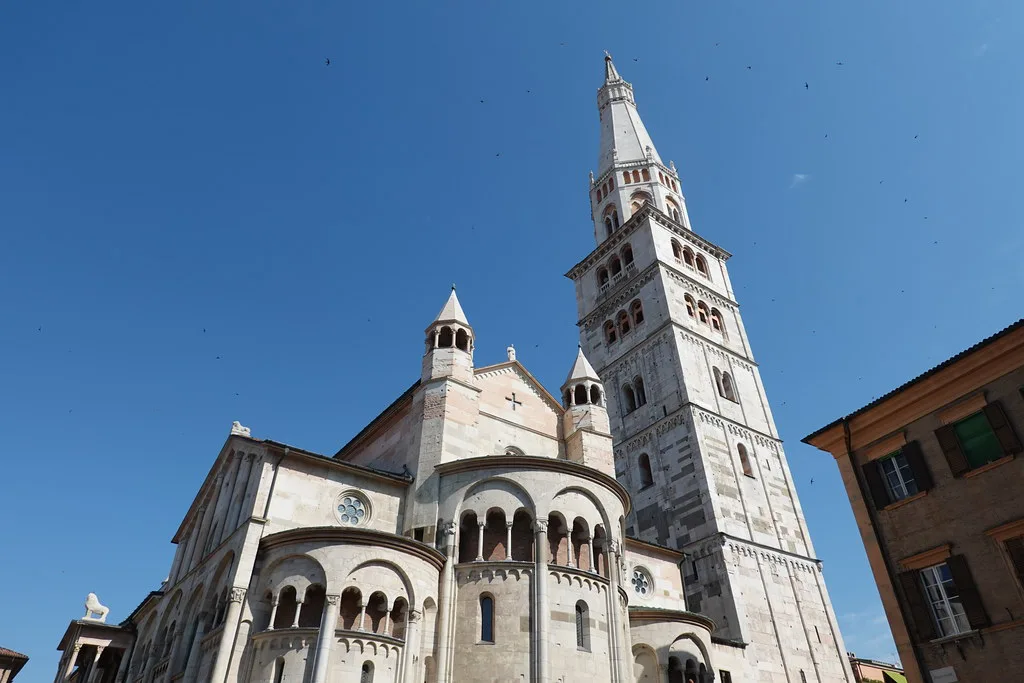
The historic centre is compact enough to cover on foot, which is why a single day can hold a market visit, the cathedral and a tower climb without a bus. Piazza Grande, the Duomo and the Ghirlandina sit together within the UNESCO site, so the biggest concentration of sights requires almost no transit.
That walkability has a practical consequence: you do not need to build a day around transport, you build it around opening hours. The market's stalls close in the early afternoon while restaurants inside trade into the evening, and the tower runs on hourly admissions. Those two rhythms, more than distance, decide your order of play.
Use Modena as a hub and you can reach the wider region when you want a change of scene. Emilia-Romagna day trips range from mosaic-heavy Ravenna to the canals of Cesenatico and Comacchio, though the furthest of these need a car or a carefully timed public transport plan.
First Decision: Market Morning or Museum Afternoon
Mercato Albinelli has traded since 1931 and remains a working food hall rather than a museum piece, with produce, cheese and fresh pasta counters alongside bars. The official market site lists 49 stalls and several restaurants, and it publishes seasonal summer hours that differ from winter timings.
Visit Modena's tourist office gives a broader published timetable, with stalls open mornings from Monday to Saturday and restaurants trading at both midday and evening. Because the two sources do not read identically and hours shift by season, check the market's own site the week you travel rather than relying on a guidebook.
The practical upshot is to front-load the market and leave the afternoon for interiors. A weekday morning before ten is when the hall feels most like a shopping errand rather than a photo stop, according to local food guides who send clients there early.
The UNESCO Trio Done Right
Modena Cathedral was begun in 1099 under the architect Lanfranco and consecrated in 1184, and it has held UNESCO status with the tower and square since 1997. Entry to the church itself is free, which makes it the easiest anchor of the day and a sensible first stop before any ticketed visit.
Free entry does not cover everything. The upper presbytery and sacristy route is ticketed, and the tourist office publishes a modest per-person charge for it, with a reciprocal reduction on the Cathedral Museums ticket. Read that as a separate, optional add-on rather than part of general admission.
The Ghirlandina is the strictest element. The tower publishes hourly admission times, seasonal closing hours, a maximum of 25 visitors per slot and mandatory advance reservation, with payment taken at the ticket office rather than online. Published rates are six euros full price and four euros reduced, but confirm them when you reserve.
Note the shape of the visit before you book. The climb is roughly 200 steps, ends at the Torresani Room rather than the summit, and is not accessible to wheelchair users or visitors with walking difficulties. Late opening on August Saturdays is also published, which matters if you are travelling in high summer.
What to Buy and Taste at Albinelli
Come with a shopping list rather than a camera. Parmigiano Reggiano cut from an aged wheel, traditional balsamic in its small teardrop bottle, tigelle flatbreads and Lambrusco are the things worth carrying home, and vendors generally let you taste before you commit.
For lunch without leaving the hall, Bar Schiavoni is the standing favourite for a filled panino and there are sit-down options for boards of cured meat and cheese. Restaurants inside keep longer hours than the stalls, so an evening meal at the market is possible even when the counters are shuttered.
Just outside, Trattoria Aldina is the traditional counterpoint, known for tortellini in broth and tagliatelle with ragù, and it does not take reservations. Arriving early matters more than any booking strategy here.
The Enzo Ferrari Museum in Modena
The Enzo Ferrari Museum occupies the founder's birthplace plus a yellow-clad exhibition gallery close to the station, which makes it an efficient first or last stop of the day. This is the Modena museum, not the Maranello complex, and the two are ticketed separately.
Opening hours vary by season, running later in summer and closing earlier from November to March, and the museum shuts on a small number of fixed dates around Christmas and in February. Buy in advance through the museum's own ticket page rather than assuming walk-up availability at peak times.
If cars are the reason for the trip, treat the combined pass as a decision rather than a default. It covers both museums at a reduced rate and requires you to nominate a date and time for each, with the two visits falling within 48 hours of one another. Check the current price on the operator's page before committing.
Design, Music and Palace Detours
Palazzo dei Musei gathers the Civic Museum, the Estense Gallery and city archives under one roof, and Italia.it publishes weekday morning hours with longer weekend opening and Monday closure. Confirm before travelling, since museum timetables in Italy change with the season.
The Ducal Palace is still a military academy, so it opens only on guided tours with prior booking and a capped group size. Italia.it lists a per-person charge with a child reduction and free entry for the youngest visitors; verify the current arrangement through the tourist office before planning around it.
Quieter options reward a slower afternoon, but call them quiet only in the sense of drawing fewer visitors than the cathedral. Aldo Rossi's cemetery is an incomplete design landmark a taxi ride or twenty-minute walk from the centre, and the Casa Museo Luciano Pavarotti holds the tenor's costumes and memorabilia outside the historic core.
In the evening, Piazza della Pomposa is where Modena's student crowd gathers for a Lambrusco spritz, and a gelato in Piazza Mazzini makes a sensible final stop. These are suggestions for pacing, not fixtures on a schedule.
Balsamic, Properly
Traditional Balsamic Vinegar of Modena is DOP-protected and aged for years in a series of wooden barrels, which is why it bears little resemblance to the thin, sweet liquid sold as balsamic abroad. A tasting should walk you through several ages side by side so the wood and acidity become legible.
City-centre shops offer short tastings without a car, while full tours at the acetaie outside town require transport and pre-booking. Choose the shop if your day is already full; choose the vineyard visit if balsamic is the point of the trip.
Expect to pay meaningfully more for aged traditional vinegar than for the supermarket product, and treat any very cheap bottle labelled balsamic as a different category of condiment. Ask what you are tasting before you buy rather than judging by the label.
Bologna and Parma as Optional Extensions
Bologna is the obvious extension: porticoes, the leaning towers and the country's oldest university give it a different texture from Modena's calm core. Parma trades on Parmigiano and prosciutto production plus a striking pink-marble baptistery, and it rewards more than a rushed half-day.
Rail is the simplest way to link the three cities along the Via Emilia, but this guide deliberately avoids quoting journey times or frequencies because those change by service and season. Check schedules and buy tickets on the Trenitalia site when your dates are fixed.
Trying two cities in one day is possible and tiring: one traveller's account of pairing Modena with Bologna describes a sixteen-hour day ending near midnight. If you attempt it, put the smaller city first and keep the evening in the larger one, where restaurants stay open later.
One Day, Two Days or a Long Weekend
With a single day, book a Ghirlandina slot for late morning, spend the early hours at Albinelli, then take the free cathedral nave and Piazza Grande before an afternoon museum. That sequence respects the market's morning peak and keeps the timed element fixed rather than improvised.
Two days lets you separate food from culture. Give day one to the market, cathedral and tower, and day two to the Enzo Ferrari Museum, the Palazzo dei Musei collections and a balsamic tasting, with a slow lunch in between. Local guides suggest a day covers the main sights but two days allow a food tour or a Ferrari combination.
A long weekend adds Bologna or Parma plus one countryside excursion, and a Friday-to-Sunday frame leaves room for the Ducal Palace tour and an evening in Piazza della Pomposa without squeezing either.
Practical Constraints Before You Go
Three things need advance action: the Ghirlandina slot, the Ducal Palace guided visit, and any Ferrari museum ticket at busy periods. Everything else, including the cathedral nave and the market floor, can be decided on the day.
Monday is the weak point. Italia.it lists the Palazzo dei Musei as closed that day, the cathedral's paid presbytery route does not run, while market restaurants and the cathedral itself follow different rhythms. Build Monday around the piazza and the market rather than the museums.
Prices quoted here are the figures the operators publish and should be treated as indicative rather than locked in. Confirm current rates, hours and closures on the tourist office and museum websites, and use the city's own portal for civic notices that might affect access.
Plan Your Visit
Modena works best when you let its timetables lead: market in the morning, tower at a reserved hour, cathedral whenever it suits, and museums in the afternoon. Bologna and Parma stay optional rather than obligatory, which keeps the day humane.
Verify the volatile details, the slots, seasonal hours and published prices, on the operator pages before you travel, then leave room for an unplanned glass of Lambrusco. The city rewards a slower pace more than a longer list.
Frequently Asked Questions
Is one day in Modena enough?
One day covers the main sights: the cathedral, Piazza Grande, the Ghirlandina and the Albinelli market. Add a second day if you want the Enzo Ferrari Museum, a balsamic tasting or a food tour, and a long weekend if you plan to include Bologna or Parma.
Do you need to book the Ghirlandina Tower in advance?
Yes. Admission is by reservation only, in capped groups per time slot, and no online payment is taken; you pay at the ticket office on the day. Book through the tourist office or tower email and wait for written confirmation before counting on a slot.
Is Modena Cathedral free to visit?
The church itself has free entry, but the upper presbytery and sacristy route is ticketed and closed on Mondays. The tower and cathedral museums are separate paid visits, so do not assume one ticket covers the whole complex.
Can you visit Mercato Albinelli in the afternoon?
The stalls typically trade in the morning into the early afternoon, and the restaurants inside keep midday and evening hours. Summer and winter timetables differ, so check the market's own site before you go.
Should you visit the Modena or Maranello Ferrari museum?
The Modena museum covers Enzo Ferrari's life and birthplace and sits near the station, while Maranello is the larger factory-side museum. A combined pass covers both within a 48-hour window if you have time for each.
Is Modena a good base for day trips to Bologna and Parma?
Yes, both sit along the Via Emilia and are straightforward by rail. This guide does not quote journey times because services change; check schedules and buy tickets on the Trenitalia site once your dates are set.
What is the difference between traditional balsamic and supermarket balsamic?
Traditional Balsamic Vinegar of Modena is DOP-protected and aged for years in wooden barrels, giving a thick, complex result. Supermarket balsamic is a different, cheaper product, often sweetened, so taste before you buy.
Sources
- Day Trips From Bologna: 16 Best Things To Do In Emilia Romagna
- 10 Best Things to Do in Modena: A Local's One-Day Itinerary – Taste Bologna
- One day in Modena, Italy: itinerary - Italia.it
- A Day Trip to Modena and Bologna – Anywhere Not Everywhere
- Official event website
- Comune di Modena - Sito Ufficiale | Servizi, Uffici e Notizie - Comune di Modena
- Enzo Ferrari museum - VisitModena
- The Cathedral OF MODENA - VisitModena
- The history of Modena Cathedral
- Mercato Albinelli in Modena - VisitModena
- Mercato Albinelli, Modena: Hours, What to Buy & Where to Eat – Taste Bologna
- Mercato Albinelli Modena | Covered market since 1931
- Ghirlandina belltower - VisitModena
- Book your admission hour to the Torre Ghirlandina - VisitModena
Continue exploring
More guides you'll find useful





