
A Two-Day Mattera Itinerary: Sassi, Cave Churches and Murgia Views
A practical two-day Matera plan: walk the Sassi, visit rock-hewn churches, and cross to the Murgia belvedere. Parking and timing tips included.
On this page
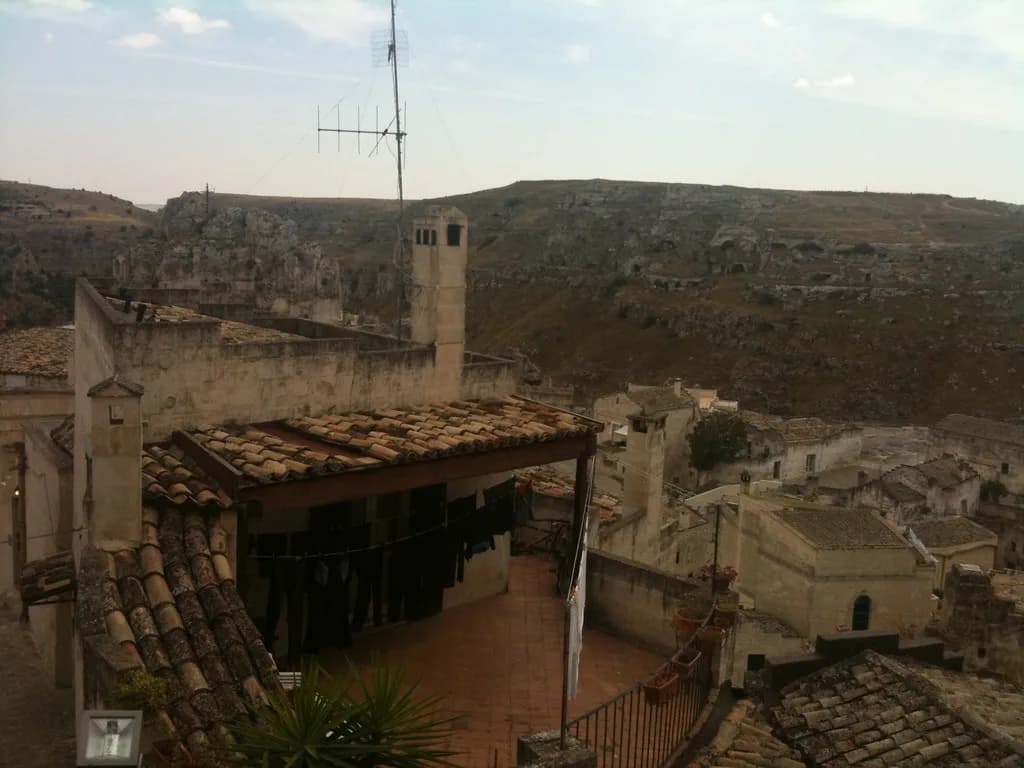
Matera rewards a short stay because the historic core is compact and most of what you want to see sits within an easy walk. Two days let you spend one day among the cave dwellings and churches of the Sassi and the next on the far side of the gravina, where the Murgia park delivers the panorama that explains the city. The catch is that the old town is pedestrian-only and layered with stairs and uneven stone, so a good plan is mostly about what you choose to leave out.
This itinerary balances the built landscape of the Sassi, the rock-hewn churches with their frescoes, and a local food and wine moment rather than a checklist of attractions. It assumes you arrive by car or shuttle and stay at least one night, since evening light is when the tufo turns gold and the lanes empty out. Ticket prices and opening times change, so check each site's own page before you go.
Why Two Days Suits Matera
The Sassi are small enough to crisscross in a morning, but they are also steep enough that rushing turns a pleasant walk into a slog. Splitting the visit into one day inside the old town and one day across the ravine keeps the walking sensible and gives you time to sit down, drink something, and look back at the city rather than photographing it from inside. A traveller's account at Find Us Lost recommends a third night to slow down further, which tells you the risk in Matera is over-scheduling, not under-scheduling.
If you only have a single day, our Matera one-day itinerary compresses the same ground into the Sassi alone and skips the Murgia crossing. Two days is the threshold at which the park becomes realistic: the belvedere at Murgia Timone is not a five-minute photo stop, but a walk, a view, and a return.
Before You Go: Parking, Arrival and Timing
Cars cannot circulate in the old town, so park outside it and walk or take a shuttle in. The Sassi and the ravine are cobbled and stepped, and a wheeled suitcase will be an obstacle rather than a convenience. Both Find Us Lost and A Change of Place Travel note that parking sits outside the historic centre and that Matera's old town is pedestrian-only, with the second source recommending that hotel guests let their property collect them rather than dragging luggage from a garage.
The most common arrival point is Bari Airport (BRI), which the Find Us Lost writer puts at roughly one hour by car, and trains link Matera with larger Italian cities. Treat those timings as the traveller's own experience and verify current connections with your airline or rail operator. On the ground, walking is the only reliable way to move through the Sassi and the park trails, so build in more time than the map suggests.
On timing, the same source suggests late spring and early autumn as the sweet spot, with mid-to-late September praised for warm weather and thinner crowds. Matera's summers are hot and dry, and the Sassi's stone holds heat, so an early start on both days counts for more than any individual sight. For month-by-month detail, see our guide to the best time to visit Matera and avoiding crowds.
Where to Base Yourself
A cave hotel is the reason many people come, and it is genuinely different from a standard room: stone walls, dim light and quiet rather than street noise. The trade-off is location. Properties on the edge of the Sassi, such as Sextantio Le Grotte della Civita, sit away from the busiest lanes, which the Find Us Lost account describes as peaceful yet still an easy walk into the centre.
If atmosphere matters less than convenience, a place near Piazza del Sedile or the Duomo puts restaurants and viewpoints at your door. Either choice works for a two-day trip, but be honest about stairs: a charming cave room reached by forty steps will feel different after a full day on stone. Ask the property directly about access before booking, and read our Matera Attractions hub if you want to map sights against your base.
Day 1 Morning: Learn the Shape of the Sassi
Start early and simply walk. The Sassi's pleasure is getting lost in the alleys, ducking into a small church cut from the rock, and finding a viewpoint nobody else is using. The Find Us Lost writer spent hours doing exactly that, treating the city as best experienced without a fixed plan, and notes that mornings before the heat sets in are the time to do it.
A short historical orientation helps before you wander. A Change of Place Travel recommends starting with a video presentation at Casa Noha that explains how the Sassi were inhabited, abandoned and revived, translated through headphones and running around half an hour. The same source notes it is air-conditioned, which makes it a sensible first stop in the middle of the day; check the current admission cost and opening days on the site itself, as neither is fixed here.
Once you have the geography, wander without a route. For a hand-held route through the quieter lanes, use our self-guided walk through the Sassi, and if you want the lesser-visited corners pointed out, keep the hidden gems in Matera in mind.
Day 1 Afternoon: Churches and Cave Dwellings Are Separate Stops
The most common mistake in Matera is assuming one ticket opens everything. It does not. The rock-hewn churches, the furnished cave homes and the underground cistern are separate sites run by different bodies, and each sets its own admission and hours. Plan them as individual stops with gaps between them, and confirm current arrangements at each entrance rather than relying on any third-party list.
For the cave-home experience, a visit to a reconstituted sasso at Casa Grotta nei Sassi shows how a large family shared one room with their animals, which gives the pretty stone lanes a hard human context. A Change of Place Travel describes the rooms as refreshingly cool on a hot day; check admission and hours before setting out, and give it real time rather than a quick pass-through.
Among the churches, Santa Maria di Idris and Santa Lucia alle Malve are the usual pairing, with frescoes that reward quiet attention. Photography is typically restricted inside to protect the frescoes, so carry light kit and accept that some images will only live in memory. Our Matera Attractions collection covers individual sights in detail if you want to choose fewer sites and see them properly.
Day 1 Evening: Aperitivo, Then Golden Hour
Matera's evenings are the part people remember. The Find Us Lost account describes candlelit cave bars and a city that transforms as the light shifts, with the best viewpoints found near the Duomo, where you look down over the Sassi as the sky changes. Arrive before the sun drops rather than chasing it.
For dinner, aim for something cave-carved and close to where you are staying, and book ahead in high season; the same writer reserved a terrace table at a view restaurant well in advance to secure the outlook. Cuisine here leans on Basilicata staples and local wine, which is a better use of one evening than chasing a long list of venues.
If you have energy left, walk a second viewpoint after dark rather than a second restaurant. The Sassi at night, with few people in the lanes, is a different city from the one you explored at ten in the morning. Sasso Barisano and the surrounding alleys on the hidden gems page give you a reason to cross town on foot.
Day 2 Morning: Rock-Hewn Churches and Fresco Etiquette
Use the second morning for the church interiors you skipped, since they are cooler and quieter early. A Change of Place Travel names Santa Maria di Idris, Santa Lucia alle Malve and Santa Maria di Armenis as three worth prioritising, allowing around 45 minutes each, and stresses that photography is banned inside to preserve the frescoes.
The views outside the churches are free and often better than anything inside. The same source singles out the outlook around Santa Maria di Armenis and warns of a hawker positioned behind Idris who charges tourists to stand on a marked box for a photograph; you can simply decline and find a public spot to the side. Admission to the church interiors remains separate and changes over time, so verify at the door.
Dress for a place of worship and keep your voice low: these are consecrated spaces as well as heritage sites. Official visitor information for the city is published by Materaturismo, which runs itineraries across the Sassi and the Murgia; use it as a directory of guides and operators rather than a fixed schedule you have to follow.
Day 2 Midday: A Slower Detour and Something Cold
By midday, stop trying to see things. A gelato eaten on a bench in one of the smaller squares is a legitimate part of the itinerary, and A Change of Place Travel singles out I Vizi degli Angeli for imaginative flavours and a setting with seating nearby. Confirm current hours on site, and use the pause to rest legs that have done a lot of stone steps.
The quieter corners of the Sassi reward this slower half hour. Rather than following the main flow between Piazza del Sedile and the churches, take a lane that looks like it goes nowhere and see where it ends. Our Matera self-guided walk through the Sassi folds these kinds of detours into a half-day route.
Day 2 Afternoon: Crossing to Belvedere Murgia Timone
The classic view of Matera is from across the gravina, at Belvedere Murgia Timone, where the whole city is visible at once with the ravine in front. It is free and open around the clock according to A Change of Place Travel, which also describes a gravel car park and roughly a mile of walking to reach the lookout. The terrain is uneven, so wear shoes with grip and turn back if the light is going rather than pressing on.
Decide between the belvedere and the walk down into the ravine. The same source describes the descent as genuinely hazardous in places, with loose ground and a risk of slipping, and notes that less intrepid walkers can still get a superb panorama from the car park side. If that is you, take the view and skip the scramble; there is no prize for the extra exposure.
If you would rather not drive, the belvedere can be approached on foot from the city along the gravina, though the crossing involves a steep descent and climb. Treat this as a half-day outing with water, and check daylight before setting out. For what else sits across the park, our Matera three-day itinerary gives this landscape a full day of its own.
What an Extra Day Adds
An extra night in Matera is more valuable than an extra sight. The Find Us Lost writer, having done two nights, wished for a third specifically to slow the pace and explore beyond the headline attractions, which is a useful signal for anyone tempted to cram in one more church.
A third day opens up the Murgia park properly, with time for the rock churches and caves scattered across the far side of the ravine, plus a slower morning in the Sassi before departure. Our three-day itinerary sets out how to use that time without repeating the first two days. If you only have one day to give, the one-day itinerary keeps the Sassi at its centre.
Practical Tips: Feet, Water and Phone Battery
Wear shoes with tread and accept that you will climb more stairs than you expect. The Sassi are cut into a hillside, and the park trails are loose underfoot; a change of pace matters more than a plan. Carry more water than feels necessary in summer, and remember that shade in the lanes disappears in the middle of the day.
Download an offline map before you arrive. Signal in the steep alleys is patchy, and the city's layout is confusing even with a screen. A paper map from a tourist office, or the route in our self-guided walk through the Sassi, is a sensible backup.
Finally, check the official tourism site before you travel for current guided options and park information, since operator schedules shift by season. Materaturismo has operated guided visits in the city for years and publishes its own offerings, which you should treat as one operator's programme rather than the city's official itinerary.
Accessibility and Pacing
Matera is not a flat city. The historic centre is a network of stairs, ramps and uneven stone, and the park trails add looser surfaces. Anyone with mobility limitations should plan fewer stops and use the shuttle and vehicle access that hotels and tour operators provide, and should ask specific questions about step counts before booking a cave room or a guided walk.
Build in one seated break per morning and afternoon, and stop earlier than you think you need to. Heat exhaustion is a real risk in summer on stone, and both sources note the value of an early start. A short, well-paced two days will leave you with a better memory of Matera than a packed one.
Plan Your Visit
Two days in Matera, planned honestly, are enough: one for the Sassi and its churches, one for the ravine and the belvedere that gives the city its shape. Park outside the old town, walk everywhere, book a cave room if the atmosphere appeals, and leave space for an unplanned hour with a view. Verify ticket costs, opening days and transport connections directly before you travel, since these change and this guide deliberately does not fix them.
For more detail on individual sights, start with the Matera Attractions hub, and if you are extending the trip, our three-day itinerary and one-day itinerary show how the same ground scales up and down.
Frequently Asked Questions
How many days is enough in Matera?
Two days covers the Sassi and the Belvedere Murgia Timone without rushing. One day is enough for the old town alone, while three days let you explore the Murgia park and the rock churches across the ravine at a slower pace. Travellers who have done two nights often say a third would have been welcome.
What should you not miss in Matera in two days?
Prioritise the cave-dwelling lanes of the Sassi at golden hour, at least one rock-hewn church with frescoes, a furnished cave home such as Casa Grotta nei Sassi, and the panorama from Belvedere Murgia Timone across the gravina. The city's official tourism site lists guided options if you want a local interpreter of the sites.
Do you need a car for a two-day Matera itinerary?
Not strictly. Trains and buses reach Matera, and the historic centre is walked entirely on foot. A car helps for reaching Belvedere Murgia Timone and for onward travel, but you will park outside the old town regardless, because the Sassi lanes are pedestrian-only.
Is the Belvedere Murgia Timone worth the trip across the gravina?
Yes, if you want the defining view of Matera. The lookout is free and accessible by car or on foot, and the walk to the point is short but on uneven ground. The steeper descent into the ravine is genuinely hazardous in places and can be skipped without losing the panorama.
What is the best area to stay in Matera for a short trip?
For atmosphere, stay in a cave hotel on the edge of the Sassi, which is quieter while still walkable to the centre. For convenience, choose somewhere near Piazza del Sedile or the Duomo. Either way, ask about stairs and how luggage is moved from parking before you book.
How do you get to Matera from Bari Airport?
The most common route is from Bari Airport (BRI), which travellers describe as roughly an hour away by car, with train and bus connections also available. Verify current schedules with your airline, rail operator or bus company, since services vary by season.
Sources
Continue exploring
More guides you'll find useful





