
Matera Markets and Food Shopping Guide: Local Produce and Picnic Supplies
Shop Matera like a slow traveller: the central market, Lucanian pantry staples for a picnic, and practical tips for buying food in the Sassi.
On this page
Matera rewards travellers who shop as they go. The historic centre is a pedestrian maze of limestone stairs, and a bag of bread, cheese and fruit turns any terrace or belvedere into a lunch stop without a reservation.
The useful detail is geographic: the main food market sits in the modern town around Piazza Vittorio Veneto, at the edge of the Sassi, so you can provision before descending into the cave districts. That ordering matters if you are carrying groceries uphill later.
Why Shop for Food in Matera
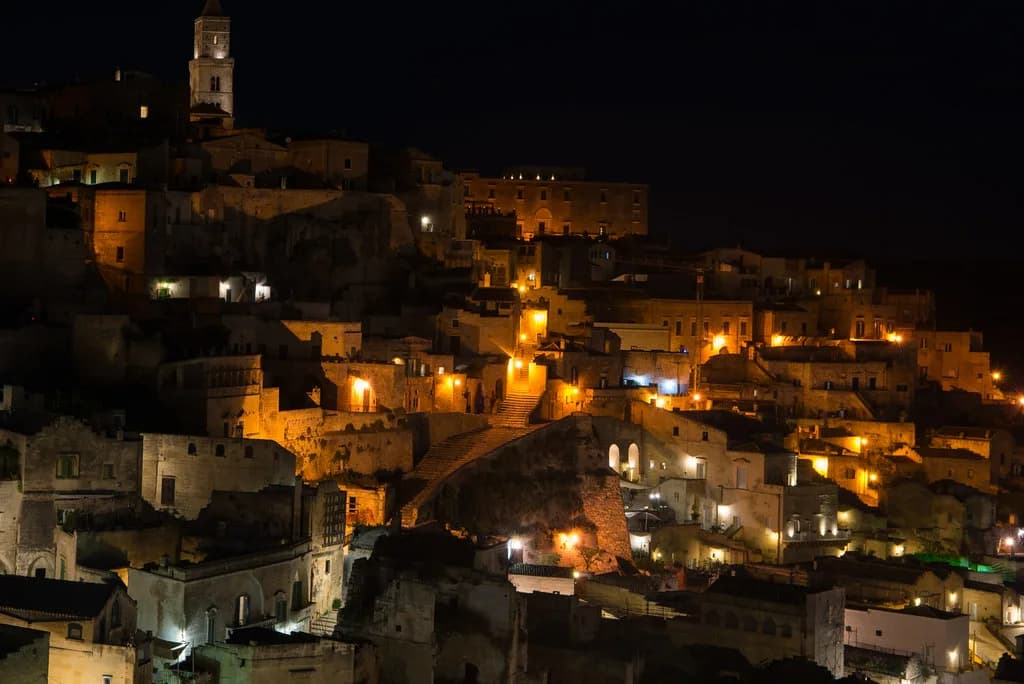
Matera's two historic districts, Sasso Barisano and Sasso Caveoso, are largely car-free stone staircases, and most everyday grocery shopping happens in the flat modern town above them. Shopping there first means you are not hauling a loaded bag up and down steps in the heat.
The other reason to shop is the pantry itself. Basilicata supplies bread, sheep's cheeses, dried peppers and sturdy red wine that travel well in a daypack, which is exactly what a picnic in a city of viewpoints needs.
The Main Stop: Mercato Storico di Matera Centrale
The central food market is the obvious first stop, described by visitor listings as a daily market, closed Sundays, with stalls of cheese, cured meats, fruit and vegetables. It sits near Piazza Vittorio Veneto according to the same third-party listing, while its description names Via Ascanio Persio, so treat the exact entrance as something to find on the ground rather than a fixed pin.
Treat those hours as indicative only. The page is assembled from visitor reports rather than a municipal notice, and market schedules shift with seasons and holidays, so confirm on arrival or ask at your accommodation before planning a morning around it.
For anything official, including notices and civic information about the city, the Comune di Matera website is the reliable starting point; individual traders rarely publish regular hours online.
What to Expect: A Compact Market With Mixed Reports
Set expectations honestly. Reviews summarised on that listing are mixed: some visitors found the market half empty with few vendors and high prices, while others praised the variety of produce and attractive prices. Recent vendor numbers are not published anywhere official, so you cannot know in advance how full it will be.
The trade-off is time against certainty. A short walk-through costs you fifteen minutes and gives you a genuine look at how the city eats; if the stalls are thin, you have lost little and can redirect to the bakeries and small shops nearby.
One practical warning appears repeatedly in visitor accounts: confirm prices before buying, especially on loose produce, and carry small notes so a quick transaction stays simple.
What to Look For on the Stalls
Cheese is the most useful purchase. Look for pecorino and for canestrato di Moliterno, a firm sheep's cheese aged in woven baskets that holds up well in a warm bag and pairs with bread and fruit. Buy a modest wedge rather than a large piece if you are walking all afternoon.
Cured meats, tomatoes, figs, greens and citrus are the other typical stall categories reported by visitors. Choose fruit you can eat by hand and avoid anything that needs washing or peeling with a knife you may not have with you.
Building a Lucanian Pantry List
Matera bread carries PGI status, and its long leavening is the reason it keeps for days, which makes a loaf the backbone of any picnic. Add peperoni cruschi, the sun-dried sweet peppers that turn crisp and sweet when fried briefly, plus orecchiette if you have a kitchen.
For drinking, Aglianico del Vulture is the local red worth seeking, and a shop assistant will usually steer you to a bottle that suits a casual meal. These are the same flavours covered in our local food guide: what to eat, which is the better read if you want dishes rather than shopping.
Beyond the Market: Bakeries and Small Food Shops
Bakeries fill the gaps the market leaves. Across Basilicata, artisan bakeries mix local flours with wild fennel, crusco pepper and aromatic seeds to produce breadsticks, taralli and long-lasting loaves that survive a day of walking; expect to find similar products in Matera's own shops.
Note the geography: the Basilicata businesses often cited as ethical-shopping examples, in Marsico Nuovo and Avigliano, are elsewhere in the region and not in Matera. Use them as a guide to what to buy locally, not as a Matera address list.
If you want a sit-down meal built on the same ingredients, La Fedda Rossa describes a menu of classic Matera dishes with cured meats and cheeses, tucked in a small square along Via del Corso in the historic centre.
Where to Eat If the Picnic Plan Fails
Rain makes the limestone slick, and a wet picnic is miserable, so keep fallbacks. Casual pizza by the slice is the easiest pivot, and travellers consistently name 5 Lire on Via Domenico Ridola as an inexpensive, no-reservation option with a small terrace.
For a proper dinner, cave restaurants and wine bars in the Sassi reward booking ahead, particularly in high season when small dining rooms fill quickly. Area Otto, a cocktail bar on Via Casalnuovo, is a common recommendation for an evening drink.
For a drink with a view above the Sassi, Crialoss Cafe is frequently mentioned for its outlook over the stone districts.
Practical Logistics: ZTL, Parking and Steps
Cars cannot freely enter the historic centre. The Sassi is a limited-traffic zone, so drivers leave vehicles in paid garages or street parking in the modern town and continue on foot; anyone needing vehicle access, including a transfer with luggage, must arrange authorisation in advance. Confirm the details with your accommodation rather than assuming a drop-off at the door.
Pack accordingly. Comfortable shoes with grip are essential, the stone gets slippery when wet, and a light bag beats a wheeled case on staircases; hotels spread across several buildings may also mean a short walk between reception and your room.
Bring small cash for market produce, and a reusable bag or two, since plastic is not always offered. A folded cloth bag weighs nothing and keeps tomatoes from rolling around your daypack.
Suggested Half-Day Picnic Route
Start in the modern town mid-morning, walk the market, then add bread from a bakery and a wedge of cheese before descending into the Sassi. Go early rather than late, since produce stalls tend to wind down towards afternoon according to visitor reports.
Carry your haul to the Belvedere di Piazza Giovanni Pascoli, consistently named the city's best-known viewpoint, where the Sassi and the ravine open out below. Eat, then walk off lunch with our self-guided walk through the Sassi rather than heading straight back uphill.
On a hot day, an underground stop such as the Palombaro Lungo cistern offers shade and cool air between courses, and Lonely Planet lists it among the city's attractions beneath Piazza Vittorio Veneto.
If You Have More Than a Day
Food shopping works best as a thread through a longer stay rather than a single errand. With extra time you can revisit the market for a second round of cheese, try a different bakery each morning, and still leave room for the viewpoints and rock churches listed in our Matera Attractions hub.
Two nights is the sensible minimum for this pace, and a three-day itinerary leaves room for the market, a picnic and a proper restaurant dinner without rushing between them.
Plan Your Food Shopping in Matera
The practical sequence is simple: shop in the modern town around Piazza Vittorio Veneto, buy bread, cheese, cured meat and fruit, then descend into the Sassi with a light bag. Verify market hours on the ground, since published details come from visitor listings rather than city notices.
Keep a fallback restaurant and a cash reserve, wear shoes that grip wet limestone, and let the picnic be flexible. Even a modest haul turns a stone staircase into a lunch with a view.
Frequently Asked Questions
Is the Mercato Storico di Matera Centrale worth visiting?
It is worth a short walk-through, especially if you are provisioning for a picnic. Visitor reviews are mixed: some found it half empty with few vendors, others praised the produce and prices. Treat it as one stop among several rather than a destination in itself, and pair it with a bakery and a cheese counter nearby.
What day and time should I go to the market in Matera?
Visitor listings describe it as a morning market, closed Sundays, but that information is third-party and can change with seasons and holidays. Aim for a morning visit and confirm current days locally, at your accommodation or by walking past, before you build your plan around it.
Can I pay by card at Matera market stalls?
No reliable source confirms card acceptance at individual stalls, so assume cash is safest. Carry small notes and coins for produce, and confirm the total before anything is weighed or bagged.
What local foods should I buy in Matera for a picnic?
Matera PGI bread, pecorino or canestrato di Moliterno, cured meats, hand fruit and peperoni cruschi make a good spread. Add orecchiette only if you have a kitchen, and ask a shop for a local Aglianico if you want wine with it.
Do I need a car to shop and eat in Matera?
No. The Sassi is a limited-traffic zone, so a car is a hindrance once you arrive; park in the modern town and walk. Trains and buses connect Matera with the surrounding region, and the historic centre is explored entirely on foot.
Sources
- Comune di Matera -
- Mercato storico di Matera centrale, Matera, Italy - Reviews, Ratings, Tips and Why You Should Go – Wanderlog
- Ethical Shopping In Basilicata: 4 Places You Cannot Miss - Ecobnb
- Matera, Italy: A Travel Guide to Italy's Oldest City
- Off-the-Beaten-Path Italy: Matera’s Ancient Streets and Delicious Eats - wareontheglobe
- Matera Travel Guide 2026: Italy's Cave City
- Top things to see in Matera, the third most ancient city in the world
- La Fedda Rossa Restaurant
- Palombaro Lungo | Matera, Italy | Attractions - Lonely Planet
- Sassi Di Matera: The Ultimate Guide For A Day Trip - The Marvelous Travelers
Continue exploring
More guides you'll find useful





