
Best Time to Visit Lecce and How to Avoid the Crowds
Lecce is best read by the hour, not just the month. See how the passeggiata, the midday siesta and a slower pace shape the calmest times to visit.
On this page
Lecce, the Baroque heart of the Salento in Puglia, is a city that rewards patience rather than a checklist. Its warm-hued pietra leccese facades, quiet alleys and café-lined squares are made for wandering, and one local guide describes the centre as somewhere you visit simply to enjoy rather than to race between monuments. That makes the question of timing less about a perfect month and more about choosing your hours, your season and how long you stay.
There is no published crowd calendar or month-by-month climate table for Lecce, so treat any promises of an objectively quiet month with caution. What visitors and local guides do describe is a clear daily pattern: an evening passeggiata, a slow stretch after lunch, and a city whose popularity has been rising. This guide works from those rhythms and flags clearly where you should verify details yourself.
Quick Answer: What 'Best Time' Means in Lecce
Start by separating the three things that make Lecce feel busy: the season, the time of day, and whether you are visiting on a day trip or staying overnight. A summer afternoon and a summer evening in the same square can feel like two different cities, because much of local life happens outside the hottest hours. If you can choose only one variable to plan around, pick your hours rather than your month.
As a rule of thumb, aim for early morning and the hours before dinner, save the middle of the day for indoor visits or a long lunch, and treat summer as the season to book ahead rather than the season to avoid. One travel writer notes that Lecce is growing more popular each year and tends to get booked up far in advance, which is the clearest signal that spontaneity in high season is risky.
Why Lecce Is a City to Enjoy, Not to Tick Off
Lecce does not have a long list of unmissable blockbuster sights. A local guide describes it instead as a place where you can do nothing and feel no guilt, sitting in a sunny square and watching the world go by. That matters for crowd planning: you are not queuing for a handful of headline attractions, so you can move your sightseeing to quieter windows without missing anything essential.
The architecture itself is the draw. The Basilica di Santa Croce, the cathedral, the Chiesa di Santa Chiara and the Chiesa di San Matteo are the famous examples, and the pleasures are often small details on balconies and doorways rather than ticketed interiors. Because the centre is largely pedestrianised, slow wandering is the main activity, which means you can sidestep crowds by choosing a different street rather than a different day.
Time of Day: The Evening Passeggiata
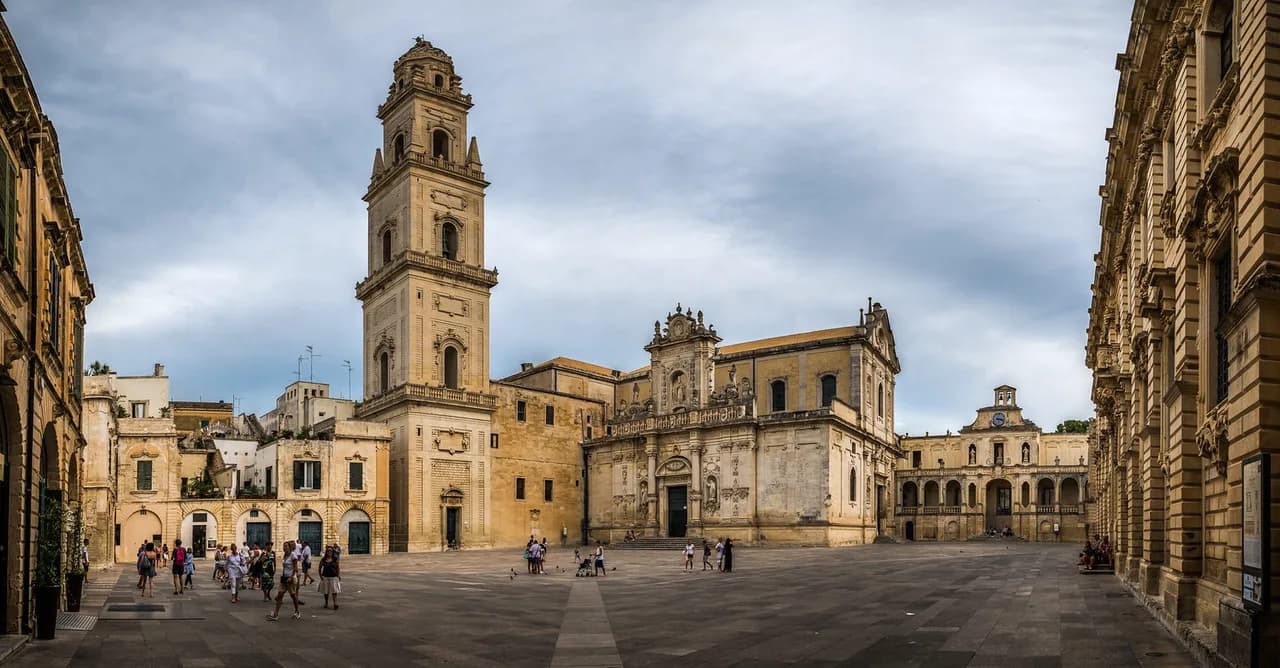
The passeggiata is the evening ritual that transforms Lecce's centre. Residents head out for a dusk stroll, and in Lecce the route typically loops around Piazza Sant'Oronzo and Piazza del Duomo. It is a nightly habit rather than a summer-only event, though it is especially pleasant in warm weather, and weekends take on a more celebratory mood.
If you want the piazzas to yourself for photos, go earlier in the afternoon and accept that your images will look emptier but the atmosphere thinner. If you want the city at its most alive, join the passeggiata and expect company. Where it matters most is dinner: bars often serve complimentary snacks with an aperitivo, so a drink before the stroll can double as a light meal.
The Midday Slowdown and How to Use It
Southern Italy keeps a midday pause, and in Lecce a local guide points to roughly two to four in the afternoon as a quiet stretch when it pays to slow down. Lots of businesses still close for a few hours around lunch, especially outside the big cities, reopening towards evening. For a visitor, that is an invitation to plan indoor visits, a long lunch or a siesta rather than fight the heat through the historic centre.
This midday pattern is most useful during the hottest months, but it operates year-round to some degree. Build your day around it and you get two pleasant windows, one in the morning and one in the evening, and a natural break in between. It also means the lunch hour is a poor time to expect every shop to be open, so check ahead if a specific workshop matters to you.
Summer in Lecce: Heat, Holidays and Busy Streets
Summer brings the strongest combination of heat and people. One local guide notes that Italians themselves holiday in Puglia, so it is not just foreign visitors filling the city, and that nearby beaches can still feel uncrowded in June and September. If your priority is space on the sand and a calmer evening stroll, those shoulder months are the sensible window to aim for.
If you travel in high summer, treat the middle of the day as downtime and save your walking for morning and evening. The same guide notes that if you want to wear a winter coat you should postpone until January or February, which is a fair reminder that summer in Lecce is seriously hot. Plan shade, water and indoor stops rather than long midday walks.
Shoulder Season: Plan Flexibly, Not by a Climate Chart
No reliable month-by-month weather table for Lecce appears in the material behind this guide, so avoid relying on exact temperature or rainfall claims you see online without checking a proper weather service for your dates. What we can say is that the city is growing more popular and that savvy travellers use the edges of the season. A flexible booking, with free cancellation where possible, is your best hedge against both crowds and heat.
For a practical check, look at accommodation availability for your exact dates a few weeks out and compare weekdays with weekends. If hotels are filling for a particular weekend, expect the piazzas to match, then shift your dates by a couple of days. Beyond that, the official city website is the sensible place to confirm whether anything special is happening that could swell the centre.
Day Trip or Overnight: Which Changes Your Crowd Exposure
Where you sleep changes when you see Lecce. A day-tripper tends to arrive late morning and leave in the afternoon, exactly the window when the heat and the crowds peak. One travel writer recommends staying overnight, or for a few nights, to make the most of the city. Staying the night lets you claim the early morning and the passeggiata hours, when the centre is at its best.
Lecce also works as a base, since it sits centrally in the Salento and reaches both coasts. That flexibility means you can spend a busy afternoon on the coast and return for a quieter evening in town, rather than spending the whole day circling the same squares.
Quiet Alternatives When the Centre Feels Full
When Piazza del Duomo and Piazza Sant'Oronzo are heaving, walk the historic gates. Porta Napoli is the most monumental, while Porta Rudiae is the oldest of the three, and Porta San Biagio has the advantage of being quieter. Moving between them takes you through some of the prettiest parts of town and thins out the company considerably.
Craft workshops are another good escape valve. Lecce is known for cartapesta (papier-mâché), with craftsmen still making figurines and large statues of saints, and shops such as Cartapesta Riso offer a place to watch and browse. Typing cartapesta into a map app will turn up a dozen possible stops. For a different kind of quiet, look at the hidden gems page for lesser-visited corners and under-the-radar museums.
The Museo Faggiano is a good rainy-day or midday option, since it sits underground and tells the story of a house where centuries of history were found during repairs. It is one of the more unusual indoor visits in the city and pairs well with a siesta-time schedule.
Beaches and Coastal Days as a Pressure Valve
When the town feels crowded, the Salento coast is a natural release. Lecce has no beach of its own, but a rental car gives you a choice of sandy stretches and rocky coves. San Cataldo is the nearest beach on the Adriatic side, and the Ionian options around Porto Cesareo and Torre Lapillo reward the extra drive.
One local guide notes that much of the Salento coastline is rocky rather than sandy, and that the water in these coves is exceptionally clear. If you want sand and facilities, aim for the western coast north of Gallipoli. Either way, swap a busy afternoon in the centre for a few hours by the sea and return for the evening stroll.
A Suggested Calm-Day Pattern
Here is a suggested pattern rather than an official itinerary: start early with coffee and a caffè leccese, walk the centre while the light is soft, and visit one or two churches or a museum before the midday slowdown. Then eat a long lunch and rest during the quiet hours.
In the late afternoon, use the time for the gates or a craft workshop, then take an aperitivo and join the passeggiata as the city comes back to life. For a second day, head to the coast or to another town, and keep the evening in Lecce. Our one day itinerary sets out a version of this pattern if you want a firmer structure.
Practical Tips for a Slower Visit
Book accommodation early in summer, since the city's growing popularity means rooms can disappear. Carry water and plan indoor breaks in the hottest weeks. If you are eating out, remember that many places serve snacks with an aperitivo, which makes a drink a light meal in itself.
Use a food guide to find markets and pasticciotto, and check opening hours directly with any workshop or museum you care about, since the material behind this article does not include current hours or prices.
Plan Around the Rhythm, Not the Calendar
The best time to visit Lecce depends less on a magic month and more on how you structure the day. Go early, rest at midday, return for the passeggiata, and keep the coast and the workshops as escape valves when the centre is busy. That approach gives you the city at its most generous, whatever the season.
Frequently Asked Questions
When is the best time to visit Lecce, Italy?
There is no single best month for everyone, but the most comfortable rhythm is early morning and evening, with a midday pause. If you want to minimize heat and company, aim for the shoulder months around summer rather than the peak, and check a reliable weather service for your exact dates. Local guides suggest June and September for quieter beaches.
Is Lecce very touristy?
Lecce is growing in popularity and can book up ahead of time, so it is not undiscovered. It still lacks the overwhelming crowds of big-name Italian destinations, and the main pressure points are the central piazzas in the evening and the hot midday hours.
How do I avoid crowds in Lecce?
Visit the centre early and late, rest during the midday slowdown, and use the historic gates or craft workshops when the main squares fill. Staying overnight rather than arriving on a day trip gives you access to the quietest and liveliest hours, and a coastal afternoon can be a good release valve.
What time of day are Lecce's streets busiest?
The evening passeggiata is the liveliest stretch, when people loop around Piazza Sant'Oronzo and Piazza del Duomo. Midday tends to be slower, especially in hot weather, as locals rest or eat. Plan photos and quiet wandering for the earlier part of the afternoon.
When should I avoid Puglia?
If heat and peak-season crowds bother you, avoid high summer and the busiest weekends, when booking pressure is highest. There is no reliable crowd calendar, so compare accommodation availability for your dates and be ready to shift by a few days.
Is Lecce worth staying overnight rather than a day trip?
Yes, staying overnight is generally worthwhile. It lets you enjoy the morning and the passeggiata hours, which are the city's best moments, and it makes the midday pause easier because you have a room to return to.
What is there to do in Lecce on a hot afternoon?
Follow the local habit of resting between roughly two and four. Use the time for a long lunch, an underground museum such as Museo Faggiano, or a craft workshop. Then return to the squares for the evening stroll as things cool down.
Sources
Continue exploring
More guides you'll find useful





