
Stampace, Cagliari Guide: Churches, Gardens and Evening Strolls
Plan a slow day in Stampace, Cagliari's oldest historic district, with churches, the botanical garden, Roman-era ruins and evening strolls.
On this page
Stampace sits just below the fortified Castello hill in the heart of Cagliari, and it rewards a slower approach than a tick-box tour. One long-time Sardinia travel blog describes it as the oldest of the city's four historic districts, historically a quarter of merchants and boutiques rather than nobles. That character survives in its narrow lanes, its small churches and a lively evening scene along Corso Vittorio Emanuele.
A suggested half day is enough for the core churches and squares, with a full day if you add the botanical garden and a long lunch; that timing is editorial advice, not an official schedule. The regional tourism site frames the island around archaeology, traditions and slow exploration, which fits Stampace's mix of Roman traces, baroque interiors and street life. Check current opening hours and tickets on official city pages before you set out, since these are the details most likely to change.
Where Stampace is and how to walk it
The district spreads out immediately west and south of Castello, the hilltop stronghold that still dominates the skyline. One guide describes Stampace as already inhabited in Roman times, with the district proper founded by the Pisans in the 13th century and shaped by trade. Corso Vittorio Emanuele is the practical spine: a pedestrian street lined with bars, restaurants and shops that works well as an anchor between sights.
A sensible route starts low and works uphill rather than the reverse, because Cagliari's inclines tire legs quickly. Begin along Corso Vittorio Emanuele, dip into the churches and squares nearby, then climb toward Castello for the view back over the district. Walking distances within the district are short, but the gradients are what slow you down.
Roman-era Stampace: amphitheatre and villa remains
Two Roman sites give the district its deepest layer of history. The Roman Amphitheatre is widely treated as one of Cagliari's landmark monuments, and the same guide notes that a guided tour is the best way to see its underground areas and hear the site's history. Separately, the ruins known as Tigellio's Villa are described as part of a wealthy residential neighbourhood rather than one poet's house, which makes them a rare example of private Roman housing.
Access to these sites is not guaranteed and is exactly the kind of detail to verify close to your visit. Check the Comune di Cagliari site and the monument's own booking channels for whether visits are running, what they cover and how to reserve. If a site is closed on your dates, the district's streets, churches and squares still fill a comfortable half day.
A green pause at the Botanical Garden
The Botanical Garden gives Stampace a spacious, green counterpoint to its stone lanes. According to one guide it covers about five hectares and is described as the most important garden on the island, mixing rare species with common plants, plus Roman traces including a basin from an ancient thermal complex and fragments of the aqueduct. Treat it as a paid stop and confirm the current admission arrangement on the garden's official page rather than relying on older figures.
It suits the middle of the day, when churches may be closed and the streets are hottest. Wear shoes that handle gravel paths and carry water, since shade varies across the grounds. If you are travelling with children or slower walkers, the garden also offers a break from the district's gradients.
The church circuit: Sant'Efisio, San Michele, Sant'Anna and Santa Restituta
Stampace holds several churches within a short walk of each other, and their differences matter for how you plan. Sant'Efisio is modest in size but central to local devotion: the same guide says it keeps the saint's statue and is where the rites in his honour begin each year, and it sits above a cave believed to have been his prison. San Michele is described there as one of Sardinia's finest baroque churches, with decorated interiors and guided tours sometimes available.
Sant'Anna dates from 1818 in baroque style, though construction began earlier and the building was only completed in the 1930s, then damaged in wartime bombing and reopened in 1951. Santa Restituta's Crypt is thought to be the site of the saint's martyrdom and was rediscovered in the 17th century; it later served as a bomb shelter. None of this tells you today's visiting hours, so separate free entry to a church from paid access to a crypt or guided tour and confirm each on arrival or via the city.
Squares, people-watching and the Castello viewpoint
Piazza Yenne is the district's best-known meeting point, named after the marquis who commissioned it and historically the start of the road toward Porto Torres, according to the same guide. Nearby Piazza del Carmine is flatter and described as less crowded and popular with families, which makes it a better pause if you have children or a stroller. Both work as short stops rather than destinations in themselves.
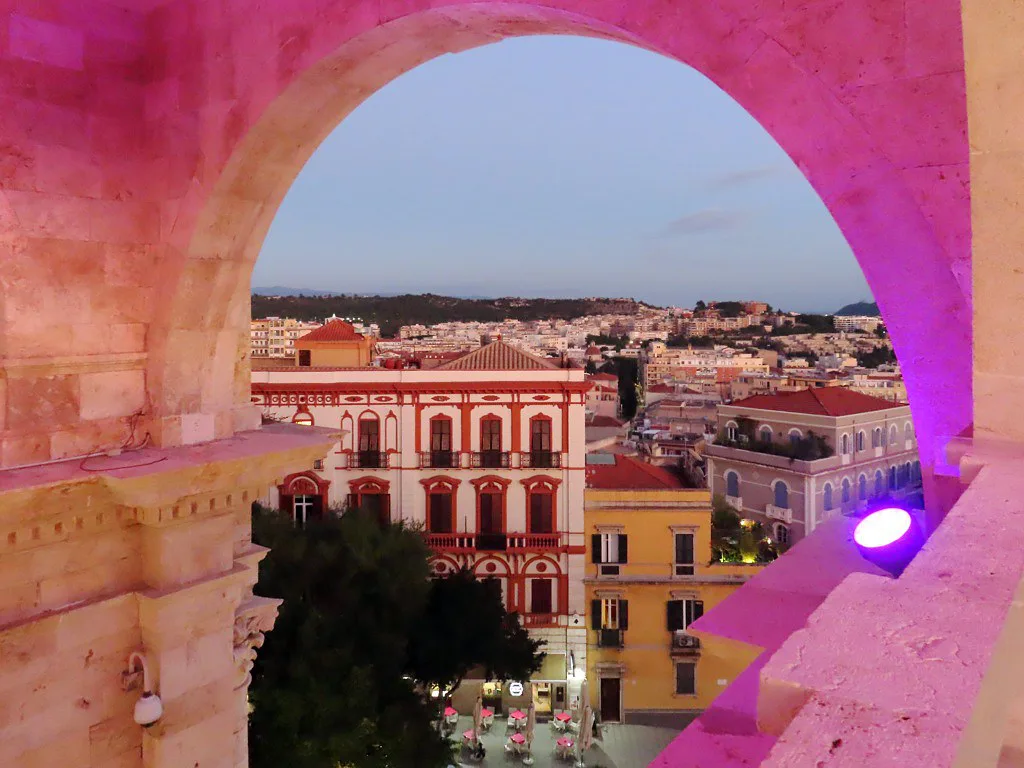
For the classic view back over Stampace's rooftops, climb to Bastione Santa Croce in Castello in the late afternoon. From there you can pick out Sant'Anna's two towers, San Michele in the distance and the old civic hospital, and the light is best as the sun drops. Pair the viewpoint with a walk down through Castello's lanes so you end the day back at street level.
If you want to broaden the day beyond the historic centre, the city and its hinterland hold archaeological sites and quieter corners worth a separate outing, including the hidden gems in Cagliari that sit outside the standard route.
Evening scene on and around Corso Vittorio Emanuele
Stampace's evenings centre on Corso Vittorio Emanuele, the pedestrian street described as the heart of the district's nightlife and good for a walk or a bite at any hour. Bars and pubs cluster here and in the side lanes, from historic Irish pubs to newer craft-beer places and long-established spots known for huge sandwich menus. These are suggestions from one travel blog rather than verified current listings, so check reviews and opening times before committing to one.
Because the area is compact, you can bar-hop without long transfers, and a central Stampace base means the walk home is short. Keep an eye on your own pace: the district's slopes feel longer after dark.
Where to eat: pizza, Sardinian classics and fusion
Eating options in Stampace lean on the Corso and its narrow side alleys, where the guide says you find places beyond the main drag. Its suggestions include a highly rated pizzeria open at lunch too, a small fusion kitchen mixing Sardinian ingredients with Japanese cooking, a butcher's shop that turns bistro at dinner, and a wine bar in a converted printworks with a deep wine list.
For traditional Sardinian cooking done in the old style, the guide points to a spot on Via Sassari off Corso Vittorio Emanuele, and it flags that popular places need booking ahead. There are also vegetarian, vegan and gluten-free options at one contemporary Sardinian restaurant. Treat all of this as a shortlist to check against current reviews rather than a fixed itinerary.
Where to stay in Stampace
Staying in Stampace puts the historic centre, the evening streets and the Castello climb within walking distance, so you can leave the car parked and explore on foot. The source blog lists a guest house in a refurbished historic building, a bed and breakfast with private bathrooms, and apartments on Corso Vittorio Emanuele as options, noting the area is central enough that a car is unnecessary unless you plan day trips.
None of those listings is verified as currently operating, so confirm availability, recent reviews and cancellation terms directly with each property. If you arrive by car, ask your host in advance about where to leave it, because the historic lanes are not designed for casual parking.
Practical notes: hills, hours and checking ahead
Two practical rules shape a good Stampace day. First, walk downhill-friendly routes and save the Castello climb for the cooler part of the day. Second, treat hours, tickets and access as changeable: the Roman sites, the botanical garden, the churches and the crypt each have their own arrangements, and the city publishes updates on its own portal.
The regional tourism site is a useful second check for seasonal context and for what else is happening on the island during your dates. Build in slack for a long lunch and an unplanned stop, since the district rewards wandering as much as ticking off sights. Plan on comfortable shoes and a refillable water bottle.
Plan Your Visit
Stampace works best as a slow, layered walk: Roman remains in the morning, a green pause at the botanical garden, churches in the afternoon and an evening on Corso Vittorio Emanuele. Because everything sits close together below Castello, a central base removes the need for a car and keeps transfers short. Check current access and tickets on official city channels before you rely on any single site.
If you only have a half day, choose either the Roman sites and churches or the garden and squares rather than trying to cover everything. With a full day, add the Bastione Santa Croce sunset and a relaxed dinner. Either way, the district's lanes and viewpoints are free to wander, which makes it a low-risk choice for a mixed group.
Frequently Asked Questions
Is Stampace worth visiting in Cagliari?
Yes, if you want a compact historic district with Roman-era remains, several churches, a botanical garden and a busy evening street all within walking distance of Castello. It suits travellers who prefer wandering and pausing over rushing between ticketed sights. Because hours and access change, confirm details with official city sources before your visit.
How long does it take to walk around Stampace?
As a rough suggestion rather than an official timing, a comfortable half day covers the main churches, Piazza Yenne and Corso Vittorio Emanuele. A full day lets you add the Roman-era sites and the Botanical Garden at a relaxed pace, plus an evening meal. Walking distances are short but the hills make the district tiring, so build in breaks.
Can you visit Stampace and Castello in one day?
Yes. Stampace sits directly below Castello, and the climb to Bastione Santa Croce for the view back over the district's rooftops is a natural way to end the afternoon. Plan the ascent for cooler hours and keep the rest of the day at street level.
Which churches should you see in Stampace?
Prioritise Sant'Efisio for its role in local devotion and San Michele for its baroque interior. Sant'Anna and Santa Restituta's Crypt add wartime and early Christian history if you have time. Confirm current visiting hours and whether interiors or guided tours carry a fee before you go.
Where should you eat in Stampace?
Corso Vittorio Emanuele and its side alleys hold most of the options, from pizza and wine bars to traditional Sardinian cooking and a fusion kitchen. Popular places are worth booking ahead. Check current reviews and opening times, since listings and hours change.
Sources
Continue exploring
More guides you'll find useful





