
One Day in Assisi: A Walking Itinerary for the Walled Town
A realistic one-day Assisi plan: basilica first, Via San Francesco, Piazza del Comune, San Rufino and Santa Chiara, with lunch breaks and late-arrival triage.
On this page
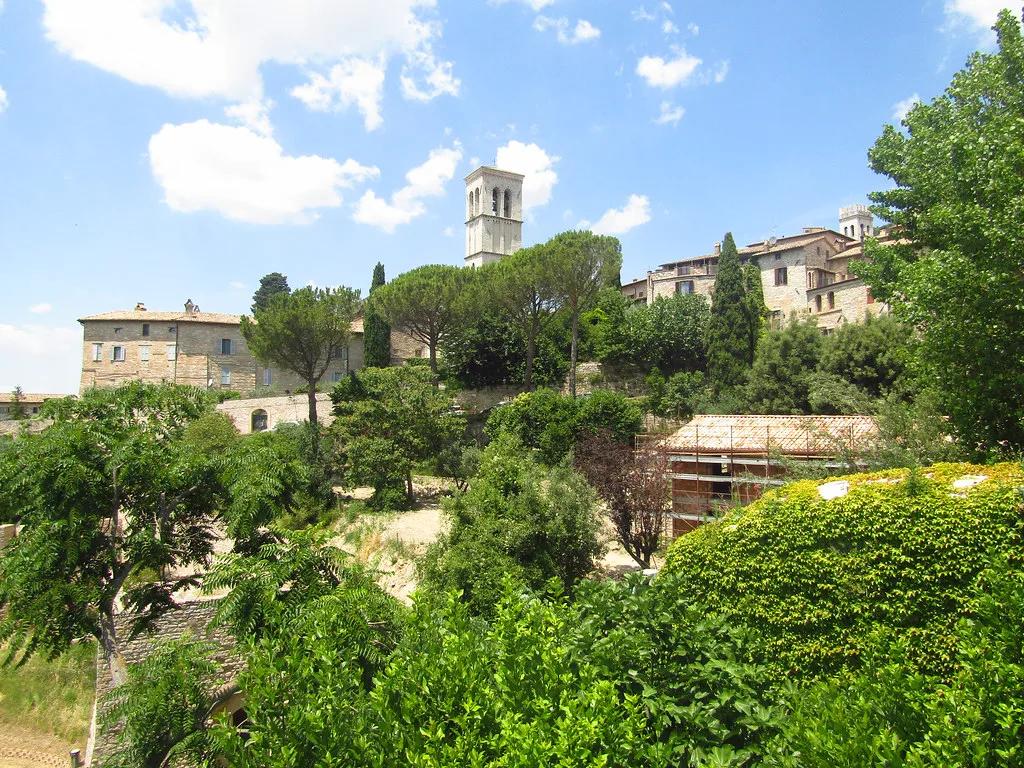
Assisi is a small walled town on the slope of Monte Subasio, and almost everything in this plan sits inside the walls or just below them. That compactness is why a single day works: you are not covering much distance, you are covering gradient. The Basilica di San Francesco anchors the day, and everything else is arranged around it rather than crammed in first.
Treat every timing here as an editorial estimate, not an official schedule. Entry to the basilica is free according to the guide sources used for this article, but hours and restrictions change, so confirm them with the basilica or the city's tourist office before travelling. Shoulders and knees must be covered, and photography is not permitted inside the basilica.
Why Assisi Rewards One Day on Foot
The streets follow terraces laid out centuries before anyone worried about visitor flow, which is why the lanes climb and dip instead of running level. Assisi is walkable in the sense that distances are short, not in the sense that walking is easy. Sturdy shoes matter more here than a minute-by-minute timetable.
The common mistake is treating town as a checklist spread in every direction. A better structure is one loop that starts high at the basilica and drops through the piazza, adding a single outlying site only if the clock allows. That also keeps the steepest climb for when you are freshest.
If your interest is the quieter lanes rather than the headline churches, a separate look at the hidden gems in Assisi pairs well with this plan; build the day around the basilica first and let those smaller corners fill the gaps.
Before You Go: How Arrival Shapes the Day
The railway station sits down in Santa Maria degli Angeli, about three kilometres from the walled centre, so a bus, taxi or uphill walk brings you into the historic core. Local services run from the station area, but timetables and fares change; check the current information at the station rather than relying on an older article.
Arriving by car means parking outside the restricted traffic zone and walking in, with some car parks a ten- to thirty-minute walk from the centre. Because the lanes are cobbled and sloped, a day bag beats a wheeled suitcase; if you are moving between towns, ask your accommodation about leaving luggage before you set out.
Start early if you can. The Basilica di San Francesco draws the largest share of visitors, and a mid-morning arrival puts you in the busiest window. If your train gets in late, follow the triage section below instead of forcing the full loop.
Opening Move: The Basilica di San Francesco
The basilica is effectively two churches stacked on each other: a soaring Gothic upper church covered in frescoes and a darker Romanesque lower church above the tomb of Saint Francis. Take the upper church first while light and attention are both good, then descend to the lower level and the crypt. Entry is free according to the sources used here, but confirm current hours with the basilica before relying on them.
The upper church holds a cycle of 28 frescoes narrating the life of Saint Francis, and art historians still disagree about which hands painted them. That argument is a reason to slow down: choose a few scenes and look properly rather than photographing all of them. Photography inside is prohibited, and the custodians enforce the rule.
Dress code is a practical planning input, not a footnote. Shoulders and knees must be covered for both men and women, and loose layers work better than a change of clothes in a bag. Allow roughly an hour here as an editorial suggestion; art lovers should take longer.
If you prefer to study the basilica in advance as a single sight rather than part of a route, the Assisi Attractions guides cover individual monuments in more detail. They are useful for deciding how long to give the upper church frescoes before you arrive.
Down Via San Francesco to Piazza del Comune
From the basilica, Via San Francesco runs gently downhill towards the centre, lined with food shops, religious goods and small boutiques worth a browse. Walk it in this direction and you save the climb for later, when you are heading back up towards your exit.
The Pinacoteca Comunale occupies the seventeenth-century Palazzo Vallemani along this street, with frescoes gathered from buildings around town. It is a separate ticketed museum rather than part of any church, so decide in advance whether you want indoor art or more time outdoors.
Piazza del Comune and the Temple of Minerva
Piazza del Comune is the heart of town and sits directly on top of the ancient Roman forum. The Temple of Minerva, with its Corinthian columns, was later converted into the church of Santa Maria sopra Minerva, and the contrast between the Roman exterior and the Baroque interior is the reason to stop. The church is free to enter.
Beneath the square, the Roman Forum archaeological area is a separate ticketed site entered from Via Portica through the crypt of the former church of San Niccolò. The city's official page lists seasonal hours and a combined ticket covering the Roman Forum, Rocca Maggiore, the Municipal Art Gallery and the Civic Tower, with a multilingual audio guide included. Check that page for current hours and ticket scope, because these change by season.
The floor inside is glass over original paving and the space runs cooler than the street above, so a light layer helps. If you are travelling with someone of limited mobility, the city's accessibility pages describe a secondary entrance on Via Arco dei Priori with a steep approach; ask at the ticket office rather than assuming the main door works.
Cathedral of San Rufino
Climb from the piazza to the Cathedral of San Rufino, whose Romanesque facade of rose windows and carved lions is among the finest in Umbria. Inside, the baptismal font in the right nave is where both Francis and Clare were baptised. The cathedral itself is free to enter, while the crypt and Diocesan Museum form a separate paid itinerary.
The crypt beneath the church takes you back to the year 1000 and the legend of the sarcophagus that refused to move, and it was one of Francis's chosen places for solitary prayer. If you are collecting too many interiors, shorten this stop rather than cutting it entirely.
Basilica di Santa Chiara and the Valley View
Santa Chiara sits at the other end of the ridge, with pink-and-white striped stone, flying buttresses and a piazza opening onto the valley below. The San Damiano cross associated with Francis's conversion hangs in a side chapel, and Clare's tomb lies on a lower level reached by stairs. Entry is free, and photography inside is not allowed.
The piazza is one of the best free viewpoints in town. Save a few minutes simply to stand there; on a clear afternoon the light on the pale limestone is the reason so many photographs of Assisi look the way they do.
Lunch Strategy
The trade-off at lunch is convenience against atmosphere. Restaurants along Via San Francesco and around Piazza del Comune put you back on the route immediately, while quieter side streets off the main arteries tend to be calmer. A menu posted only in English with no name on the door is a warning sign rather than a recommendation, so read what is actually written before sitting down.
Book dinner if you are staying overnight, because highly rated places fill up, but at midday you can usually walk in. Keeping lunch to an hour protects the afternoon for San Damiano if you want it. Carry a water bottle; the fountains around town make refilling easy.
Optional Afternoon: San Damiano and the Carceri
San Damiano lies outside the main walls, about two kilometres from the centre, and is the church where Francis heard the call to rebuild God's house and where Clare's community later settled. Walking there and back adds real time on sloped ground, so it suits a full day rather than a half one. Check opening arrangements before you commit.
The Eremo delle Carceri is further out, roughly a fifteen-minute drive on a narrow winding road, and a visit takes about half an hour to forty-five minutes once you are there. On foot it would take several hours and a strenuous climb, so treat it as a car or taxi excursion rather than an afternoon stroll.
If you have energy left and want a view rather than a church, Rocca Maggiore crowns the hill above town. The climb is steep and the fortress is a ticketed site within the city museum circuit, so check current hours and the combined-ticket terms on the official pages rather than trusting older figures.
Late-Arrival Triage: What to Drop First
If you arrive after midday, drop San Damiano and the Carceri immediately; both cost travel time you no longer have. Next, drop the Rocca Maggiore climb, which is rewarding but steep and adds an hour. The core loop of basilica, piazza, cathedral and Santa Chiara is the irreducible part.
With only three or four hours, go straight to the Basilica di San Francesco, then walk Via San Francesco to Piazza del Comune and pause at the Temple of Minerva on the way through. Add Santa Chiara only if it sits on your route back to your car or bus. Compressing the loop means fewer stops, not faster walking.
Practical Notes and Dress Code
Between the basilica, the piazza and San Damiano the lanes are cobbled and often steep, with steps cut in where the gradient is sharpest. Flat shoes with grip are worth more than any other packing decision. If you have limited mobility, the official accessibility pages detail ramps, secondary entrances and shuttle arrangements for the main basilicas, though access varies by building and entrance.
Covered shoulders and knees are required in churches, and photography rules differ between sacred and museum spaces. The Franciscan celebrations around 4 October bring extra crowds and evening lanterns, so check the event calendar if your visit falls in that window.
Finally, remember that many churches are free while museums and the Roman Forum are not, and one ticket does not cover all of them. Verify prices, hours and combined-ticket terms on the official city site before you go, because they change by season.
Plan Your Visit
One day in Assisi works because the town is compact, not because it is short on things to see. Start at the basilica while it is quiet, walk downhill through the piazza and cathedral, and let Santa Chiara close the loop with its valley view. Keep the outlying sites for a second visit or a car.
Everything else is a decision about trade-offs: lunch convenience against calm, an extra museum against a slower walk, the fortress climb against an earlier train. Check official channels for hours, tickets and accessibility details, then let the hilly lanes set the pace. For related planning, see Basilica di San Francesco d'Assisi: A Practical Visitor Guide.
Frequently Asked Questions
Is one day in Assisi enough?
For the walled centre, yes. A full day lets you see the Basilica di San Francesco, walk Via San Francesco to Piazza del Comune, and add the cathedral and Santa Chiara without rushing. Outlying sites such as San Damiano and the Carceri need extra time or a car.
Is the Basilica di San Francesco free to enter?
Entry to the basilica is free according to the guide sources used here, but hours and any access restrictions change. Check the basilica's official channels before your visit, and remember photography is not permitted inside.
What should I skip in Assisi if I arrive late?
Drop San Damiano and the Carceri first, since both require travel outside the centre. Next, skip the Rocca Maggiore climb. Keep the basilica, Via San Francesco, Piazza del Comune and, if time allows, Santa Chiara.
How do I get from the Assisi train station to the historic centre?
The station sits down in Santa Maria degli Angeli, about three kilometres from the walled town. A local bus or taxi takes you up, or you can walk. Confirm the current bus service at the station rather than relying on older timetables.
Do I need to book the Roman Forum in advance?
The Roman Forum is a separately ticketed underground site entered from Via Portica. Hours vary by season and a combined ticket covers several civic sites, so check the official city tourism page for current arrangements before you go.
What is the dress code for Assisi's churches?
Shoulders and knees must be covered for both men and women in the main churches. Loose layers are the easiest solution, and photography rules vary, with most sacred interiors prohibiting it.
Sources
- Assisi Online Guida turistica, Hotel, ristoranti e mappa di Assisi, Umbria
- 16 Best Things to Do in Assisi, Italy (+ Tips & Map)
- Assisi: a complete guide through the birthplace of San Francesco
- Roman Forum and Archeological Collection - Visit Assisi
- Official tourist information site for Assisi - Visit Assisi
- Assisi Cathedral (San Rufino) - Exploring Umbria
- Assisi for everyone - Visit Assisi
Continue exploring
More guides you'll find useful





