
Alghero Old Town Guide: Centro Storico Quarter Walk & Stay
A practical guide to Alghero's walled centro storico: Catalan-Gothic lanes, the bastions at sunset, coral heritage, and where to stay inside or outside the walls.
On this page
Alghero's centro storico sits inside a ring of Renaissance-era walls on Sardinia's north-west coast, and it is the part of the city most visitors end up circling back to. The quarter is compact and pedestrian-only, so you can treat it as a single continuous walk rather than a checklist of separate sights. This guide focuses on orientation, the Catalan layer in the architecture, the evening rhythm on the bastions, and the accommodation trade-off between staying inside the walls and basing yourself outside with a car.
What the Centro Storico Is and Why It Anchors a Visit
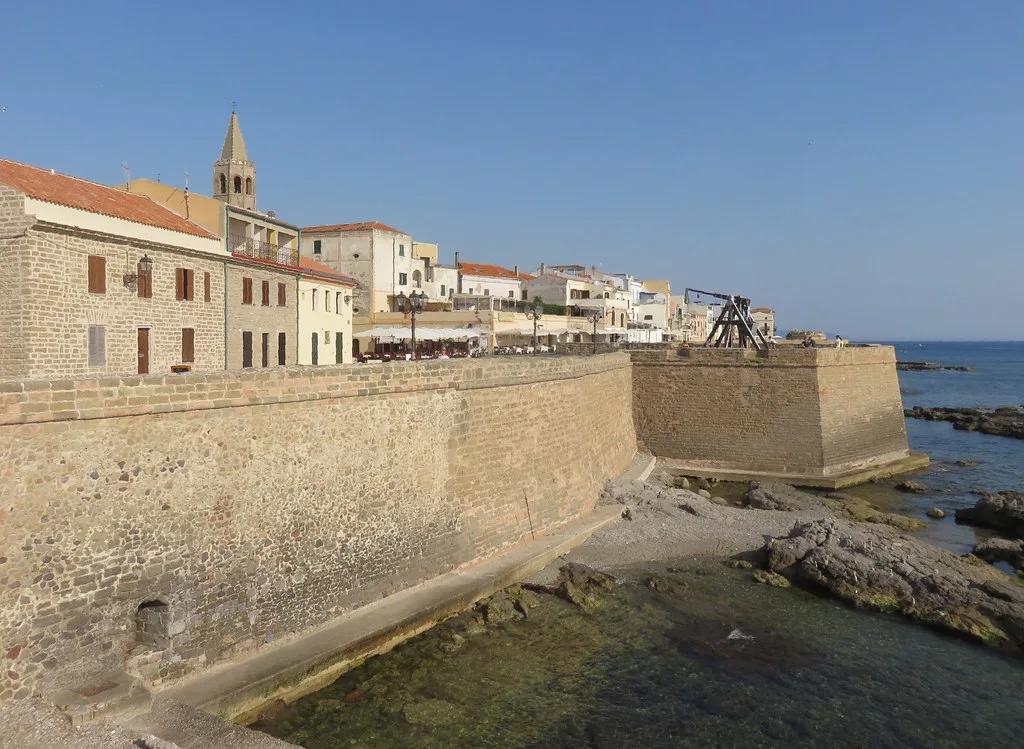
The centro storico is the medieval citadel of Alghero, a dense grid of cobbled lanes enclosed by bastions that look out over the sea. For a first visit it works as an anchor: you can wander it in a morning, return for aperitivo on the walls, and use it as the fixed point from which the rest of the Riviera del Corallo is planned. The local tourism consortium treats the walled centre as the starting reference for the area, emphasising its Catalan character and medieval towers.
Unusually for Sardinia, the old town carries a strong Catalan imprint, visible in the street plan, the Gothic arches and the civic architecture. That heritage is not a museum piece — it is the fabric of a lived-in quarter with shops, restaurants and apartments inside the walls. If your interest runs to the less obvious corners of the city beyond the main lanes, our guide to hidden gems in Alghero is a useful companion for planning the rest of the day.
Getting Oriented on Foot
The historic centre is compact and walkable, and one traveller's account describes crossing it end to end in about fifteen minutes on foot — treat that as a rough personal suggestion rather than an official figure. The practical consequence is that you rarely need a plan for the old town itself; you need a plan for what surrounds it. Walking in from a nearby apartment or hotel is the simplest approach because the core is pedestrian-only and driving inside it is not part of the experience.
Orientation is easy once you understand the two edges: the seaward bastions on one side and the streets leading inland toward the modern city on the other. Start at a gate and let the lanes pull you through rather than tracking a strict route. Keep a paper map or an offline map on your phone, since signal in tight stone lanes can be patchy.
Reading the Catalan-Gothic Character
The Catalan layer in Alghero is best read in the details: pointed arches over doorways, heavy stone portals, and churches whose interiors feel wider and plainer than their facades suggest. Guides to the city consistently point to the Catalan influence as the defining feature of the old town's architecture, alongside the medieval walls and towers. Walking slowly and looking up at cornices and window frames gives you more than ticking off facades.
Because the quarter is small, the Catalan character is not confined to one street or one monument — it is the general texture of the place. That also means you can appreciate it without entering a single paid interior. The lanes, the piazzas and the wall circuit are public space, and they carry much of the architectural story on their own.
Landmarks to Slot Into a Walk
The Cattedrale di Santa Maria is the conventional starting landmark, a large church whose adjacent bell tower with its pyramidal spire is easy to spot above the rooftops. San Francesco, a fourteenth-century church, is the other obvious anchor, and both sit within easy reach of each other in the compact core. Treat the exteriors and the surrounding lanes as free public space; whether you can go inside depends on the day and the season, so check locally rather than assuming.
Rather than chasing a fixed list, pick two churches and let the connecting streets fill the rest of your walk. The value of the quarter is in the spaces between monuments — small squares, stairways, shopfronts and the sudden view of the sea where a lane opens onto the walls. If you want deeper context on individual buildings before you arrive, browsing the Alghero Attractions hub first can help you decide which interiors are worth your time.
The Bastions Circuit and the Evening Rhythm
The bastions form a continuous walkable ring around the citadel, and one account describes circling it from Porta a Mare to Piazza Sulis, passing watchtowers including Torre di San Giacomo, Torre della Polveriera and Torre di Sant'Elmo. The same source highlights Bastioni Marco Polo as a favourite stretch and notes the walls are busy at sunset, when bars and restaurants spill outward for aperitivo. That combination makes the wall walk the natural hinge between daytime sightseeing and the evening.
In practice, plan your walk so you finish on the seaward side rather than in the middle of the grid. Arriving on the walls with time before the light drops gives you the option of a drink with a view, then dinner in the lanes behind. If you prefer quiet, go earlier in the day when the circuit is more of a promenade than a gathering.
Coral Heritage and the Boutiques
Alghero's coral trade has shaped the old town's shops for centuries, and the Museo del Corallo is the place to start if you want to understand what you are looking at in the windows. A traveller's guide notes that around twenty coral boutiques cluster in the historic centre and advises looking for the Corallium Rubrum consortium mark, established in 2015, when buying a piece. Imitation coral is common in markets, so the distinction is worth knowing before you shop.
Even if you are not buying, a short pass through the museum and a few shopfronts adds a specific local industry to the walk. Check the museum's current visiting arrangements with the city or the consortium before you build your day around it, since this guide deliberately does not fix hours or admission details.
How the Quarter Changes From Day to Evening
The most useful planning constraint in Alghero is the mid-afternoon slowdown: like much of Italy, the city takes siesta seriously, and shops and many businesses close for a few hours in the afternoon. One traveller's account flags this explicitly as something to expect rather than resent. Build your day around it — walk the walls and churches in the morning, rest through the hottest part, and return for the evening.
By evening the old town's restaurants and bars take over the lanes, and the atmosphere shifts from sightseeing to dining. The consortium's site frames the local food culture around seafood, lobster and regional wines, which is a fair steer for what to order. Reserve the evening for eating inside the walls rather than driving out, and you get the quarter at its most sociable.
Where to Base: Inside the Walls or Nearby With Parking
The central accommodation decision in Alghero is not which hotel but whether you sleep inside the walls or outside them with a car. The old town is pedestrian-only and best explored on foot, so staying within it means you can walk to dinner and back without moving a vehicle. The trade-off is that you will still want a car to reach beaches, parks and day trips, which makes parking the thing to solve.
The alternative is to base yourself a short walk from the centre in a place with its own parking, then walk in for evenings. One traveller's guide recommends exactly this: keep the rental car and pick accommodation with parking so you are not re-parking after a day out. If you want to compare specific sight-level options before choosing a base, the Alghero Attractions pages cover the individual landmarks in more depth.
Both approaches work; the choice depends on how much of your trip happens outside the city. A short city break tilts toward staying inside the walls; a longer trip with day trips favours parking and a short walk in.
Beyond the Walls: Porto Conte and Nuraghe Palmavera
A half-day outside the centre is easy to plan from Alghero, and two additions stand out. Porto Conte Regional Natural Park, roughly a twenty-to-thirty-minute drive north depending on where you enter, offers coastal headlands, coves and pine forest, and a scenic drive toward Capo Caccia is a rewarding way to spend an afternoon. Nuraghe Palmavera, about ten minutes north of the city, is one of the most accessible Bronze Age nuraghe complexes on the island and is worth an early visit in summer because the site is fully exposed to the sun.
For longer excursions, the consortium's tourism pages list the wider Riviera del Corallo and day-trip territory, while the city council publishes notices on road works, events and local services that can affect driving plans. Check those before you commit to a route, because temporary traffic changes are common in the region.
What This Guide Leaves for You to Verify
Deliberately missing here are admission fees, opening hours, seasonal closures, booking rules and transport schedules. These change, and the reliable places to confirm them are the Comune di Alghero website, the Consorzio Turistico Riviera del Corallo, and the individual museum or site you plan to visit. The city pages also carry notices on events and temporary traffic measures that are worth a look in the week before you travel.
The same applies to Neptune's Grotto and Capo Caccia access, where guided visits and boat connections are described in general terms but should be confirmed locally. Treat any walk or stairway mentioned in travel writing as something to check on arrival rather than assume is open.
Plan Your Visit
Alghero's centro storico rewards a simple approach: walk it slowly, use the bastions as your evening anchor, and let the Catalan streets do the rest. Solve the parking question early, because it shapes where you sleep and how easily you reach the coast beyond the walls. Everything else — which church, which coral shop, which dinner — can be decided on the day.
Frequently Asked Questions
Is one day enough for Alghero old town?
For the centre itself, a single full day is generally enough to walk the lanes, see the main churches from outside and circle the bastions. If you want time on the beaches, a boat trip or a day out at Porto Conte or Bosa, three nights in the city gives you a more comfortable base.
Do you need a car to visit Alghero's centro storico?
No. The historic centre is compact and pedestrian-only, so you explore it on foot. A car becomes useful for reaching the beaches, Porto Conte and day trips such as Bosa or La Pelosa, which is why the parking decision matters for accommodation.
Should you stay inside the old town or nearby with parking?
Staying inside the walls puts restaurants and the bastions on your doorstep, but a car is awkward in a pedestrian zone. Basing yourself a short walk away with parking keeps day trips simple while still letting you walk in for dinner.
What is there to see in Alghero old town besides churches?
The bastions circuit, the towers along the walls, the Museo del Corallo and the small piazzas between the lanes. The coral boutiques in the centre are also a specific local feature worth a look, particularly if you want to understand the consortium mark.
Is the old town quiet in the afternoon?
It slows down. Like much of Italy, Alghero takes siesta seriously, and many businesses close for a few hours mid-afternoon. Plan the walls and churches for the morning, rest through the hottest part, and return for the evening.
How does Alghero compare with Bosa as a base?
Alghero sits by the sea and is more centrally placed for the north-west coast, including Porto Conte and Capo Caccia. Bosa, on the Temo river, is about forty-five minutes south and works well as a day trip rather than a rival base.
Sources
Continue exploring
More guides you'll find useful





