
Best Time to Visit Alghero: A Season-by-Season Crowd Guide
Plan Alghero around crowds, not just the calendar: seasonal switches for the cave, cathedral hours and beach shuttles, and why September often beats August.
On this page
Alghero's peak crowds aren't just a matter of month; they follow a set of seasonal switches. Boats to Neptune's Grotto start in April, the cave can be reached by shuttle in some months and on foot in others, and the cathedral and San Francesco cloister change their opening hours twice a year. Planning around those switches is more effective than choosing a month by temperature alone.
The front-loaded practical detail: from June to October, access to the cave by land involves parking at Casa Gioiosa and taking a shuttle, and arriving about an hour before your slot; from November to May there is no shuttle and you walk up, arriving around 40 minutes early. Treat these as reported patterns, not confirmed 2026 rules, and verify with the operator before booking.
September and June usually sit on either side of the August peak and keep most summer services running. Winter is a different trip altogether: shorter site hours, no boats, and a quieter town. The suggestions below are editorial planning guidance; the operator and the town council are the only places to confirm hours, tickets and access for your dates.
Why September Is Usually the Smart Compromise
August is the obvious month for Alghero and, for crowd avoidance, usually the wrong one. September keeps much of the summer list in place while the peak has passed. That combination is why it comes out ahead for most travellers who want warmth without the busiest weeks. A seasonality guide for Alghero points to September as the better bet, with June as the fallback on the other side of the peak.
June offers the same logic from the other direction: the season has started but the peak has not arrived. The trade-off is that early-summer heat can be heavier, which makes the midday break more important. If your dates are fixed to school holidays, plan around hours rather than hoping for empty lanes.
The practical way to use this is to fix your dates first, then let the seasonal switches shape the itinerary. A September trip can still include a boat trip, a cave visit and a beach afternoon, but each has its own window. Regional listings can help you spot events that might change how busy a weekend feels; SardegnaTurismo publishes an events calendar worth checking before you lock dates.
How the Alghero Day Changes With the Season
In warmer months, Alghero runs a two-part day: old town and sights in the morning, a retreat during the hot and busy middle hours, then a return in the evening when the passeggiata fills the lanes. Following that rhythm puts you in quieter streets when coach groups are heading back.
The cathedral illustrates the shift. A seasonality guide reports that it opens in the evening, roughly 19:00–21:30, from June to August, and switches to afternoon hours, around 16:00–18:30, from September to May, with closures on Wednesdays and Sundays. Because these are reported patterns rather than a confirmed current timetable, check the parish or the town's tourism pages before planning a visit around them.
The San Francesco cloister follows a similar split: the same guide reports 9:00–13:00 and 17:00–21:00 from July to September, and 9:30–12:30 and 16:30–20:00 from October to June. Shorter windows mean less flexibility, so slot the cloister first and let flexible wandering fill the gaps. The Comune di Alghero site is a sensible last check, since civic notices and events can affect access and traffic.
Summer in the Old Town: Where the Pressure Sits
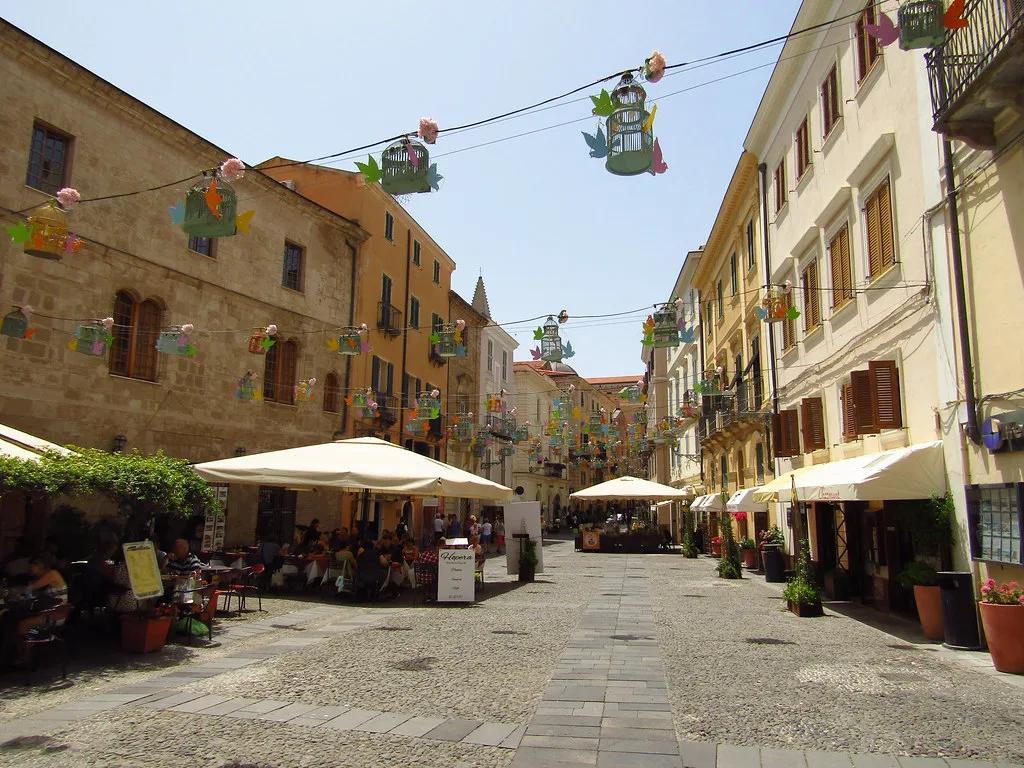
Crowd pressure in Alghero is not evenly spread. The sea walls, the main lane through the old town and the cathedral square absorb most foot traffic, especially in late afternoon and evening. Step one street back and the volume drops, which is why a wandering approach works better in high season than a checklist of headline sights.
Micro-location matters more than month. A paid cave visit has a fixed capacity and time slot, so the crowd is managed; a free stretch of sea wall has no such control at sunset. For the classic viewpoints without the press, go early morning, when the light is good and the lanes are largely empty, and save museum and church interiors for the middle of the day.
Basing yourself in the old town is convenient but puts you in the busiest lanes. Staying slightly outside and walking in gives you a quieter start and an easier exit in the evening. Our guide to the hidden gems in Alghero is a useful companion for streets away from the main flow.
Beaches and Sea: The Switches That Signal Peak Season
Beach logistics are one of the clearest indicators of seasonal pressure. La Pelosa at Stintino, a day trip from Alghero, reportedly requires an online ticket between 15 May and 15 October, with no ticket needed outside that window. The rule is a crowd-management measure, so its dates show when demand is highest. Confirm the current requirement and how to obtain the ticket before you travel.
Access to the sea itself is seasonal in a different way. Boats to Neptune's Grotto are reported to start in April, and a beach bus serving the cave and local beaches reportedly runs from May to September. Outside those windows you can still reach the cave by land, but a beach day becomes a walk rather than a swim-and-lie plan.
September sits in the sweet spot: warm enough for the sea, still inside the boat and beach-bus season, and past the August peak. October is a transition month, when the town remains pleasant but water and shuttle schedules become the deciding factor. Verify current operating dates with the operator rather than relying on last year's timetable.
Neptune's Grotto Without the Queue
Neptune's Grotto is Alghero's most famous fixed-slot visit, and how you reach it changes with the season. The seasonality guide reports that between June and October you park at Casa Gioiosa and take a shuttle up to the cave, arriving about an hour before your slot; from November to May there is no shuttle and you walk straight up, arriving around 40 minutes early. Those lead times are the practical detail most people miss.
Book the cave time slot first and build the rest of the day around it. If you are visiting in the shuttle months, allow for the car park, the transfer and the walk at the top; the buffer is not optional. In the walking months, the visit is simpler to organise but the climb is on you, so wear appropriate shoes.
Access can also be limited by sea conditions, which is why the boat option is not guaranteed on a given day. Treat any boat crossing as weather-dependent and keep a land-based alternative in reserve. SardegnaTurismo is a useful starting point for checking what is operating when you plan to visit.
Palmavera and Anghelu Ruju: Short Winter Windows
The archaeological sites around Alghero show the seasonal switch in miniature. The seasonality guide reports that Palmavera opens until 18:00 in April, May and October and until 19:00 from June to September; winter brings a shorter day. Anghelu Ruju is reported to close at 14:00 in November, December, January and March, with February not listed in its schedule.
For a crowd-avoiding visitor this is useful. A short winter window turns the site into your morning plan and frees the afternoon for the town, the food and the sea walls. Check current hours at the site or through the town's tourism pages, since the exact opening times are the detail most likely to change.
Both sites pair naturally with a slow day rather than a packed one. The necropolis in particular rewards an unhurried visit, and going early in its window means fewer people in the same confined spaces. Our Alghero Attractions hub collects visitor guides to the city's individual sights if you want to plan several in one trip.
Winter in Alghero: A Different Product, Not a Worse One
Winter in Alghero is a town working a shorter day. The cathedral keeps afternoon hours, the cloister opens in two short blocks with a long midday gap, the archaeological sites close early and the beach infrastructure disappears. What remains is the old town, the food, the sea walls and the cave reached on foot, which is a perfectly good trip if you plan for it.
The crowd question answers itself in winter: the pressure moves indoors, into restaurants and the smaller museums. Book dinner rather than a sunbed, and treat the shorter opening windows as a structure rather than a limitation. You will not swim comfortably, and boat trips are not running, but you get the town at its most ordinary.
Alghero's civic calendar keeps running through the winter months, with events, road works and public notices published by the town council. Checking the Comune di Alghero site before a winter visit is worthwhile, since works and closures can affect the streets you plan to walk.
Practical Timing Tactics That Work
The single most effective tactic is to book fixed time slots first: the cave visit above all, then anything else with a timed entry. Once those are locked, arrange the flexible parts of the day, such as wandering, meals and the sea wall at sunset, around them. This small scheduling habit removes most of the friction from a busy-season trip.
Second, work with the two-part day rather than against it. Go out early, take the middle hours slowly, and return in the evening when the light softens. This puts you in the old town when it is calmer and indoors when the sun is strongest, which is both a comfort and a crowd decision.
Third, verify before you travel. Seasonal patterns reported by third-party guides are a good planning signal, but the operator, the town council and the regional tourism board are the sources that matter for hours, tickets and access. Keep a note of what you checked and when, and re-check the week before departure. Our Alghero Attractions hub is a good place to start matching sights to your dates.
Two Crowd-Aware Plans: Two Nights in September, Three in Winter
A two-night September trip works best with the fixed slot on day one: book the cave for the morning, then spend the afternoon on the sea walls and in the lanes once the day-trippers thin. Day two is for the town's interiors, including the cathedral, cloister and archaeology, booked around their reported hours, with the evening left free for the passeggiata. This fits around the seasonal switches described above.
Three nights in winter suits a slower shape. Put the archaeological site in the morning while its window is open, take a long lunch, and use the afternoon for the old town and the cathedral's shorter hours. The cave becomes a walking visit rather than a shuttle transfer, which changes the timing of the whole morning.
Both plans are suggestions, not official itineraries, and both should flex around what is actually open on your dates. The value is in the sequencing: fixed slots first, flexible wandering second, and a verification check before you go. For more angles on the city, start with the Alghero Attractions guides.
Plan Your Visit
For most travellers, September is the best compromise between warmth and calm, with June as the fallback on the other side of the August peak. Winter is a genuinely different trip, with shorter site hours, no boats and a quieter town, and worth choosing deliberately rather than by default.
Whichever month you pick, the method is the same. Fix the timed entries first, build a two-part day around them, work with the seasonal switches rather than against them, and confirm hours, tickets and access with the operator or the town before you travel.
Finally, keep your plan honest about what each season gives you. A quiet Alghero in January and a busy one in August are not the same destination, and neither is a worse one. Choose the version of the town that matches what you actually want to do.
Frequently Asked Questions
What is the best month to visit Alghero to avoid crowds?
September is generally the best compromise: the August peak has passed, while the boats and beach shuttles are reported to still be running and the sea is still warm. June is the fallback on the other side of the peak. Neither guarantees quiet, so plan around opening hours as well as dates.
Is September a good time to visit Alghero?
For most travellers it is the strongest month. You keep most of the summer services, the heat eases and the busiest weeks are behind you. The trade-off is that La Pelosa's online ticket requirement reportedly runs until 15 October, so check whether it applies on your dates before planning that day trip.
Can you swim in Alghero in October?
October is a transition month. The town stays pleasant, but the water and seasonal services decide whether a swim-and-beach day makes sense. Boats to Neptune's Grotto and the beach bus are reported to run only within their seasonal windows, so confirm current operating dates with the operator.
Is Alghero worth visiting in winter?
Yes, as a different kind of trip. The cathedral keeps afternoon hours, the cloister opens in two short blocks, and the archaeological sites close earlier. The town becomes a morning-sight, long-lunch destination, and the beaches and boat trips are not part of the picture. Check the town council site for works and closures before you go.
Sources
Continue exploring
More guides you'll find useful





