
Piazza Unità d'Italia Guide: Trieste's Seafront Square
Piazza Unità d'Italia anchors any Trieste visit: the buildings around it, the history it carries, and how to use it as the start of a city walk.
On this page
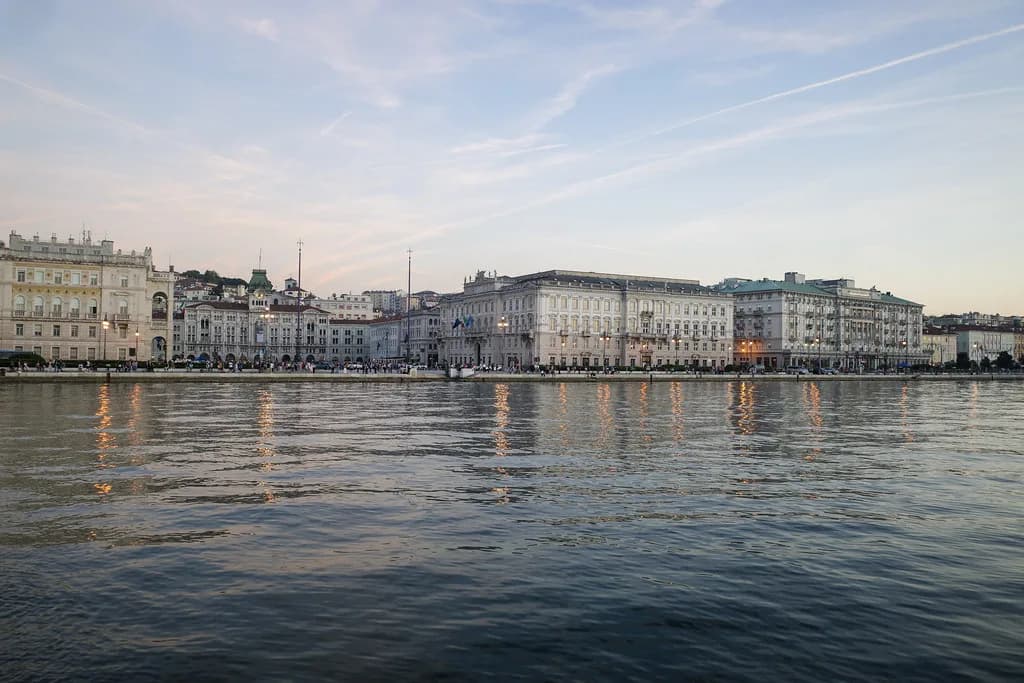
Trieste greets arrivals from the sea with an open-armed square, and that first impression is a good reason to make Piazza Unità d'Italia the fixed point of your day. It is the obvious place to begin, not a detour to squeeze in between museums: much of the centre can be measured from here.
The city tourism portal describes the piazza as the largest square facing the sea in Europe and notes that residents call it the city's front parlour. Treat that nickname as a way to read the space: it was designed for receiving guests, and it still works that way for travellers arriving by land or by boat.
Allow roughly forty-five minutes to an hour for the square itself, as an editorial suggestion rather than an official figure, then add time for whatever walk you choose next. The outdoor space needs no booking, but the surrounding buildings and the history attached to them reward a slower pass.
Why the Square Anchors a Trieste Visit
Geography does most of the work here. The piazza sits directly against the water on the city's edge, so it functions as a natural arrival hall whether you come by sea or on foot from elsewhere in the centre. Use it to fix your mental map before wandering inland.
The ensemble reads as a statement of imperial confidence made as that confidence was fading, with the main players of Trieste's commercial and civic life lined up along its edges. That framing helps you look at the buildings as a group rather than ticking them off one by one.
It is also a living room in the everyday sense: the city's own account of the square notes that people meet here for a morning coffee or an evening aperitivo, and children use the open pavement as a playground. That ordinary use is part of what you are visiting, so plan to stand still for a few minutes rather than crossing it at speed.
The Buildings Around the Square
Look first at the Art Nouveau government building, the Assicurazioni Generali block and the Lloyd Triestino building. The tourism portal presents these as cornerstones of the city's commercial hub, and their facades are where the square's ambition is most legible.
The City Hall, or Palazzo del Municipio, was the last of the group to be built, which is why the square reads like a closing act rather than an opening one: the cast assembled, then the final piece slotted into place. Knowing that order changes how you see the composition.
Do not assume the interiors follow the same logic. The open square is public outdoor space, but the surrounding buildings are working offices and institutions, and nothing in the city's published material guarantees casual entry to their halls. If a specific interior matters to you, ask at an information point rather than pushing a door.
The Old Marina Under Your Feet
One detail is easy to miss and worth hunting for: blue lights set into the pavement trace the line where the old marina once met the city. They mark the former water's edge, in a square that the tourism portal explains was later closed off from the sea by a building along the shore.
Standing on that line is the quickest way to understand that the piazza you see is not the piazza that existed a century and a half ago. It turns an abstract bit of urban history into a physical step you can take, and it costs nothing.
For more of Trieste's overlooked corners, from the Canal Grande to quieter backstreets, the city's hidden gems in Trieste pick up where the main square leaves off. The piazza is the orientation point; the smaller places are what you find once you are oriented.
Four Dated Episodes You Can Read On the Spot
Start with 2 July 1914, when the boat carrying the remains of Archduke Franz Ferdinand and his wife Sophie landed at the quayside here, a moment the city's own account frames as the end of a world. The square was already the stage on which Trieste's fate was announced.
Then comes 3 November 1918, when crowds waited for the destroyer Audace and the beginning of a new chapter in the city's history. Later, on 26 October 1954, crowds again filled the square to cheer the return of Italian troops.
The hardest episode to stand in front of is 18 September 1938, when Mussolini spoke from a stage built for the occasion to announce the Racial Laws, in a speech broadcast by radio to squares across Italy and beyond. A bronze commemorative plaque was placed here on 18 September 2013, so the date is not left to memory alone.
These four dates turn a handsome open space into a sequence you can walk through in a few minutes. Reading them in order, rather than photographing the facades and moving on, is what makes the square worth more than a snapshot.
What Is Free and What You Should Verify
The square itself is open outdoor public space, so walking into it costs nothing and needs no ticket. That is a suggestion for how to treat the space, not an official rule, and it does not extend to the buildings around it.
The Comune di Trieste publishes the notices that actually govern access, works and events in the city, so check there before assuming a particular building or passage is open on your dates. General travel listings are a poor substitute for the city's own communication.
Museums, castles and paid collections elsewhere in Trieste have their own arrangements, and nothing about the open piazza implies a shared ticket. If you want a free-things-to-do plan for the day, keep the square as the anchor and confirm each indoor stop separately.
Using the Square as a Walk Starter
From the piazza, the most natural uphill move is toward the Castello di San Giusto, which sits above the city and gives you the reverse view of the square you have just read. Allow the climb and the visit as separate blocks of time rather than bolting them together.
If you would rather ride than walk, the Trieste HopTour links Piazza Unità d'Italia with the Castello di San Giusto and the Castello di Miramare, with hop-on hop-off tickets and audioguides synchronised to the route. The tourism portal describes the route but does not publish frequencies or fares, so check current details before relying on it.
For a themed alternative on foot, the Trieste Habsburg walk traces the imperial layer of the city that the square announces so loudly. Doing it after the piazza gives those facades a context they otherwise lack.
Looking Slowly at the Facades
The square rewards attention to detail more than it rewards a wide shot. Work along one side at a time, comparing the ornament on the government building with the plainer commercial blocks, and notice how the City Hall closes the composition as the final piece built.
The pavement tells its own story: the blue lights marking the old waterline, the open expanse where people cycle and children run, and the way the space funnels attention toward the sea. None of this needs a guide, only a slower pace.
There is no verified best time for photographs, and lighting varies with season and weather, so plan around your own comfort rather than a claimed golden hour. Early or late in the day often means fewer people, but that is a practical guess, not a published fact.
Where the Square Fits in a Trieste Day
Trieste's food story runs from the cafés of the centre outward to the Karst, where the tourism portal points to agriturismi serving typical dishes made with local ingredients, some with farm visits, riding stables and rooms. Use the piazza as the city-side start and treat the plateau as a half-day excursion of its own.
The osmize, seasonal farm eateries in the surrounding countryside, are another reason to leave the centre behind after a morning on the square; the same portal lists them among the city's experiences, and their opening periods vary, so confirm before you travel out.
For a wider frame on the city's sights, the Trieste Attractions hub collects the individual guides, while a self-guided Habsburg walk covers the imperial thread in more depth. Between them you can build a day that starts at the waterfront and ends somewhere with a view.
Use the Square, Then Leave It Behind
Piazza Unità d'Italia works best as a tool rather than a destination: a place to get your bearings, notice a handful of details, and then choose a direction. Read the facades, find the blue lights, look for the plaque, and let the square point you uphill to the castle or along the waterfront.
Before you set out, confirm anything time-sensitive on the city's own channels, since the tourism portal and the Comune publish the notices that actually apply. Those pages, not a general guide, are where to check what is open, what is ticketed and what is happening during your dates.
Frequently Asked Questions
Is Piazza Unità d'Italia free to visit?
The square is open outdoor public space, so walking into it costs nothing and requires no ticket. That applies to the piazza itself, not to the buildings around it: the City Hall, the Assicurazioni Generali block and the Lloyd Triestino building are working institutions, and their interiors are not covered by any general promise of free entry. Check with the city or an information point if a specific interior matters to you.
Why is Piazza Unità d'Italia significant?
The city tourism portal calls it the largest square facing the sea in Europe, and residents call it the city's front parlour because it has long been Trieste's reception room for visitors arriving by land or water. Its character also rests on the ensemble of buildings around it, including the Art Nouveau government building, the Assicurazioni Generali and Lloyd Triestino blocks, and the City Hall, which was built last.
What happened in Piazza Unità d'Italia in 1938?
On 18 September 1938 Mussolini spoke from a stage built in the square to announce the Racial Laws, in a speech broadcast by radio to squares throughout Italy and beyond. A bronze commemorative plaque was placed here on 18 September 2013 to mark the date. It is one of four dated twentieth-century episodes the city's own account highlights alongside the 1914 funeral arrival, the 1918 arrival of the destroyer Audace and the 1954 return of Italian troops.
Is the square a good starting point for walking in Trieste?
Yes, because it sits against the water at the edge of the centre and fixes your orientation immediately. From there you can head uphill toward the Castello di San Giusto, follow the imperial thread on a Habsburg-themed walk, or take the hop-on hop-off route that the tourism portal describes linking the square with San Giusto and Miramare. Confirm current route details before relying on any transport option.
How long should you spend at the square?
The square itself needs roughly under an hour if you read the facades and find the blue pavement lights, as an editorial suggestion rather than an official timing. The castle or a Karst excursion will take a good part of a day on its own, so build your city time around one anchor per day rather than rushing between sights, and check opening arrangements for each indoor stop before you go.
Sources
Continue exploring
More guides you'll find useful





