
Museo Civico d'Arte Modena: Palazzo dei Musei Guide
Plan the Museo Civico d'Arte in Modena's Palazzo dei Musei. See how it differs from the Galleria Estense and which visit details to confirm before you go.
On this page
The Museo Civico d'Arte di Modena is one of several collections inside Palazzo dei Musei at Largo Porta Sant'Agostino 337, a complex that also holds the civic archaeological and ethnological museum, the Estense Lapidary Museum, the historical archive and, on the fourth floor, the Galleria Estense. The most common planning mistake is treating the whole palace as one museum with one door and one ticket.
A third-party overview places the palace roughly a ten to fifteen minute walk from the Duomo and Piazza Grande and describes a converted eighteenth-century building rather than a purpose-built gallery, so expect floors and separate sections instead of one linear route. Decide which collections interest you first, then match that list against what the museum's own pages publish for your dates.
What Is Inside Palazzo dei Musei
The building groups distinct institutions under one address. A directory listing names the Roman and Estense Lapidary Museum, the Historical Archive, the Civic Archaeological and Ethnological Museum and the Civic Art Museum among them, with the Galleria Estense on the fourth floor. Plan the palace as a cluster of museums rather than a single route.
The Museo Civico publishes its own contact and administrative material, including its address at Largo Porta S. Agostino 337 and documents covering services, loans and reproduction requests. That site is the practical reference for the civic side of the palace, though it is not an illustrated gallery of individual highlights.
An external overview says the palace hosts temporary exhibitions and cultural events alongside the permanent collections, so part of the building can change between visits. Check the civic museum's media page to see what is announced before deciding how much time to allow.
The Museo Civico d'Arte Explained
The civic art collection belongs to the city, while the Galleria Estense descends from the dynasty that ruled Modena and occupies the same building as a separate gallery. The same directory describes the Estense collection as paintings and sculpture amassed by the dukes from the fourteenth to eighteenth centuries, displayed across four large halls and sixteen rooms.
That difference matters for planning. The two collections have different owners, histories and displays, and the institutions' published pages do not present them as a combined admission. Budget attention for each as its own visit and check each institution's own ticket information rather than assuming one ticket covers both.
The same listing identifies the civic art museum as established in 1871 after archaeological excavations, with prehistoric artefacts and ethnological collections part of its profile. That origin helps explain why the civic side reads as a city and territory collection rather than a dynastic picture gallery.
Getting There and Orientation
The palace stands at Largo Porta Sant'Agostino 337, on the edge of the historic centre. The third-party overview puts it roughly a ten to fifteen minute walk from the Duomo and Piazza Grande and warns that the centre is a limited traffic zone, advising drivers to park at the edge of the historic district and continue on foot or by public transport.
For rail arrivals, that same overview mentions a local bus from Modena Centrale taking about ten minutes, or a walk of around twenty minutes, and names Bologna Airport as the usual air arrival with onward trains. These are third-party suggestions rather than operator timetables, so confirm current services locally on arrival.
Because the palace sits among the streets just beyond the cathedral, it fits a walking day that begins at the UNESCO core. The city council's own portal is where to check civic notices and information before setting out.
Admission and Opening Patterns to Verify
The Museo Civico's published pages do not state an admission fee, a free-entry policy or a current timetable for the civic art museum or the civic museums as a group. Do not carry a price over from a travel blog or an old listing: check the museum's own pages and the tourist office, and ask specifically about the civic art collection rather than the palace as a whole.
The commercial overview lists the palace as closed on Mondays, with longer Tuesday-to-Saturday hours and shorter Sunday hours, but it is not an official source and should be treated as a prompt to check rather than a schedule. Confirm directly with the museum instead of reorganising a day around a third-party table.
Public holidays are the other trap. State and civic museums often follow different closure calendars, and the Galleria Estense is a state institution while the civic collections belong to the city, so a closure in one does not automatically mean the other is shut. Verify both separately in the week before your visit.
A Slow Half-Day Inside the Palace
A sensible pace is to give one collection your full attention and treat the rest as optional. If you want a figure to plan around, the third-party guide suggests setting aside two to four hours for the palace's main galleries, or an hour and a half to two hours for a quick pass. Treat that as a suggested pace, not official guidance, and cut it down if you only want the civic art rooms.
Start with the civic art collection while your attention is fresh, then move to the Galleria Estense on the fourth floor if it is open and you want a second, larger collection. The Estense gallery is the one usually associated with named old masters, so save it for when you can linger rather than squeezing it in before closing.
The civic museum also runs digital projects that publish collection material online, useful for previewing objects or following up afterwards. Browsing beforehand can help you decide whether the civic collections or the Estense gallery better matches your interests.
Pairing Beyond the Palace
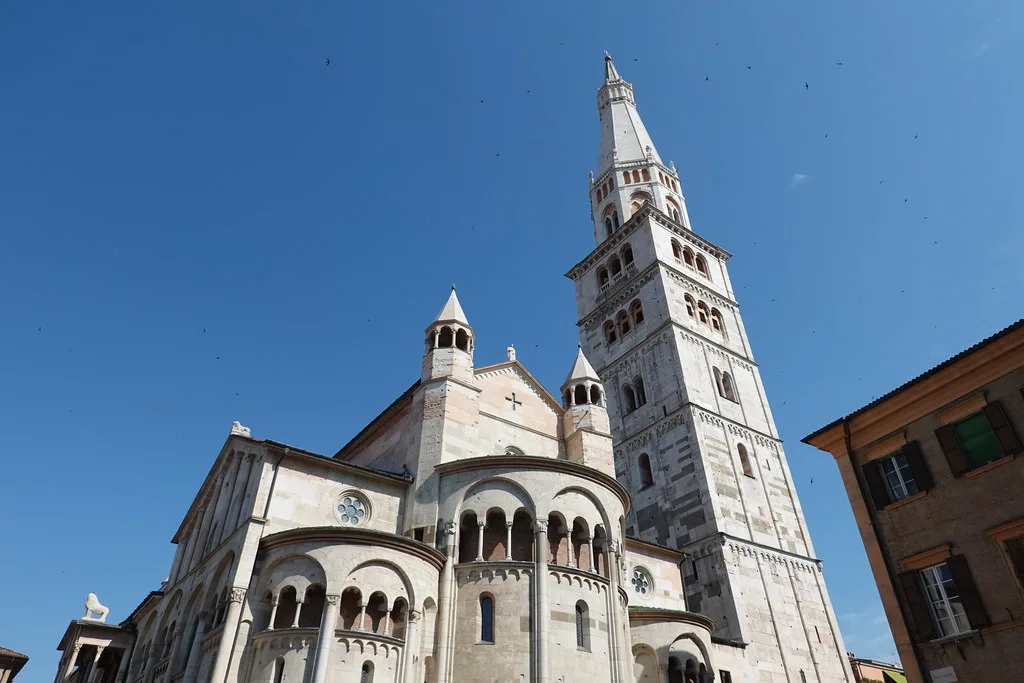
Modena's cathedral is a short walk away, and its basic visiting rules are straightforward: entry is free, visits pause during celebrations, and a separate paid route covers the upper presbytery and the sacristy. The cathedral was begun in 1099 under the architect Lanfranco and consecrated in 1184, which gives useful context for the medieval sculpture you will meet in the city's collections.
The Ghirlandina bell tower is a separate booking with its own timed entry, a cap of 25 visitors per slot and roughly 200 steps, and visits stop at the Sala dei Torresani rather than the very top. It is not included with palace entry, so decide whether the climb fits your day before reserving a slot.
For lunch, the Mercato Albinelli is minutes from the cathedral and combines market stalls with bars and restaurants inside a 1931 Art Nouveau building. Its own site lists separate summer and winter timetables, so check the current opening-hours page on the day rather than relying on a single table.
Smaller Collections for a Quieter Afternoon
If the palace has absorbed your attention, Modena offers smaller collections that suit a slower second day. The Museo della Figurina, founded in 2006 by Giuseppe Panini, holds small prints, calendars, trading cards and similar ephemera on Corso Canalgrande, a niche subject that rewards curiosity more than a checklist.
The Museo Lapidario Estense on the ground floor of the palace displays stonework including pieces linked to the sculptor Wiligelmo and his workshop, which connects neatly back to the cathedral facade. Pairing the lapidary rooms with the cathedral helps the medieval material make sense in sequence.
Beyond the museums, the historic centre rewards wandering. Wanderlog's city survey highlights the lanes around Piazza Grande and the Ghirlandina where the city feels least hurried, and our guide to the hidden gems in Modena adds the smaller squares and corners worth building into a palace day.
Practical Pitfalls to Avoid
Do not assume the palace is closed on Mondays because one travel site says so, and do not assume it is open either. The civic museums and the state gallery answer to different administrations, so verify each separately, particularly around public holidays and the days either side.
Do not treat any price found online as current. Admission for the civic art museum is not published in the material available here, and the Galleria Estense publishes its own conditions. Ask at the ticket desk or check the institution's site before you budget.
Finally, allow for the building itself. The palace is a large complex with several entrances and floors, and a rushed visit can turn into a corridor walk. Pick two collections you actually care about and leave the rest for another trip.
Plan Your Visit
The Museo Civico d'Arte rewards visitors who arrive knowing it is one part of Palazzo dei Musei rather than the whole story. Decide in advance whether the civic collections or the Galleria Estense is your priority, then build the rest of the day around the cathedral, the tower or the market as time allows.
Before travelling, confirm opening days, admission and any booking requirements directly with the civic museum and with the Galleria Estense, since the two are run separately. Treat blog timetables and prices as leads to check, not facts to rely on. For related planning, see Modena on a Rainy Day: Indoor Plan for the Historic Center.
Frequently Asked Questions
Is the Museo Civico d'Arte in Modena free to visit?
The museum's own published pages do not confirm an admission fee or a free-entry policy for the civic art museum. Check the Museo Civico's site or ask at the ticket desk before you go, and do not rely on prices quoted in older travel articles.
Does a Palazzo dei Musei ticket include the Galleria Estense?
The institutions' published pages do not indicate that the civic collections and the Galleria Estense share one ticket. They belong to different institutions, so check each one's own admission information separately before planning your day.
How long does it take to see the civic collections in Palazzo dei Musei?
One third-party guide suggests two to four hours for the palace's main galleries, or an hour and a half to two hours for a quick visit. That is a suggested pace rather than official guidance, and a single collection will take less.
What else can I see in Palazzo dei Musei besides the art museum?
The complex also houses the Civic Archaeological and Ethnological Museum, the Estense Lapidary Museum, the historical archive and, on the fourth floor, the Galleria Estense. Temporary exhibitions may also be running, so check the museum's media page.
Is Palazzo dei Musei closed on Mondays?
A commercial travel site lists Monday closure, but it is not an official source. Confirm current opening days with the civic museum and the Galleria Estense separately, since the two follow different administrative calendars.
How far is Palazzo dei Musei from Modena Cathedral?
The palace is at Largo Porta Sant'Agostino 337, roughly a ten to fifteen minute walk from the cathedral and Piazza Grande according to one overview. Drivers should note that the historic centre is a limited traffic zone and park at its edge.
Sources
- Palazzo dei Musei Modena: Tickets, Hours & Best Collections
- The 25 best places to visit for arts and culture in Modena
- Comune di Modena - Sito Ufficiale | Servizi, Uffici e Notizie - Comune di Modena
- Museo Civico di Modena
- Museo Civico di Modena
- Museo Civico di Modena
- The Cathedral OF MODENA - VisitModena
- The history of Modena Cathedral
- Mercato Albinelli Modena | Covered market since 1931
- Book your admission hour to the Torre Ghirlandina - VisitModena
Continue exploring
More guides you'll find useful





