
Palazzo Ducale Estense Ferrara Guide: Piazza Municipio
The Palazzo Ducale Estense in Ferrara now houses the city council. See what remains on Piazza Municipio, from the marble staircase to the frescoed rooms.
On this page
The Palazzo Ducale Estense is the first building many visitors misread in Ferrara. Its crenellated outline and statues suggest a castle-museum, yet the complex on Piazza del Municipio serves as the city's municipal seat, and its most reliable point of contact for a casual visitor is the open courtyard rather than a ticketed gallery. For wider planning, see Ferrara Attractions: Visitor Guides to 10 Sights.
That distinction matters when you plan a day. Treat the palace as a connective stop between the cathedral and the Estense Castle, allow a short look at the entrance and courtyard, and check with the Comune di Ferrara before assuming the frescoed rooms are open.
What Palazzo Ducale Estense Actually Is Today
Historically this was the ducal residence of the Este family, linked by a covered walkway to the castle and used by the court until the castle itself became the family seat. Today the building functions as the town hall, which is why its busiest activity is administrative rather than touristic. Plan your expectations around a working civic building.
A travel guide to the complex describes the Palazzo Ducale as a precious architectural remain of Pietro Benvenuto's fifteenth-century work and the only piece of that architect's output from the period to survive intact. That framing is useful: you are looking at a layered civic monument, not a single restored period room.
Getting Oriented on Piazza Municipio
Piazza del Municipio sits between the cathedral and the palace, and the guide source describes it as the heart of the old Palazzo Ducale, reachable directly from the cathedral by passing under an imposing arch. Two further entrances lead into the central courtyard: the Volto della Colombina toward via Garibaldi and the Volto del Cavalletto toward Via Cortevecchia.
Use those names rather than a street number when you navigate. Arriving from the cathedral side puts you under the arch and in front of the statues first, which is the sequence that makes the entrance legible.
The Courtyard: The Most Reliable Look-In
Step inside and the reward is a large open courtyard framed by the palace wings, with the white marble Scalone d'Onore rising at one side. The travel guide notes that the square is currently the stage for concerts, conferences, book presentations and other popular events, so a passing visit may coincide with setting-up or a crowd.
This is the part of the palace a casual visitor can reasonably plan around, and it is free to walk through according to the guide. It is also the limit: nothing in the available sources establishes that the frescoed rooms beyond the courtyard are open to the public.
The Scalone d'Onore and Este Self-Presentation
The staircase, finished in 1481 and executed by Pietro Benvenuto, is covered in white marble and designed in Renaissance style, though its balustrade recalls an older Gothic manner and the whole composition shows a clear link to Venetian art. Look at how the stair is staged rather than only at its material.
A ceremonial stair of this kind was a statement of rank: it slowed arrival, framed the guest and made the ascent part of the audience. Reading it that way turns a quick photo stop into the clearest surviving lesson in Este self-presentation on the site.
Statues and Columns at the Entrance
Above the arch, two Estense figures face the piazza: Nicolò III on horseback and Borso d'Este seated on an episcopal chair while brandishing the scepter of power. Borso is remembered for leaving a celebrated miniature Bible, now held by the municipality of Modena.
Both statues you see are copies, because Napoleon's troops destroyed the originals in 1796. The columns supporting them carry a harder history still: the guide states they were built with material taken from destroyed gravestones of the Jewish cemetery, demolition ordered by the Inquisition. Look up, then look at the bases.
Rooms with Frescoes and Painted Woodwork
Inside, the Sala dell'Arengo holds a fresco cycle by Achille Funi painted between 1934 and 1937 and dedicated to the city of Ferrara. The Camerino delle Duchesse, a small room created for Duchess Eleonora and Lucrezia d'Este, has walls covered with gilded wooden panelling painted by Sebastiano and Camillo Filippi in 1565.
These are the interiors most worth asking about, precisely because their reputation outstrips any confirmed visiting arrangement. The Comune di Ferrara's institutional site is the place to check current civic use and any published access information before you build a trip around them.
What Is Original After the 1924 Remodelling
The palace you admire today is, in the guide's words, a remake in fourteenth-century style carried out in 1924. That date explains the crisp medieval costume of much of the exterior and should stop you reading every stone as Renaissance fabric.
The nearby Victory Tower was built in the same years and still carries at its base a memorial to the fallen of all wars, with a bronze statue by Arrigo Minerbi dated 1918. Pairing facade and tower gives you a compact lesson in how Ferrara reconstructed and commemorated in the early twentieth century.
Free Versus Paid Access: What to Assume
Split the site in your planning. The piazza, the entrance arch and the open courtyard are described as freely walkable, while the frescoed interiors have no confirmed ticketing, hours or guided access in the sources available. Do not plan on buying a single ticket that covers everything.
For anything beyond the courtyard, ask the city directly through its published contacts rather than relying on old tour listings. Confirm scope in writing: which rooms, on which days, and whether a city office or a separate operator runs the visit.
Civic Life and the Piazza as a Stage
Because the palace is the municipal seat, weekday mornings bring employees and service traffic rather than tour groups. Photograph the courtyard without blocking entrances, and treat any ceremony or event setup as a reason to step aside rather than a photo opportunity.
The city's better-known recurring spectacle, the Palio, is run near Piazza Ariostea on the last Sunday of May rather than in Piazza Municipio. If you are in Ferrara for that weekend, expect the historic centre to be busy and keep palace time flexible.
Nearby Stops That Fill Out a Half-Day
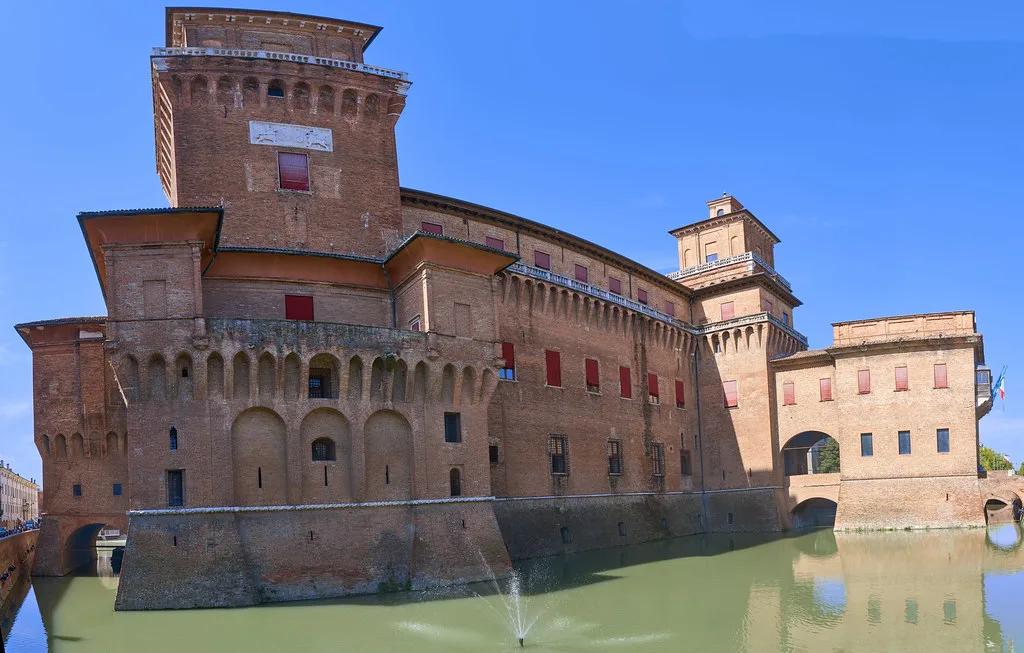
Build a short circuit around the palace. The cathedral of San Giorgio, with its Romanesque lower facade and Gothic upper section and its unfinished Alberti bell tower, stands immediately alongside; the Palazzo dei Diamanti, faced with thousands of diamond-shaped marble blocks and home to the national picture gallery, lies along Corso Ercole I d'Este; the moated Estense Castle sits at the end of the same axis.
Add the Via delle Volte with its suspended arches and the former Jewish ghetto, whose gates were closed from 1624 and reopened only in 1848, for the part of the city that rewards slow walking. These are suggestions for sequencing, not a fixed route.
If you want quieter corners beyond the main squares, save time for the lesser-known lanes and courtyards that fill out the city's hidden gems in Ferrara, many of them inside this same UNESCO World Heritage centre.
Practical Planning Before You Go
Check the Comune di Ferrara's official site shortly before travelling, and use the city tourist information channels for any temporary exhibition or civic event that might affect the courtyard. Ask specifically about the Sala dell'Arengo and the Camerino delle Duchesse.
Dress and behave as you would in any working town hall, keep voices low near offices, and allow roughly thirty to forty-five minutes as a suggested visit duration for the piazza, entrance and courtyard. That duration is not an official figure, and it stretches if an event is under way.
Plan Your Visit
Approach the Palazzo Ducale Estense as Ferrara's town hall with a ducal past, not as a museum with an entrance fee. The piazza, the arch with its copied statues and the marble staircase courtyard give you the most dependable experience, and the stories behind them are specific enough to justify the stop.
For the frescoed rooms, verify directly with the city before you travel, and use the wider city guides to decide how much of the surrounding centre to fold into the same afternoon.
Frequently Asked Questions
Is the Palazzo Ducale in Ferrara a museum you can visit?
No. The former Este ducal palace on Piazza del Municipio serves as Ferrara's municipal seat. Surviving descriptions treat the open courtyard and entrance as the walkable parts, while the frescoed rooms have no confirmed public visiting arrangement. Ask the Comune di Ferrara before planning around the interiors.
Can you walk into the courtyard of Palazzo Ducale for free?
The travel source describes the square inside the palace as freely accessible on foot along with the surrounding piazza and entrance arch. That applies to the courtyard only, not to the frescoed rooms beyond it, and temporary civic events can change how much of the space is usable on a given day.
What can you see inside the former Este ducal palace?
Documented features include the courtyard, the white marble Scalone d'Onore, the Sala dell'Arengo with Achille Funi's 1930s fresco cycle, and the Camerino delle Duchesse with painted gilded panelling of 1565. Whether those interiors can be entered on your dates is a separate question that only the city can answer.
Why does the palace look partly medieval when much of it dates to 1924?
The building was remodelled in a fourteenth-century style in 1924, so much of the exterior reads as neo-medieval costume rather than untouched Renaissance fabric. The Victory Tower beside it was built in the same years, which helps explain the ensemble's consistent early twentieth-century look.
What happened to the original statues of Nicolò III and Borso d'Este?
Napoleon's troops destroyed the originals in 1796, and the figures now above the arch are copies. The columns carrying them were built from material taken from destroyed gravestones of the Jewish cemetery, a detail worth noticing during a short visit.
How long should you allow for Piazza Municipio and the palace courtyard?
Allow about thirty to forty-five minutes as a rough personal suggestion for the piazza, entrance and courtyard, longer if a civic event or ceremony is taking place. No official duration is published, and any interior access would need extra time and prior confirmation.
Which nearby sights pair well with Palazzo Ducale?
The cathedral of San Giorgio is immediately adjacent, the Palazzo dei Diamanti and its picture gallery sit along Corso Ercole I d'Este, and the moated Estense Castle closes the same axis. The Via delle Volte and the former Jewish ghetto reward slower walking nearby.
Sources
Continue exploring
More guides you'll find useful





