
Poetto Beach Cagliari Guide: Free Sand, Lidos and the Devil's Saddle
Plan a slow day at Poetto, Cagliari's long city beach: how the shoreline shifts from end to end, free stretches versus lidos, and the Devil's Saddle walk.
On this page
Poetto works less like a sight to tick off and more like the place where Cagliari spends its afternoons. The shoreline runs for roughly eight kilometres from the city's western headland towards Quartu Sant'Elena, which means "Poetto" is really several different beaches wearing one name. A suggested plan of half a day is ample; choose a stretch deliberately and the visit becomes far easier to handle.
This guide sticks to what you can decide in advance: how the beach changes from west to east, when paying for a lounger is worth it, and how to handle the heat on the headland walk. It also covers the wetland immediately behind the sand, plus a quick note on how the beach reached its present shape.
Why Poetto Shapes a Cagliari Trip
Few Italian cities of this size have a beach quite so close to the centre, and that proximity changes how you plan a day. The sand sits a short ride from the historic streets, so a swim can sit alongside a morning of churches and lanes rather than replacing it. Visitors arriving by sea also treat it as the obvious nearby escape.
The official cruise port describes Poetto as a vast city beach with eight kilometres of coastline extending between Cagliari and Quartu Sant'Elena, a few kilometres from both the centre and the port. That framing is useful: this is a substantial piece of coast, not a small town beach, so walking its full length is a genuine outing rather than a stroll to the water. Further visitor details appear in Poetto Beach – Cagliari Cruise Port.
Sardinia's regional tourism board gives the island's beaches and coastal experiences prominent space in its planning material, which is a reminder that Poetto is part of a much wider shoreline rather than a standalone destination. If you have several days in the city, use Poetto as the relaxed counterweight to the archaeological and cultural stops on your list.
Orientation: Reading the Beach from West to East
The beach begins at the limestone headland on the Cagliari side and continues towards Quartu Sant'Elena, and its personality changes along the way. At the western end, closest to the city, the sand is busiest at weekends and holds the longest stretches of free public beach. The middle section is where most of the concessions cluster, with kiosks, showers and bars sitting behind the sand. Further east, towards Quartu, things quieten down.
That pattern gives you a simple rule. Travellers without a car should head west for space and easy access; anyone with a car who wants calm on a crowded Sunday should consider driving to the eastern end. Decide this before you leave your accommodation, because the beach is long enough that walking from one end to the other burns a lot of a hot day.
One detail worth knowing for families: the offshore gradient is shallow, so you can wade out a considerable distance before the water reaches your shoulders. The sand is pale rather than brilliant white, and the shallows are the main reason the beach suits children so well.
How to Get There
Buses from Piazza Matteotti, just off Via Roma, are the standard way to reach the beach without a car. According to one visitor account, the trip takes roughly fifteen to twenty minutes and tickets are bought before boarding, at a tabaccheria or a machine, then validated on board; fares and line numbers change, so confirm current details with the local transport operator before you travel.
Driving is quicker on paper, but parking along the beach road in July and August is its own small ordeal. For most visitors in high summer the bus is the better bargain, since it drops you near the sand without a hunt for a space. If you are arriving on a cruise ship, the port is within a few kilometres of the beach, though how long that walk takes should be judged by the heat of the day rather than by distance alone.
Free Sand or a Lido: How to Decide
Poetto mixes long free public sections with private concessions, the stabilimenti, that rent loungers and umbrellas. Renting from a lido typically brings shade, showers and access to a bar. The free stretches are perfectly good, and they are particularly generous at the western end, but there is no natural shade anywhere on the sand. Bring your own umbrella if you burn easily.
A dated visitor report from 2026 puts a sunbed and umbrella at roughly five to twelve euros depending on the establishment and the day, with weekends and August at the higher end. Treat that as an approximate, dated figure rather than a current tariff: prices vary by lido and season, so check the board at the entrance before you commit.
The judgement call is simple. On a hot August afternoon, shade is worth paying for; in June or late September, when the light is gentler, a towel on the free sand is often the more pleasant choice. A lido rental buys convenience and comfort rather than access to better water.
Sand, Water and What to Bring
There is no natural shade on the beach, so a portable umbrella, a wide hat and a refillable bottle of water are the essentials rather than optional extras. The shallow water is forgiving for young swimmers, but the same exposure that makes the sand bright makes it hot underfoot by early afternoon. Cash in small notes is useful, because some kiosks still prefer it.
The beach you walk on has a recent history. The original sand was coarser and darker, and in 2002 the beach was replenished with dredged material that turned out finer and paler and behaved differently in the water. The low fences and planted sections behind the sand are there to hold the dune in place rather than to keep people off it, so read them as dune protection, not as a barrier.
Walking the Devil's Saddle
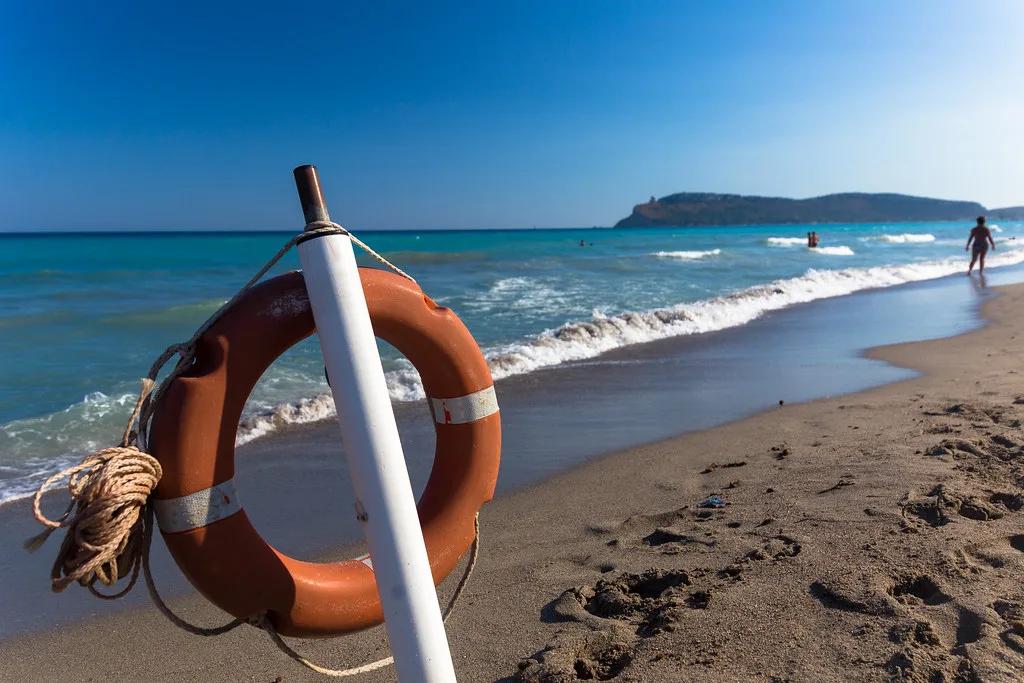
The Sella del Diavolo, the Devil's Saddle, is the limestone promontory that closes the western end of the beach. On a clear day the plateau gives views across the whole gulf, the long line of Poetto running east, the salt pans behind it and the city stacked on its ridge. The path begins behind the Calamosca hotel, on the far side of the headland from the main beach, and climbs steeply through low scrub.
Budget around forty minutes to the summit, a suggested timing rather than an official one, and longer if you stop to look back. The route is completely exposed, with no shade and no water, and the rock throws heat back at you. Go early in the morning or late in the afternoon, avoid the middle of the day in summer, and wear proper shoes because the surface is loose and dusty with drops along the way.
The name comes from a legend about the devil being thrown from heaven into the gulf and leaving his saddle behind, which is a better story than the geology. If you plan to combine the climb with a swim, do the walk first while it is cool and save the water for afterwards.
Behind the Sand: The Molentargius-Saline Wetland
Directly behind Poetto lie more than 1,600 hectares of former salt pans, now the Molentargius-Saline regional park, where greater flamingos are present year round and numbers peak during migration, according to a visitor account. Boardwalks and observation points keep disturbance low, and in the evening the birds often feed close enough for a phone camera. Binoculars are worth carrying if you have them.
Access arrangements and opening hours are the part to verify rather than assume. That same visitor account describes the park as free and open from dawn to dusk, but conditions and management can change, so check the park's current published arrangements before you build an evening around it. If in doubt, ask at your accommodation or the city's tourist information service.
The same beach bus that serves Poetto stops near the hospital at Ospedale Marino, about ten minutes' walk from the gate according to the same account, which makes a late-afternoon wetland visit easy to combine with a swim. Schedule the birds for the last hour of light and the salt pans will do the rest.
Sunset Strategy: Face Inland
The gulf faces roughly south, so this is not a beach for watching the sun drop into the sea. What you get instead is the light going long across the sand from the west, with the headland turning gold at the near end and the city on its ridge glowing behind you. The move is to turn inland at the end of the day.
From the middle of the beach in low light, Cagliari stacked on its limestone ridge makes a memorable evening view as the light fades, and almost everyone is looking the other way, out to sea. Carry this tip into the evening: swim late, then walk back into town as the light goes.
Pacing the Day Around Poetto
A sensible rhythm is a medieval lane or museum in the afternoon, the beach bus later, several hundred flamingos by early evening, and dinner back in the city. The beach rewards late arrivals: in September, according to the same visitor account, people are still swimming at seven in the evening. If you are visiting in high summer, shift the whole sequence later to avoid the worst of the heat.
The municipality publishes notices on weather alerts, transport and services that can affect a day at the coast, from storm warnings to road works, so it is worth a glance on the morning of your beach day. These pages are practical rather than promotional, and they are the quickest way to see whether anything official affects your plans.
If you would rather spend the afternoon inland, the Tuvixeddu necropolis is a good reason to leave the sand early, and it pairs naturally with a swim the next morning. Either way, keep Poetto as the flexible half of the day rather than the fixed appointment.
Beyond the Beach: Fitting Poetto Into a Cagliari Plan
Poetto sits alongside a wider set of sights that deserve their own time, from the cathedral and the bastion walk to the two historic towers. Grouping the beach with nearby coastal and cultural stops gives structure to your days without overloading any single one. A full day at the beach plus a wetland visit plus the climb is ambitious in summer heat. For wider planning, see Cagliari Attractions: Visitor Guides to 13 Sights.
Use Poetto for what it does best: a long, shallow swim, a short exposed hike, and an evening of birdwatching behind the dunes. Save the city's interiors for the hours when the sun is at its strongest. Built that way, a beach day becomes part of the trip rather than a break from it.
Plan Your Beach Day
Decide your stretch of Poetto before you leave: the western end nearest the city for free sand and easy access, the middle for loungers and kiosks, or the quieter eastern run towards Quartu Sant'Elena if you have a car and want calm. Take the bus from Piazza Matteotti, confirm current fares and routes locally, and carry shade and water because the beach offers none.
Then let the day work with the heat rather than against it: the Devil's Saddle early or late, the free beach in between, and the flamingos in the last hour of light. Finish by facing inland as the city catches the evening sun. Budget details and park access arrangements change, so verify before you go, then leave room for a swim that runs longer than planned. For related planning, see Poetto District Cagliari Guide: Beach, Lidos and Getting There.
Frequently Asked Questions
Can you walk from Cagliari city centre to Poetto beach?
The beach is a few kilometres from the centre and the port, so it is a long walk rather than a short one. Most visitors take a bus from Piazza Matteotti, just off Via Roma. Buy a ticket before boarding at a tabaccheria or machine and validate it on board, and confirm current routes and fares locally.
Is Poetto beach free to use?
Yes, in large part. There are long free public sections, particularly at the western end, alongside private lidos that rent loungers and umbrellas. Free sand has no natural shade, so bring your own umbrella and water. Lido prices are not published consistently and change with season and day, so check the board at the entrance.
How long does the walk up the Devil's Saddle take?
Allow around forty minutes to reach the top from the path behind the Calamosca hotel, a suggested timing rather than an official one, and longer if you stop for the view. The route is steep, completely exposed, and has no shade or water, so wear proper shoes and go early or late rather than in the middle of a summer day. Stay aware near the loose edges.
Can you see flamingos near Poetto beach?
Greater flamingos live in the Molentargius-Saline park behind the beach, and numbers rise during migration periods rather than at one fixed time of year. Boardwalks and viewpoints keep disturbance low. Opening arrangements and access conditions can change, so check the park's current published information before planning an evening visit.
Which part of Poetto is quietest?
The eastern end, towards Quartu Sant'Elena, is the calmest stretch and the best choice on a crowded Sunday if you have a car. The western end nearest the city is busiest at weekends but has the longest free public beaches. The middle section concentrates the concessions, kiosks and showers.
Is Poetto good for swimming with children?
The water stays shallow for a long way out, so there is plenty of room for young swimmers before it gets deep. The trade-off is the complete absence of natural shade on the sand, which matters on hot days. Bring an umbrella, hats and water, and plan around the middle hours of the day.
What should you bring to Poetto?
A sunshade, water, footwear for the rocky headland and small notes for the kiosks cover most needs. There is no natural shade anywhere on the beach, and the Devil's Saddle walk is fully exposed. Cash is still preferred at some kiosks, so carry a few small notes even if you plan to pay by card elsewhere.
Where are the viewpoints around Poetto?
The plateau above the Devil's Saddle looks across the whole gulf, the beach running east, the salt pans and the city on its ridge. For a gentler option, the middle of the beach at sunset, facing inland, shows Cagliari lit along its limestone ridge while most people look out to sea.
Sources
Continue exploring
More guides you'll find useful





